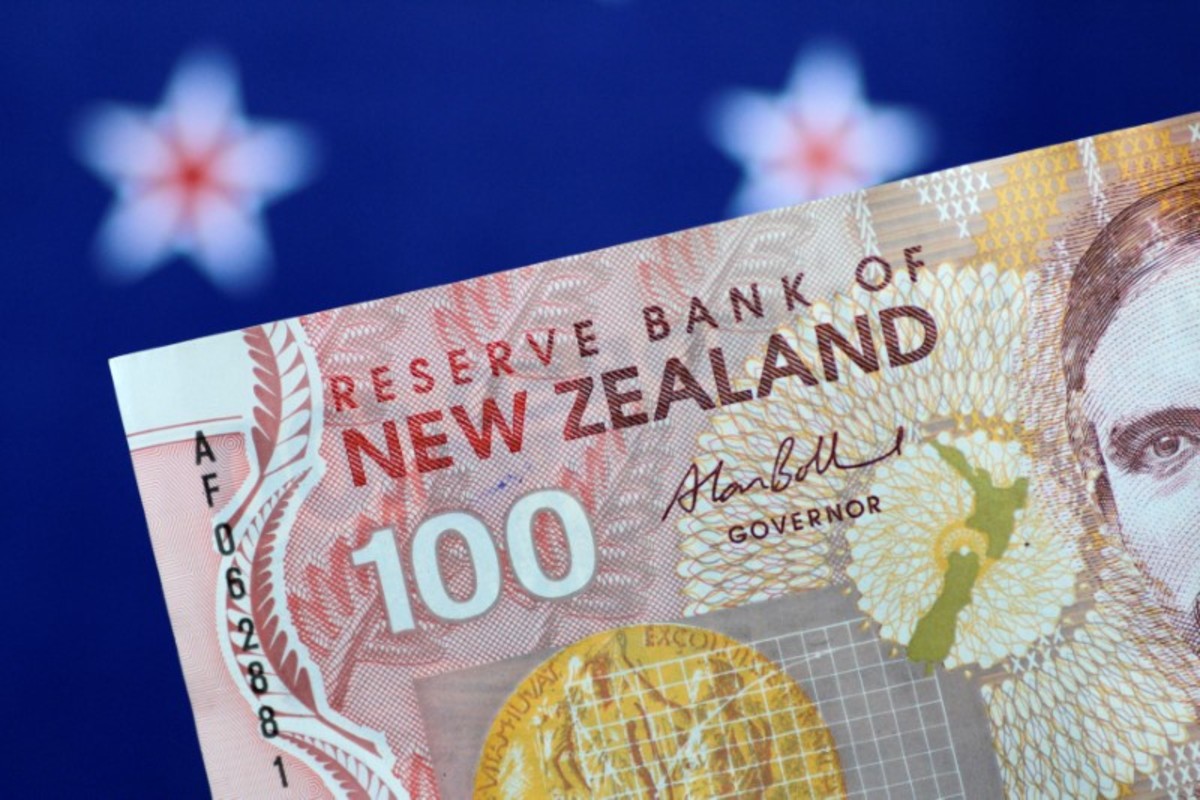
SYDNEY (Reuters) - The New Zealand dollar suffered a fresh setback on Tuesday after the country's incoming Labour government outlined its left-leaning priorities, including a clamp-down on foreign buyers of local housing.
The kiwi dollar <NZD=D4> shed all its early gains to be back at $0.6954, having briefly been as high as $0.7003 at one point. The currency has sunk over three cents in as many sessions after the Labour Party secured power following an election last month.
Signing a power-sharing deal with the nationalist New Zealand First party, Prime minister-elect Jacinda Ardern laid out policies that some investors worry could threaten the country's strong economic track record.
These include cutting back on immigration, raising the minimum wage and altering the mandate of the Reserve Bank of New Zealand to include employment and not just inflation.
Analysts suspect the latter shift could mean interest rates stay lower for even longer than the RBNZ has currently predicted, with markets already not pricing in a hike until 2019.
The news helped lift the Australian dollar up 0.3 percent to NZ$1.1236 <AUDNZD=R> and back to heights last visited in April 2016.
The Aussie <AUD=D4> also inched up to $0.7818, though dealers noted recent attempts to rally had failed at $0.7884 and $0.7898, leaving the near-term trend downward.
Immediate support was put at $0.7797 while a breach of the October trough of $0.7733 would be particularly bearish.
That test could come Wednesday should inflation figures for the third quarter prove softer than expected.
The consumer price index is forecast to rise a relatively large 0.8 percent in the quarter, nudging the annual pace up to 2.0 percent and back into the Reserve Bank of Australia's (RBA) 2-3 percent target band.
However, much of the increase will be due to rising energy prices which are more of a tax on consumers than a symptom of overheating demand.
Exclude energy and prices remain very subdued. Analysts at Westpac forecast underlying inflation will rise just 0.3 percent in the quarter and 1.8 percent for the year.
"The overall story for the Aussie is familiar – it still looks expensive on fair value estimates but not at an extreme and with upbeat global risk appetite helping prevent a sharp correction," said Westpac senior currency analyst Sean Callow.
"But an inflation reading around our forecast may be enough to see the Aussie probe four-month lows around $0.7730."
Australian government bond futures edged higher in line with gains in U.S. Treasuries. The three-year bond contract <YTTc1> rose 1 tick to 97.860, while the 10-year contract <YTCc1> firmed 3 ticks to 97.2050.
(Editing by Simon Cameron-Moore)


.jpg?w=600)