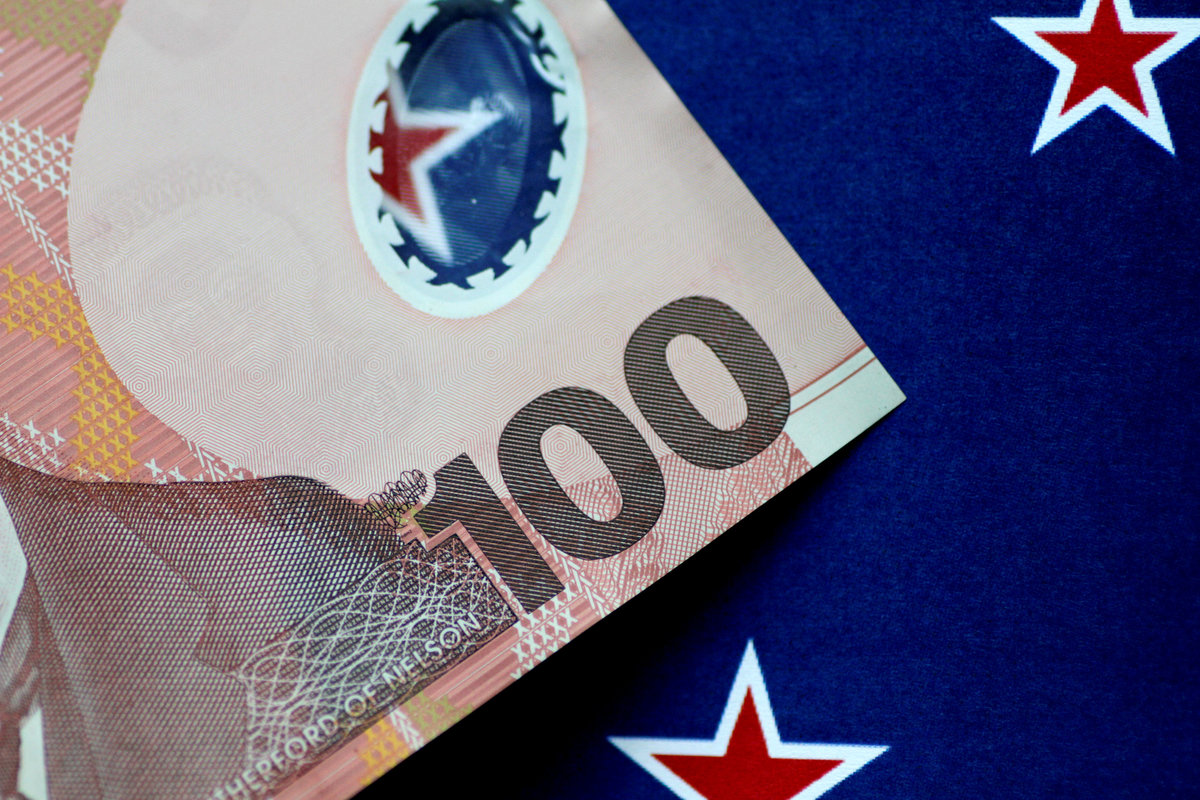
SYDNEY (Reuters) - The New Zealand dollar skidded to a five-month trough on Monday on concerns the incoming Labour coalition would introduce curbs on immigration and foreign investment, while the Australian dollar slipped to 1-1/2 week lows.
The New Zealand currency <NZD=D4> fell for a fifth straight day to $0.6941, a level not seen since May 22.
The kiwi has tumbled 5.4 percent since an inconclusive election on Sept. 23 left the country's two major parties reliant on the nationalist New Zealand First to form government.
NZ First leader Winston Peters ended the speculation last week when he announced he would back the Labour Party, which had been in opposition for the last decade.
Kiwi bulls have been inconsolable since, as the Labour-NZ First coalition represents an abrupt shift in the country's open door policy that has helped fuel strong economic growth in recent years.
Already, incoming prime minister Jacinda Ardern has put a roadblock on New Zealand's participation in the Trans-Pacific Partnership insisting she will push for changes to the agreement due to be finalised next month.
New Zealand markets are closed on Monday for a holiday.
"Owning Kiwi over most other (developed) countries has been a very good asset allocation trade for the last 10 years, but the change in government and the apparent ending of the current housing and migration cycle is altering the outlook and with it, the currency dynamic," said Sean Keane, a director at Triple T Consulting.
"There is a definite feeling locally that the end of the summer weather is now upon us."
Across the Tasman Sea, the Australian dollar <AUD=D4> slipped to $0.7805, the lowest since Oct. 12. The Aussie has lost more than 3 percent since hitting a two-year high of $0.8124 last month.
Most of those losses have come on the back of a resurgent greenback, which got a shot in the arm last week after the U.S. Senate approved a budget blueprint for the 2018 fiscal year.
The progress in tax reforms boosted expectations of increased U.S. Government borrowing and a possible pickup in inflation, lifting yields on two-year Treasuries to a nine-year high. [US/]
An emphatic election victory for Japan's ruling party was also positive for the U.S. dollar as it means yen-weakening reflationary measures will remain at the heart of government policy. [FRX]
Domestically, the main event this week will be Australian third-quarter consumer price data due Wednesday. Economists expect headline inflation to just reach the floor of the central bank's 2-3 percent target band, and a higher outcome would be needed to challenge the outlook for steady rates in the near term.
The Reserve Bank of Australia (RBA) has left rates at a record low 1.50 percent for more than a year and investors see the next move higher in the second half of 2018.
Australian government bond futures edged lower, with the three-year bond contract <YTTc1> down 1 tick at 97.840. The 10-year contract <YTCc1> slipped 3.5 ticks to 97.1600.
(Reporting by Swati Pandey; Editing by Sam Holmes)