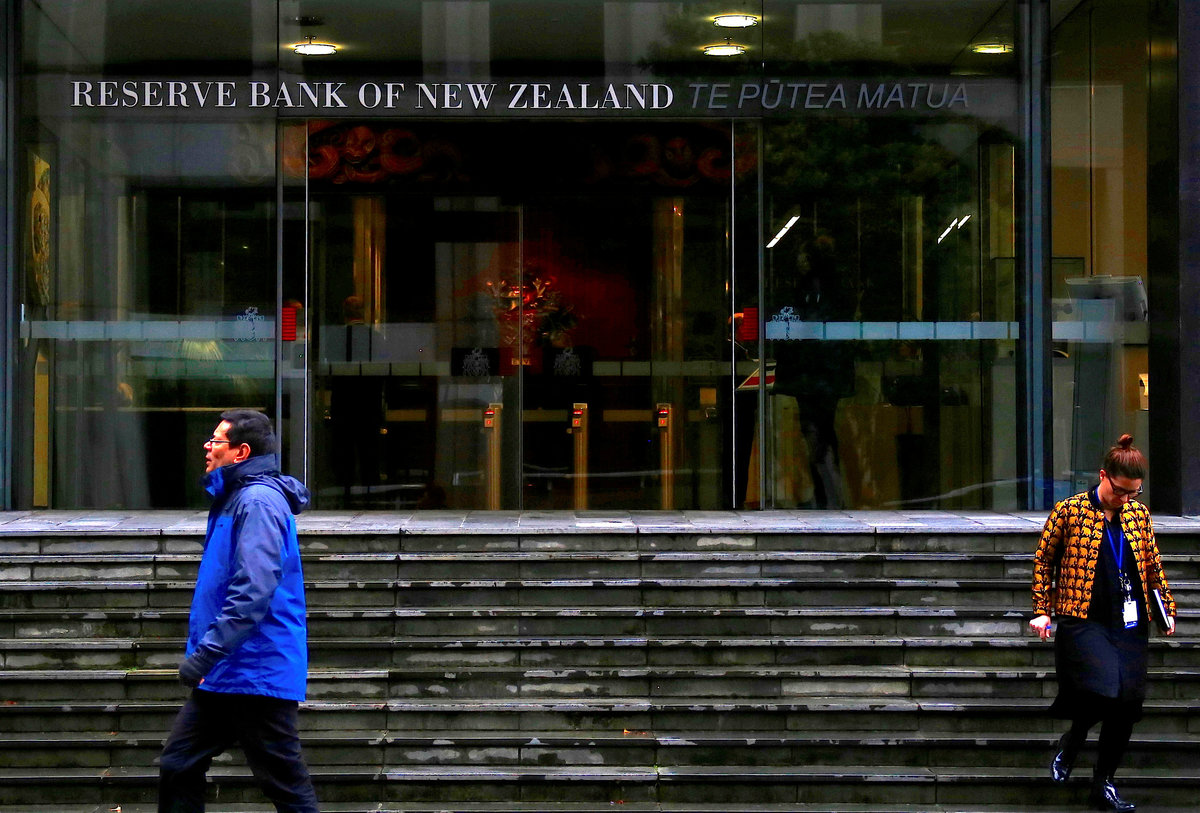
WELLINGTON (Reuters) - New Zealand's central bank is expected to stand resolutely pat when it decides interest rates on Thursday, particularly as the general election results have created some uncertainty over its policy direction – and the appointment of a new governor.
The Reserve Bank of New Zealand is widely expected to keep interest rates at a record-low 1.75 percent, against a background of coalition wrangling after an inconclusive election result left either of the major parties able to form a government - if it can get the nationalist New Zealand First on board.
Seventeen economists polled by Reuters expect the RBNZ to stand pat on Sept. 28 and all 19 who made forecasts beyond Thursday expect the bank to keep rates on hold until the end of the year.
It will be the first rate decision under Grant Spencer, who will be taking over as acting governor for six months, after incumbent Graeme Wheeler steps down on Tuesday.
An election result giving no major party enough seats in parliament to govern alone means it will now likely take weeks to form a government, with the impact on monetary policy still unclear. ]nL4N1M40FC]
"Election uncertainty gives them (the RBNZ) a great reason to hold the line on their message," said Michael Gordon, senior economist at Westpac.
While the ruling National Party was around 10 points ahead of the Labour Party after Saturday's election, either could form a government if they get the New Zealand First Party, led by the outspoken Winston Peters, on board.
Labour wants to add employment to the central bank's inflation-targeting mandate, which would likely make monetary policy more stimulatory, while New Zealand First favours more currency intervention by the central bank.
"One way or another, there could be a concession towards easing the focus on inflation," Gordon added.
New Zealand has been among the fastest-growing advanced economies in recent years but has lost some momentum of late as the booming economy hit capacity constraints and labour shortages.
The economy grew a solid 0.8 percent in the three months to the end of June, data showed last week, but that was largely due to spending by tourists who flooded the country for a British and Lions rugby tour, and was slightly below the central bank's projection of 0.9 percent growth.
The data was unlikely to divert the RBNZ from its path of keeping rates at record lows for years to stoke inflation, which in the second quarter slowed by more than expected.
"Nothing has really departed from the constructs of the last monetary policy statement," said Craig Ebert, senior economist at BNZ.
"Nobody really knows what the next government here is going to look like. That just lends itself again to a holding pattern which of course the Reserve Bank is already clearly in."
(Reporting by Ana Nicolaci da Costa; Editing by Eric Meijer)