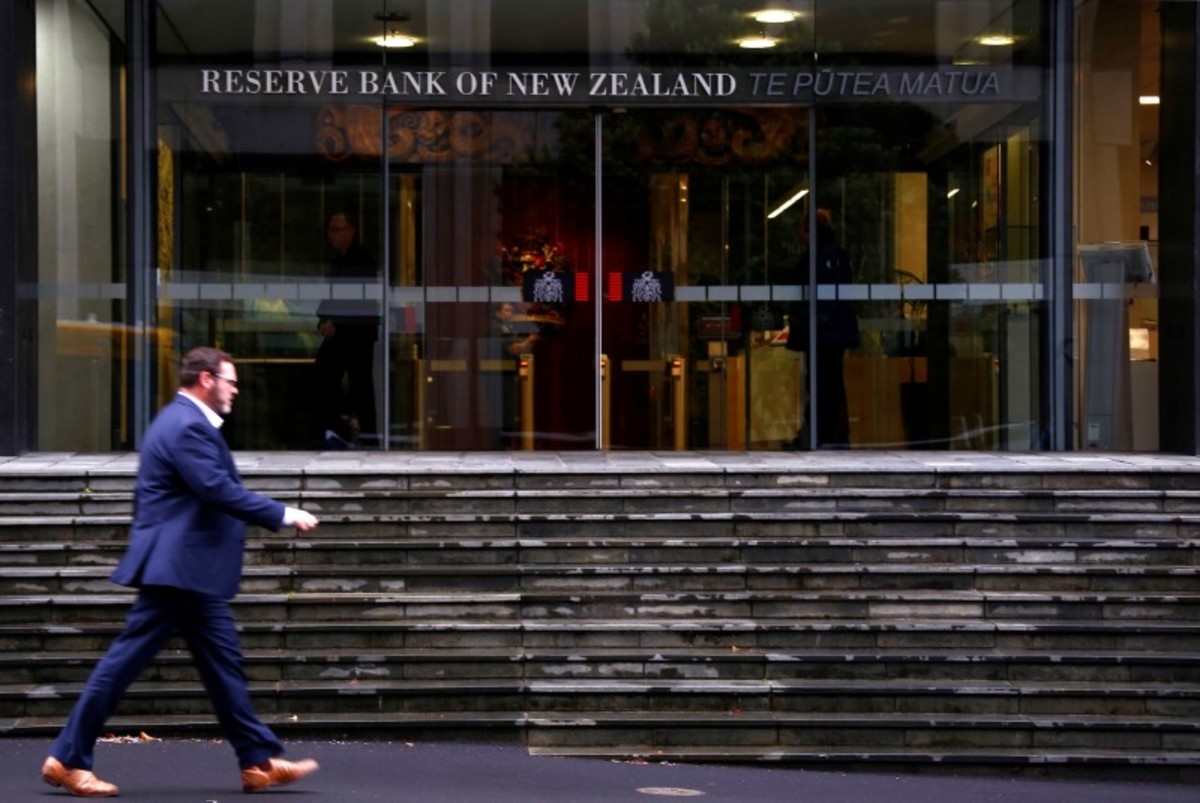
WELLINGTON (Reuters) - New Zealand's central bank is expected to hold interest rates at a record low of 1.75 percent at the last meeting chaired by Acting Governor Grant Spencer on Thursday in its mission to boost tepid inflation and sluggish growth.
All 15 economists polled by Reuters forecast rates to stay on hold for the ninth consecutive meeting and only six out of 14 see a rate hike in the first or second quarter of 2019.
Inflation ran at a rate of 1.6 percent last year, edging back from the 2 percent midpoint of the central bank's 1-3 percent target and below analyst expectations. Growth also disappointed, coming out at a weaker-than-expected 2.9 percent for 2017, data on Thursday showed.
New Zealand's subdued rate outlook is in tune with many other Asian economies, but contrasts with that of major central banks in the West, which are flagging rate hikes, or, in Europe's case, a looming exit from heavy stimulus mode.
The Reserve Bank of New Zealand (RBNZ) is expected to stick to recent language that "monetary policy will remain accommodative for a considerable period".
"The economic outlook has not changed materially from six weeks ago," analysts at ASB said in a note, referring to RBNZ's February meeting.
"We do not expect any change in the RBNZ’s assessment of risks ... and guidance on monetary policy."
New Zealand GDP, rates, jobs, inflation: http://reut.rs/2pfJlMe
The decision will be the last before Acting Governor Grant Spencer hands over to pension fund chief Adrian Orr on March 27.
The new Labour-led government has said it will review the central bank act to add employment as a focus to its policy mandate, a plan which is expected to be approved soon.
Markets don't expect this change to shift RBNZ's near-term rate path, but some analysts call for caution.
"There is a risk that there may be a step change in the way that monetary policy and/or macroprudential policy is conducted," said Kate Hickie, Australia & New Zealand Economist at Capital Economics.
"At the moment, there is no way of knowing if that will happen and if it does whether Orr will be more dovish or hawkish. So the risks to our interest rate forecasts are unusually wide."
Hicks expects the first rate hike won't come until the second half of 2019.
(Reporting by Marius Zaharia; Editing by Eric Meijer)