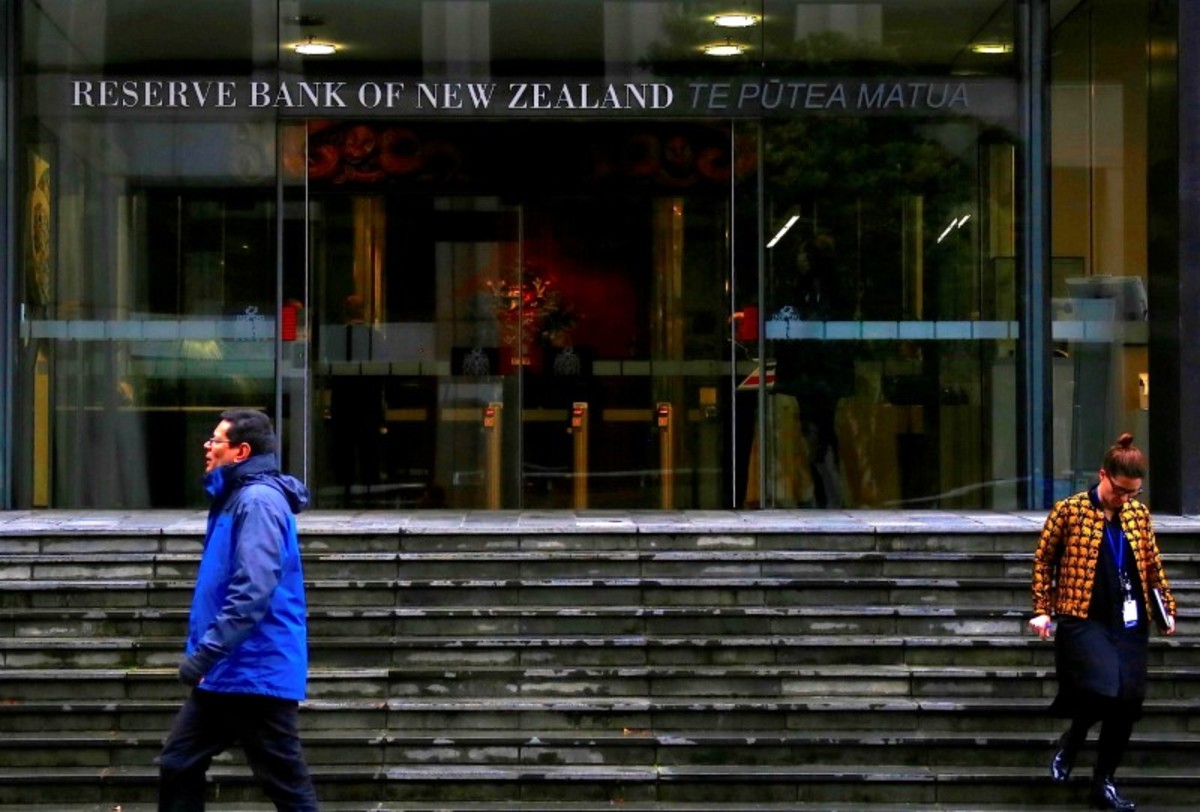
WELLINGTON (Reuters) - The Reserve Bank of New Zealand (RBNZ) on Thursday held interest rates at a record low of 1.75 percent, as expected, saying inflation was likely to weaken in the near term before returning to the midpoint of its 1-3 percent target range later on.
The RBNZ said monetary policy "will remain accommodative for a considerable period", cementing widespread expectations that rates will be on hold for the rest of the year.
The New Zealand dollar NZD=D4 fell to its lowest since early February at $0.7154 before rebounding, with analysts citing the dovish message sent by the central bank flagging a temporary dip in inflation.
"Over the medium term, CPI inflation is forecast to trend upwards towards the midpoint of the target range. Longer-term inflation expectations are well anchored at 2 percent," said a statement accompanying the rates decision, Acting Governor Grant Spencer's last before he hands over to national pension fund chief Adrian Orr on March 27.
Orr's mandate is expected to include a goal on employment, in addition to keeping the 1-3 percent inflation target.
"You wouldn't expect a change given you're going to have a transition in governors so you want a bit of stability in message before that," said Ben Jarman, senior economist at JPMorgan in Sydney.
"The statement is pretty much unchanged, although there is some slight dovishness around their comment on inflation."
Inflation ran at a rate of 1.6 percent last year, below analyst expectations. Growth also disappointed, coming out at a weaker-than-expected 2.9 percent for 2017, data on Thursday showed.
All 15 analysts polled by Reuters expected rates to remain steady for the rest of the year and some see a potential hike in the first half of 2019.
New Zealand's subdued rate outlook is in tune with many other Asian economies, but contrasts with that of major central banks in the West, which are flagging rate hikes, or, in Europe's case, a looming exit from heavy stimulus mode.
Hours earlier, the U.S. Federal Reserve raised interest rates to 1.50-1.75 percent and forecast two more hikes in 2018.
(Reporting by Marius Zaharia and Jane Wardell in Wellington and Wayne Cole and Swati Pandey in Sidney; Editing by Raissa Kasolowsky)