New York in 'race against time' as Trump stresses face masks are voluntary
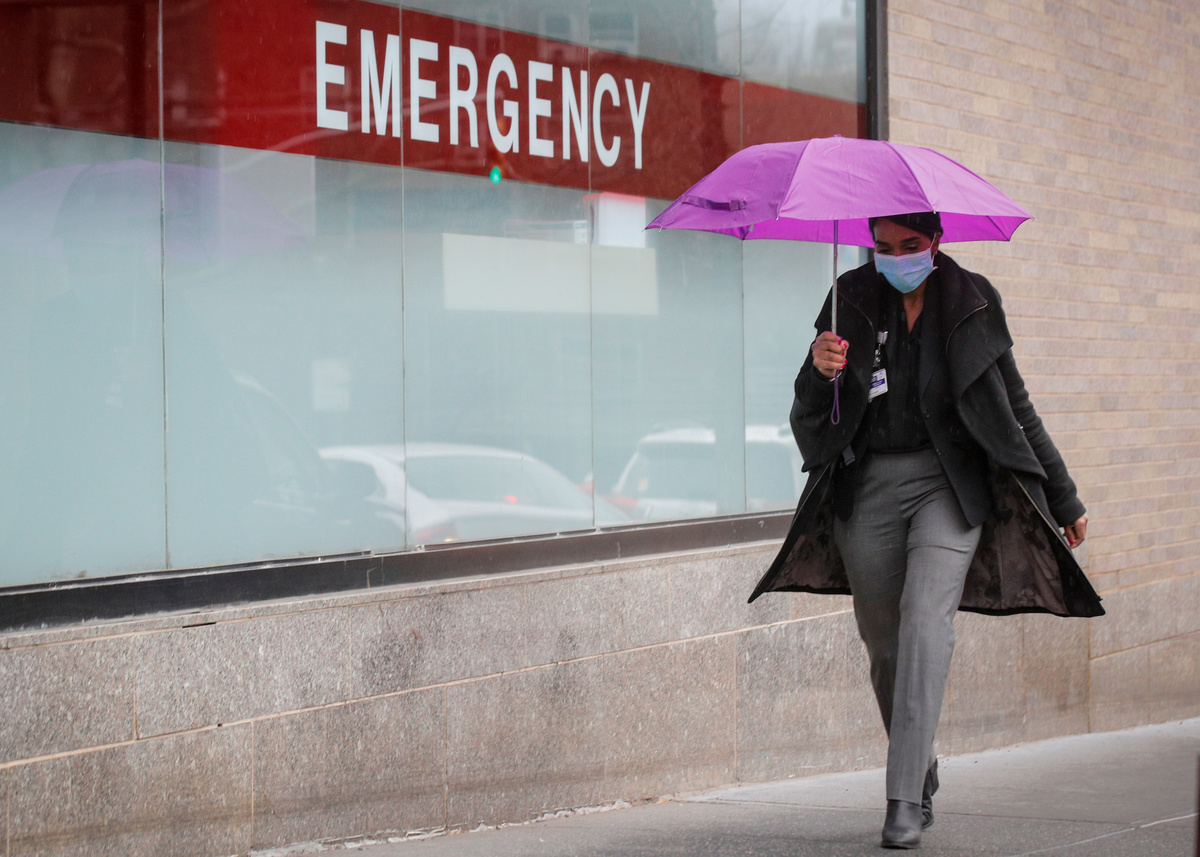
A Healthcare worker arrives at Mount Sinai Hospital, during the outbreak coronavirus disease (COVID-19) outbreak, in New York City, U.S., April 3, 2020. REUTERS/Brendan McDermid
Two of the principal U.S. coronavirus hot spots - New York and Louisiana - reported their biggest jumps in COVID-19 deaths yet on Friday, as the White House sent mixed messages on whether Americans should cover their face if they venture outdoors.
Surging deaths in New York City and New Orleans showed that a wave of lethal coronavirus infections expected to overwhelm hospitals, even in relatively affluent, urban areas with extensive healthcare systems, has begun to crash down on the United States.
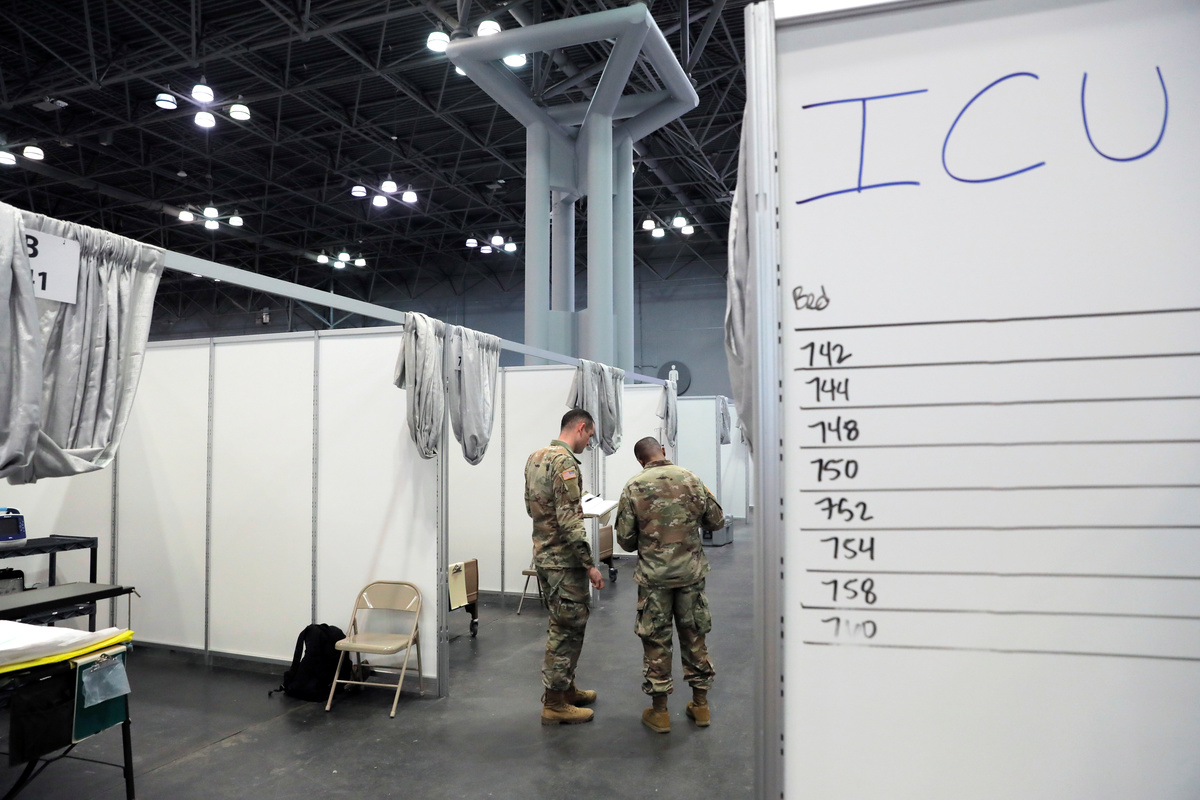
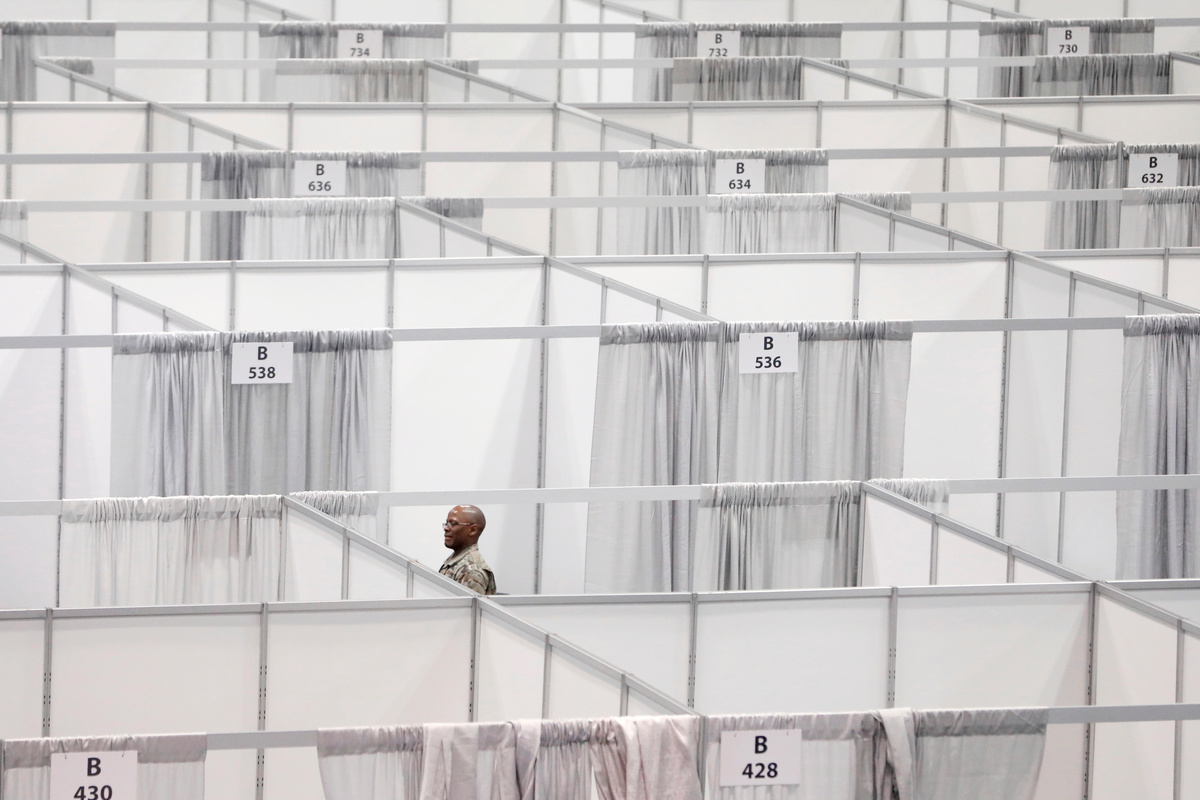
U.S. Army Medical Personnel from the 531st Hospital Center out of Fort Campbell, Kentucky and the 9th Hospital Center out of Fort Hood, Texas walk amongst cubicles in phase 2 of the Javits New York Medical Station at the Jacob K. Javits Convention Center during the coronavirus disease (COVID-19) outbreak in Manhattan, New York City, U.S., April 3, 2020. REUTERS/Andrew Kelly
Governors, mayors and physicians have voiced alarm for weeks over crippling scarcities of personal protective gear for first-responders and front-line healthcare workers, as well as ventilators and other medical supplies.
With the federal government's national strategic stockpile of such equipment nearly depleted, states have been forced essentially to compete against each other on the open market for vital resources.
Cities across the country have also scrambled to expand hospital capacity and recruit healthcare professionals out of retirement to meet looming shortages of sick beds and personnel.
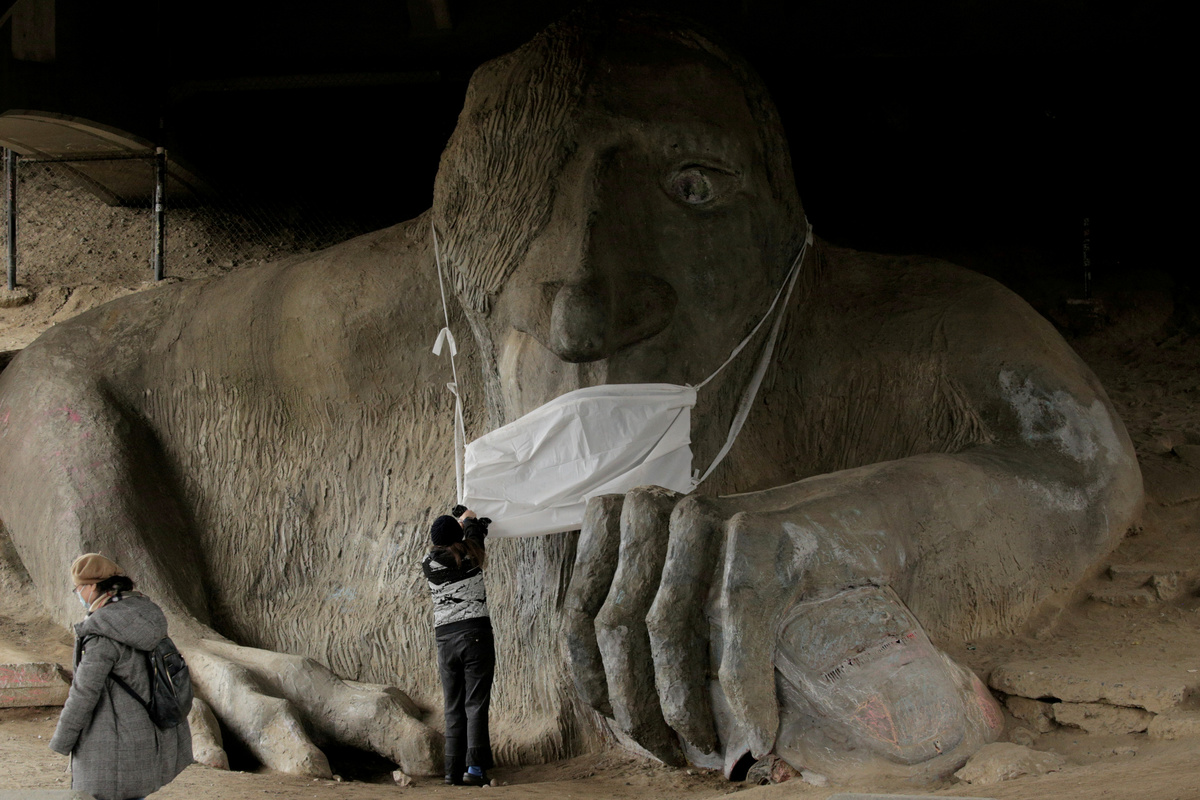
A woman removes a makeshift mask made from shower curtains on the Fremont Troll, a landmark public sculpture in the Fremont neighborhood, during the coronavirus disease (COVID-19) outbreak in Seattle, Washington, U.S. April 3, 2020. REUTERS/David Ryder
New York City, the pandemic's U.S. epicenter, has mere days to prepare for the worst of the outbreak, said Mayor Bill de Blasio, whose city has suffered more than a quarter of the 7,000-plus coronavirus deaths to date nationwide.
New York is in an "extraordinary race against time," de Blasio told a news briefing on Friday, renewing his call for the federal government to mobilize the U.S. military.
"We're dealing with an enemy that is killing thousands of Americans, and a lot of people are dying who don’t need to die," he said. "You can’t say, every state for themselves, every city for themselves. That is not America."
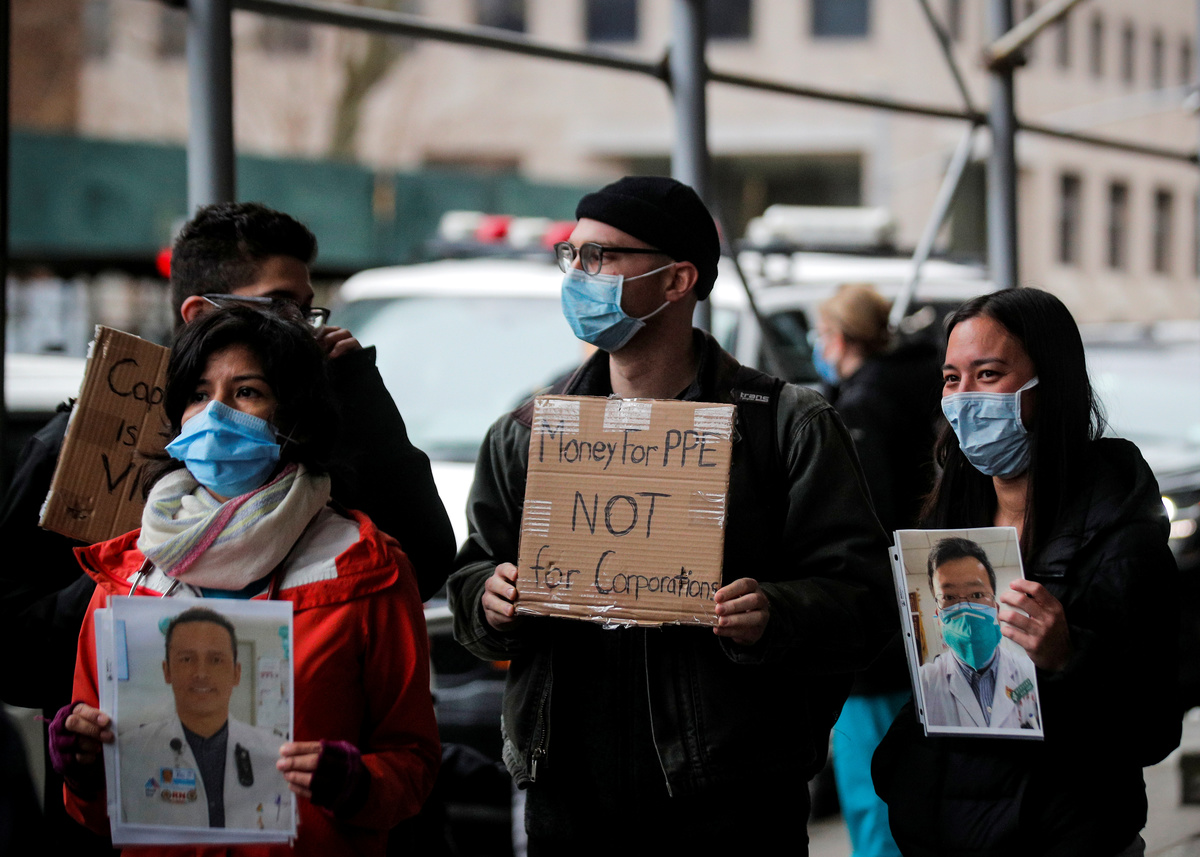
Healthcare workers at Mount Sinai Hospital hold photos of sick colleagues during a protest demanding critical Personal Protective Equipment (PPE) to handle patients during the outbreak coronavirus disease (COVID-19) outbreak, in New York City, U.S., April 3, 2020. REUTERS/Brendan McDermid
Americans, almost all of them under orders to stay home except for essential outings such as grocery shopping or seeing a doctor, have heard conflicting guidance in recent days about the need for wearing face masks in public.
At the White House on Friday, President Donald Trump seemed to muddy the waters further when he announced that federal health authorities are now recommending individuals wear cloth face coverings to stem transmission of the virus. But he stressed the advisory was purely voluntary, and that he would not be heeding the recommendation himself.
"With the masks, it's going to be a really voluntary thing. You can do it, you don't have to do it. I'm choosing not to do it," he said.
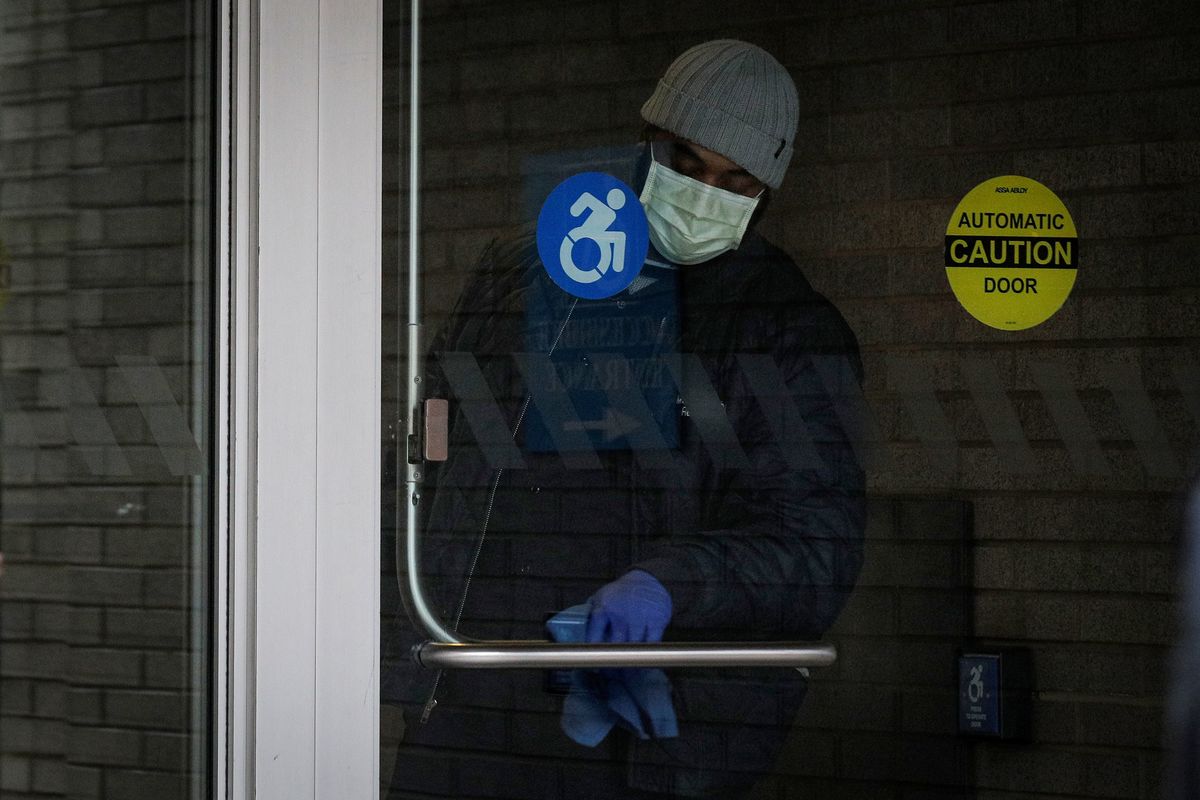
A member of the hospital staff cleans the door at Mount Sinai Hospital, during the outbreak coronavirus disease (COVID-19) outbreak, in New York City, U.S., April 3, 2020. REUTERS/Brendan McDermid
Doctors and nurses, many lacking adequate supplies of medical-grade face masks and other protective gear, were already confronting an onslaught from COVID-19, the respiratory illness caused by the highly contagious coronavirus.
One physician at a New York City hospital recounted arriving at work on Friday to learn that three of his COVID-19 patients had died that morning. A few hours later, he had intubated two others.
"I've never seen anything like this. I've never even heard of something like this in the developed world," he told Reuters on condition of anonymity, because he was not authorized to speak with the media.
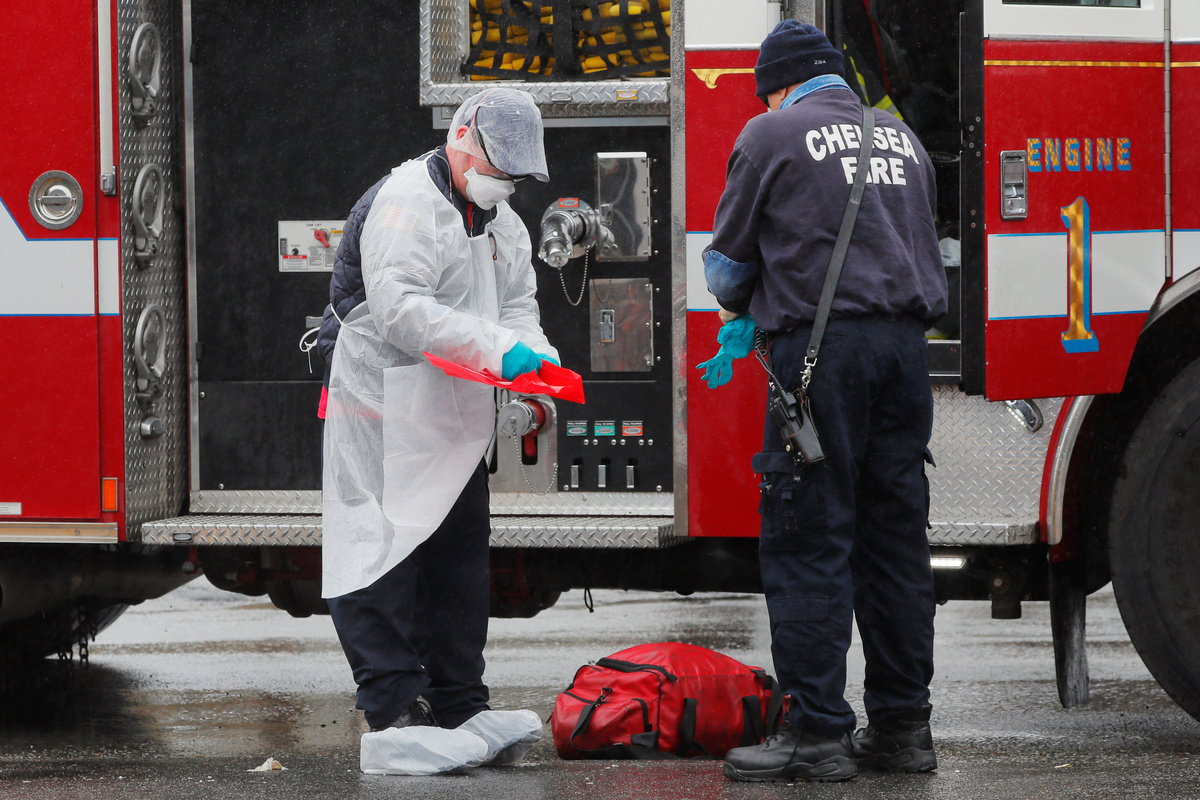
Firefighters remove their personal protective equipment after responding to a medical call amid the coronavirus disease (COVID-19) outbreak in Chelsea, Massachusetts, U.S., April 3, 2020. REUTERS/Brian Snyder
Another hot spot, Louisiana, reported a sharp jump in deaths, climbing 20% to 370 on Friday, marking the highest day-to-day increase in fatal cases yet for the Gulf Coast state.
Louisiana Governor John Bel Edwards pleaded for residents to abide by his state-at-home order as the number of infections statewide surpassed 10,000.
"For those of you who are not taking the crisis seriously, I am asking you to do a better job," he told a news conference.
A member of the military walks among cubicles being prepared in phase 2 of the Javits New York Medical Station at the Jacob K. Javits Convention Center during the coronavirus disease (COVID-19) outbreak in Manhattan, New York City, U.S., April 3, 2020. REUTERS/Andrew Kelly
Louisiana's largest city, New Orleans, where Mardi Gras celebrations in late February are believed to have spread the virus before social distancing orders were imposed, has become a focal point of the crisis.
The outbreak there has proven far more lethal than elsewhere in the United States, with a per-capita death rate twice that of New York City. Doctors, public health officials and available data suggest the Big Easy's high levels of obesity and related ailments may be part of the problem.
In New York, the U.S. state hardest hit by the coronavirus in sheer numbers of infections and lives lost, the cumulative number of fatalities rose above 2,900 - on par with the death toll from the Sept. 11, 2001, attacks on the United States.
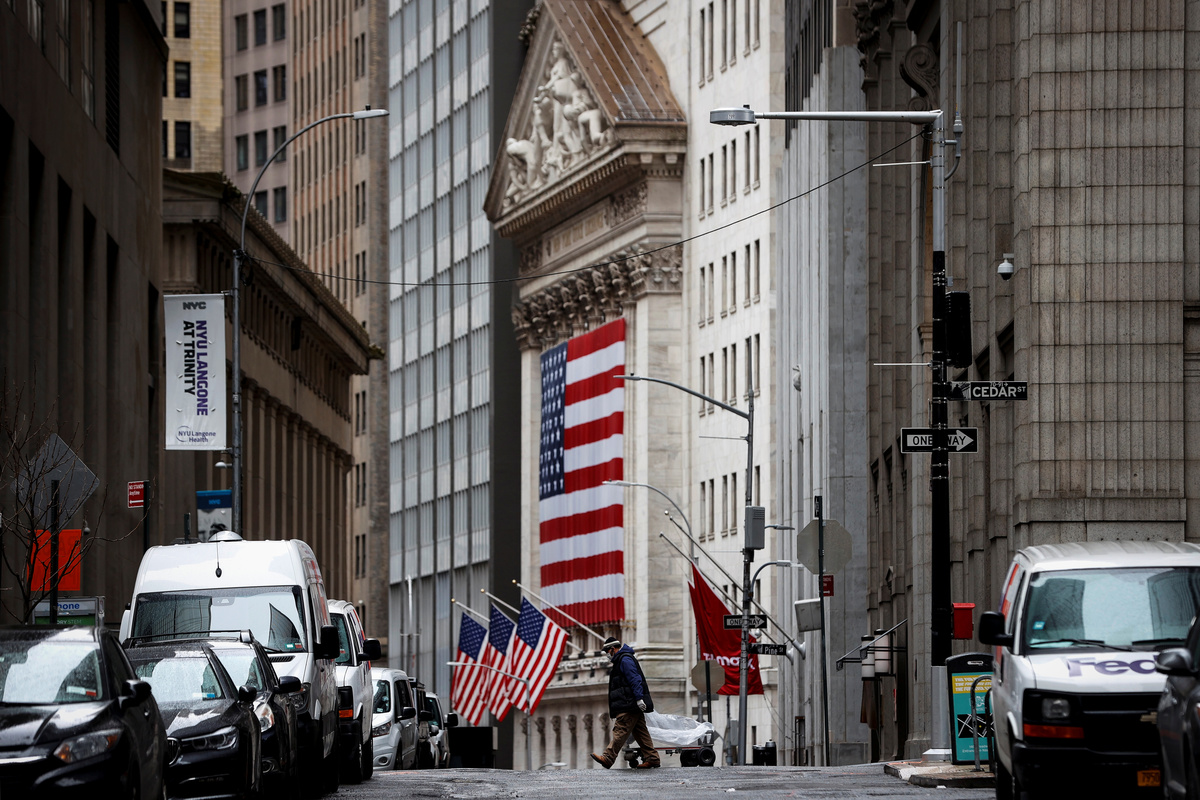
A man crosses a nearly deserted Nassau Street in front of the New York Stock Exchange (NYSE) in the financial district of lower Manhattan during the outbreak of the coronavirus disease (COVID-19) in New York City, New York, U.S., April 3, 2020. REUTERS/Mike Segar
"Personally, it's hard to go through this all day, and then it's hard to stay up all night watching those numbers come in," Governor Andrew Cuomo said.
New York City alone accounted for more than a quarter of the 7,077 U.S. coronavirus deaths tallied by Johns Hopkins University on Friday. Known U.S. infections, approaching 275,000 cases, made up about 25% of the more than 1 million cases reported worldwide.
'PAIN, LONELINESS AND DEATH'
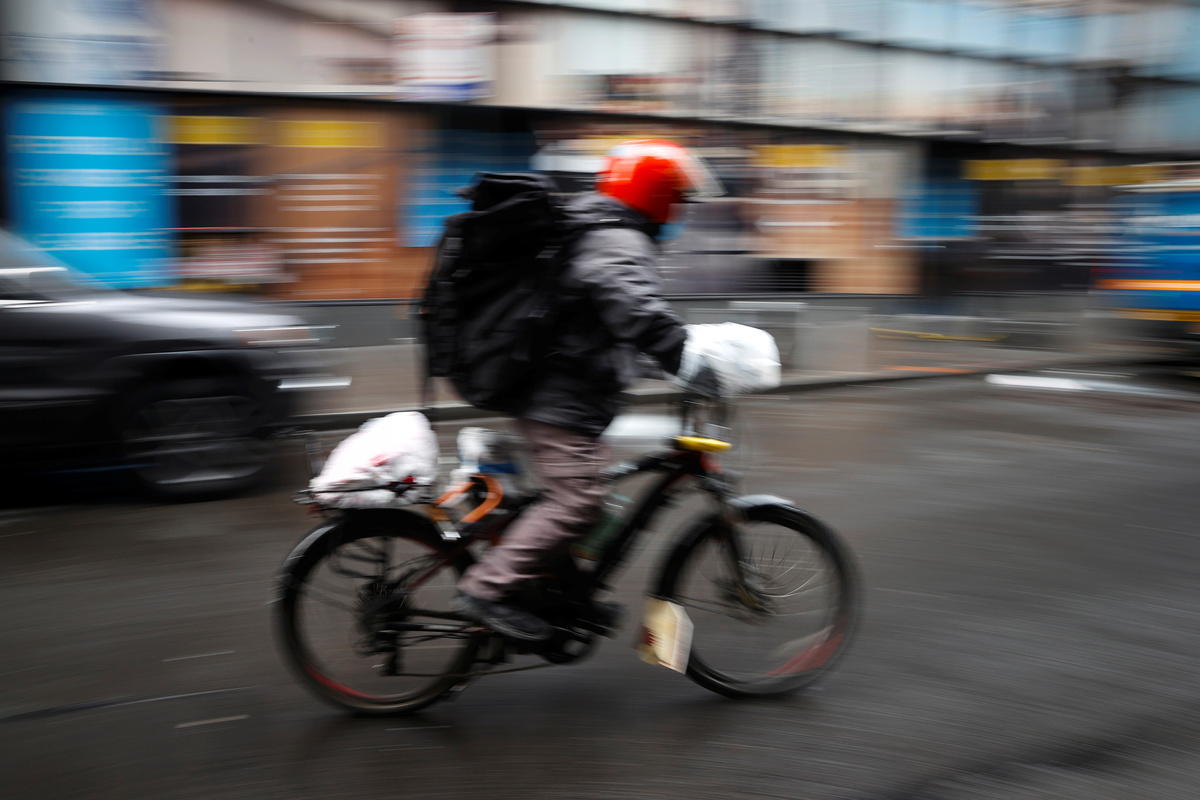
A delivery rider makes his way on nearly deserted Fulton street in the financial district in lower Manhattan during the outbreak of the coronavirus disease (COVID-19) in New York City, New York, U.S., April 3, 2020. REUTERS/Mike Segar
Many of the most gravely ill patients were dying alone as medical staff forbade relatives to be with them in their final hours for fear of a further spread of infection.
Dr. Craig Spencer, director of global health in emergency medicine at New York's Columbia University Medical Center, described the scene inside tents set up outside hospitals to help contain an increasing influx of patients.
"In those same tents, I saw too much pain, loneliness, and death. People dying alone," he wrote on Twitter on Thursday night.
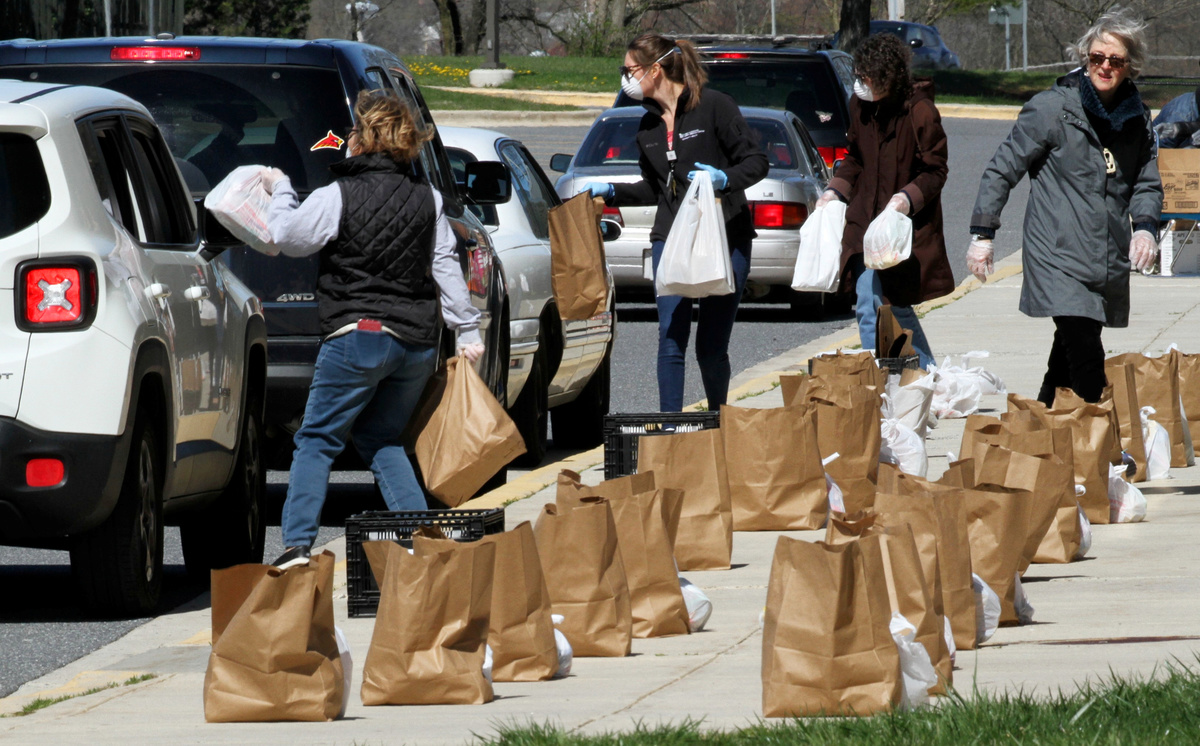
Volunteers from the Student Support Network, an organization supplying food and clothing to families with school aged children in need, hand bags of donated food and supplies to families who don't have access to Baltimore County public schools food programs because the schools have been closed due to coronavirus restrictions in Parkville, Maryland, U.S. April 3, 2020. REUTERS/Mitch Koppelman
In New Jersey, Governor Phil Murphy ordered all flags lowered to half-staff for as long as the emergency lasts, saying his state was the first to take such a measure.
Fresh data on Friday highlighted the economic consequences of the public health crisis, confirming that hundreds of thousands of Americans had lost their jobs due to the pandemic. Economists said actual job losses will prove far greater but had yet to be reflected in employment figures as much of the economy had only begun to shut down last month.
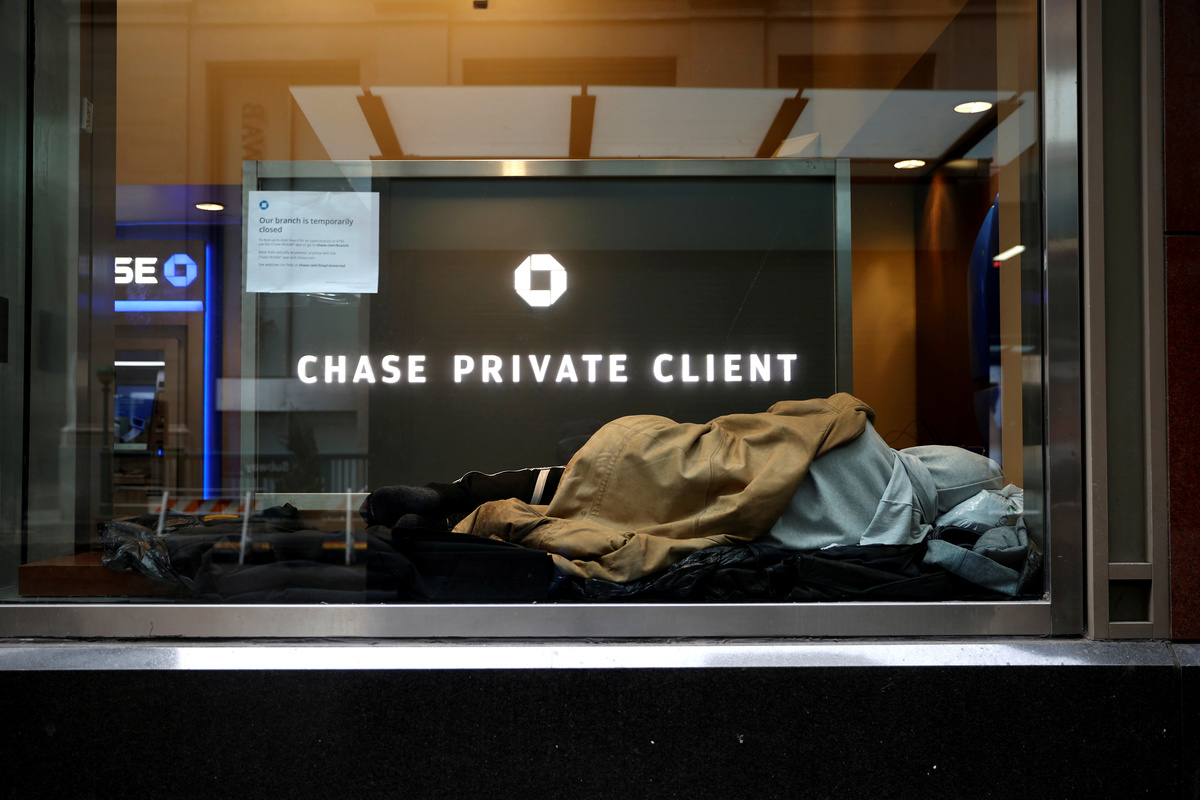
A homeless man sleeps in a closed Chase bank branch on a nearly deserted Wall Street in the financial district in lower Manhattan during the outbreak of the coronavirus disease (COVID-19) in New York City, New York, U.S., April 3, 2020. REUTERS/Mike Segar
(Reporting by Maria Caspani and Nathan Layne; Additional reporting by Peter Szekely, Lucia Mutikani, Lisa Lambert, Susan Heavey, Brad Brooks, Steve Holland and Sharon Bernstein; Writing by Alistair Bell; Editing by Howard Goller, Cynthia Osterman and Daniel Wallis)
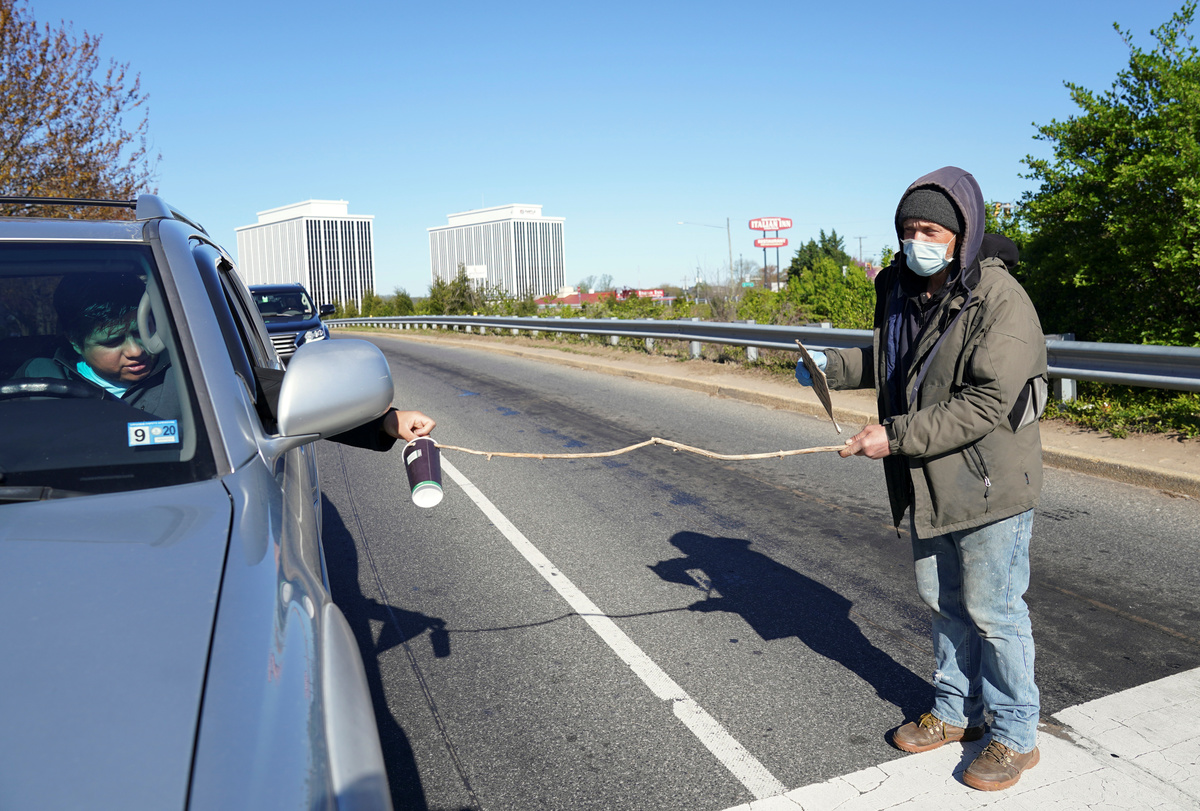
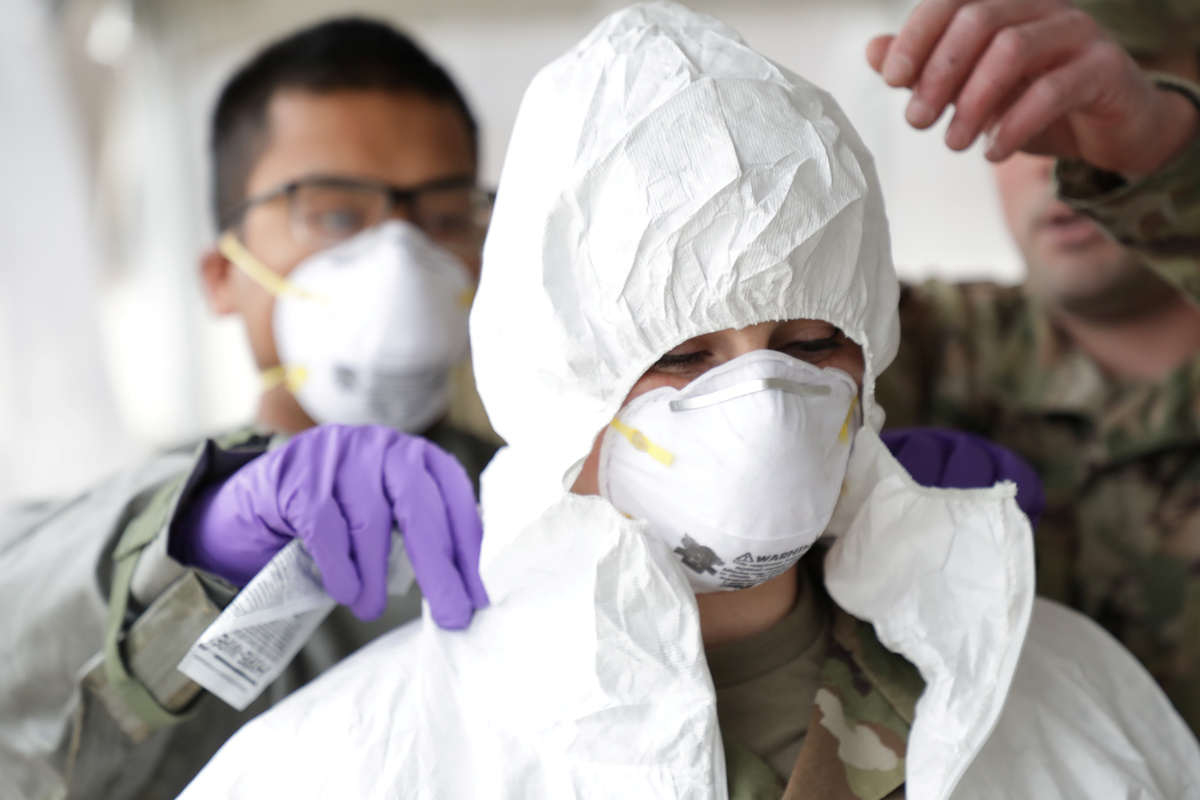
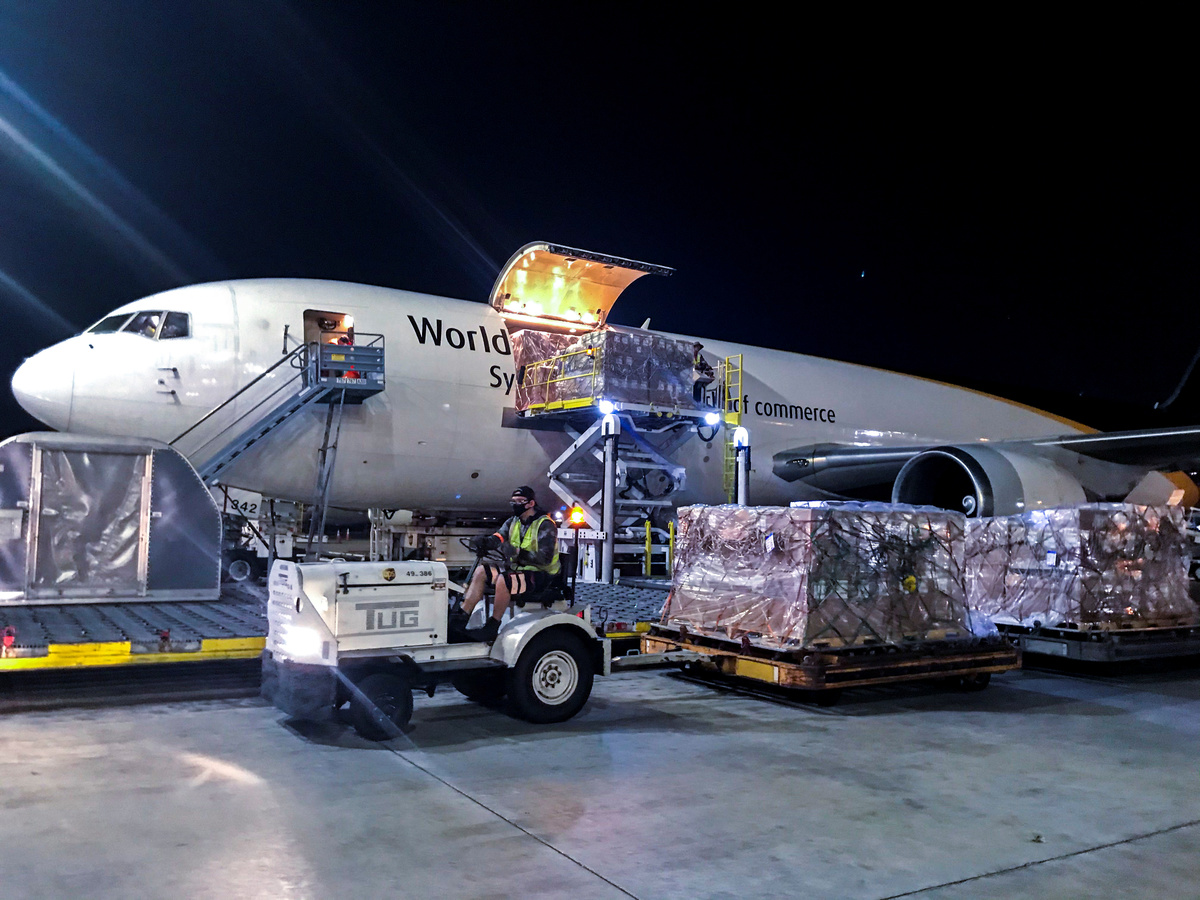
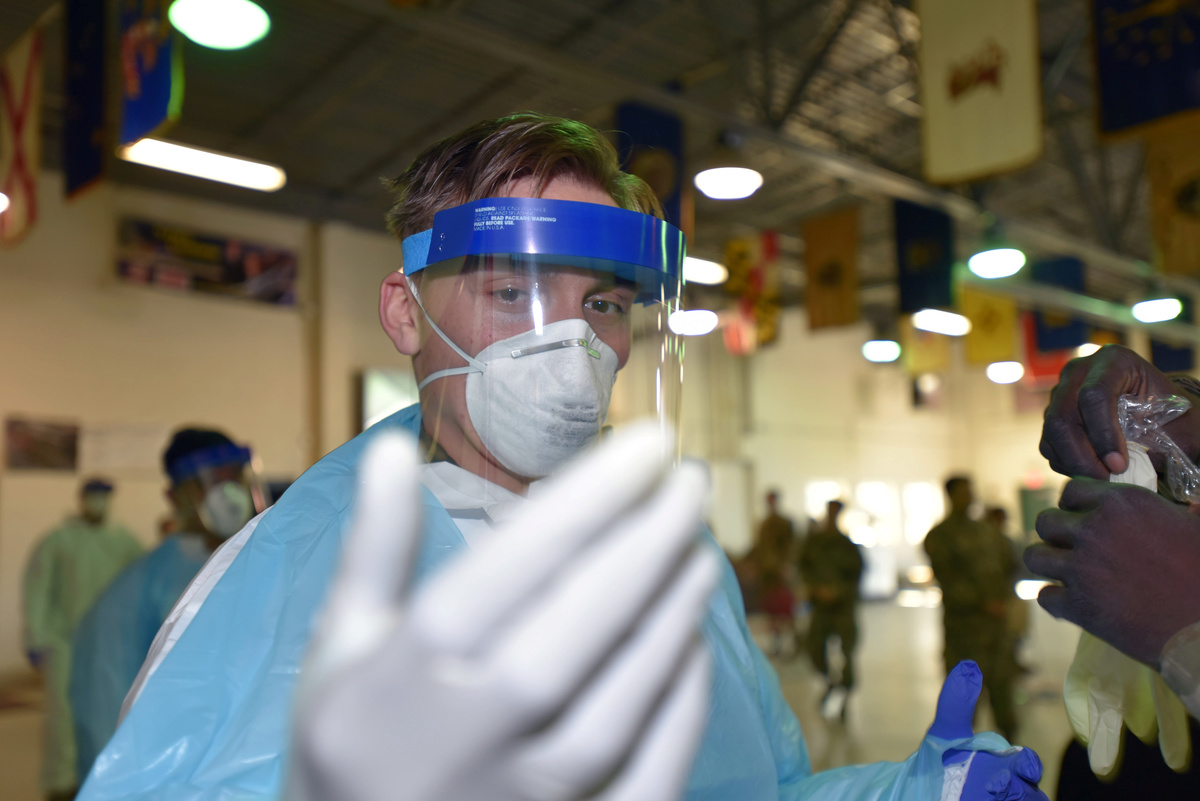
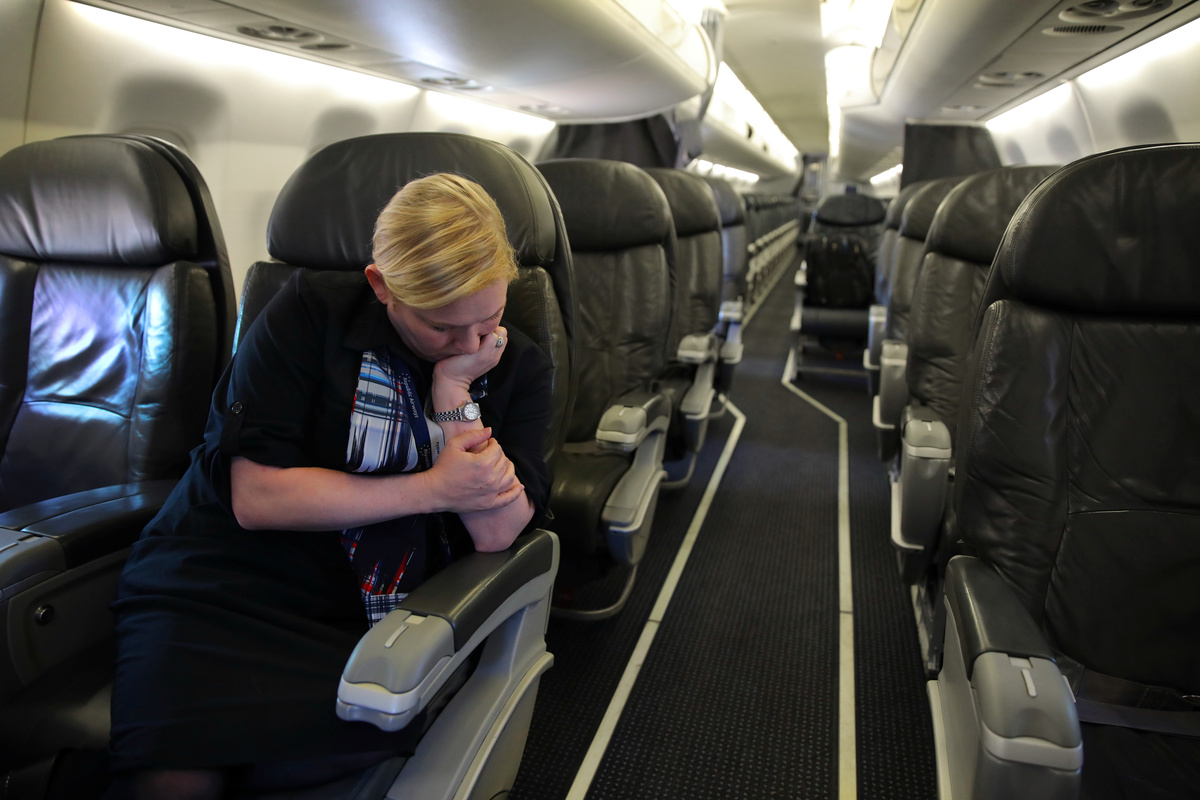
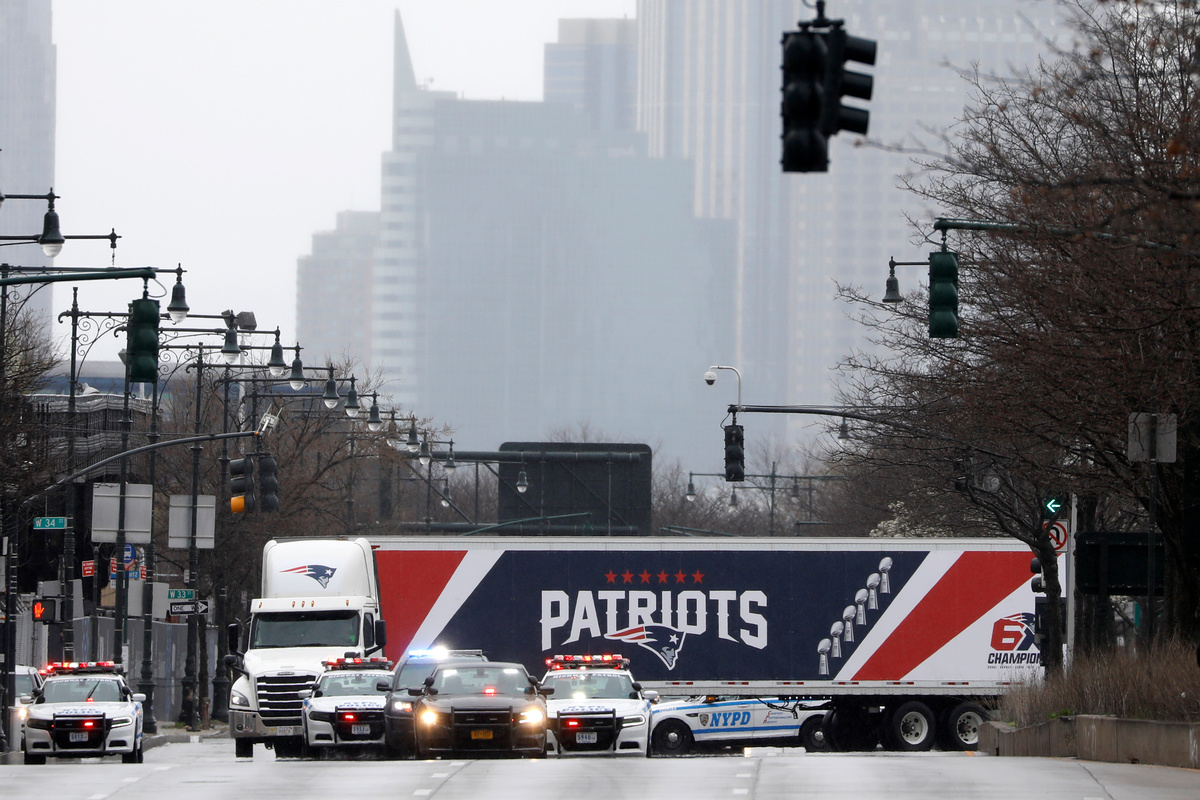
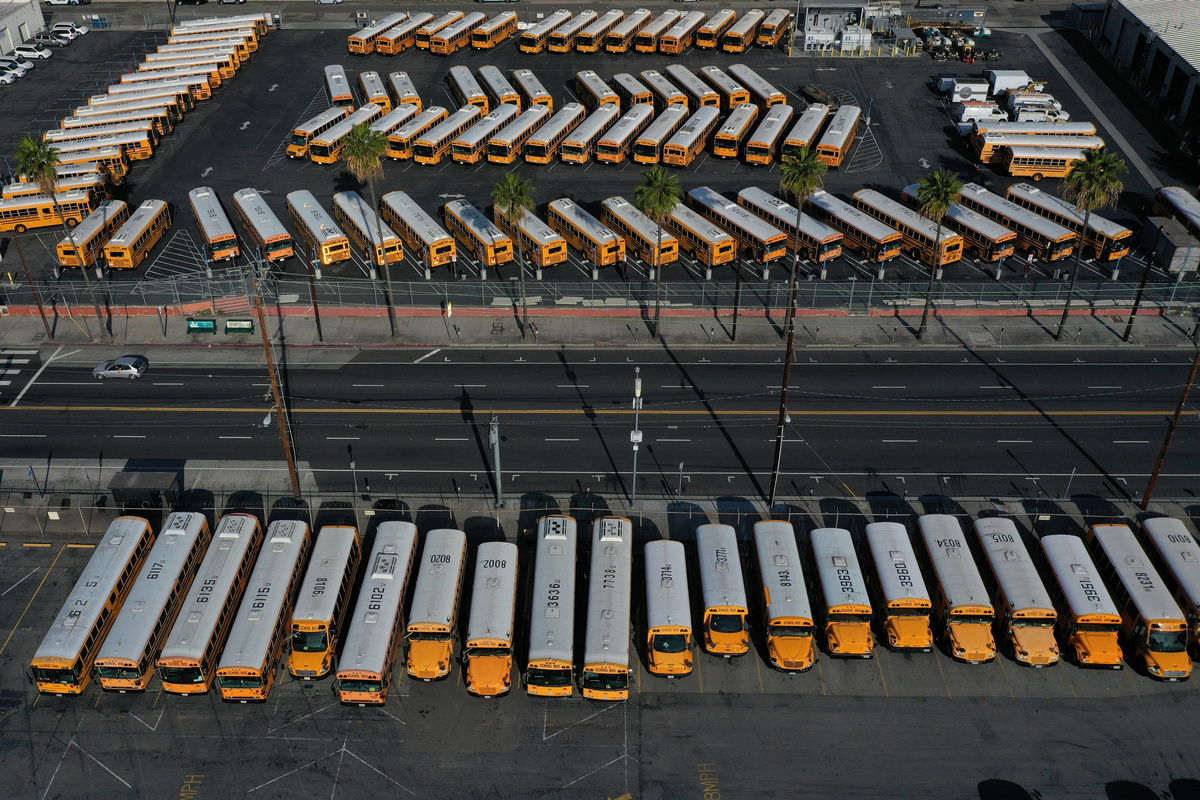
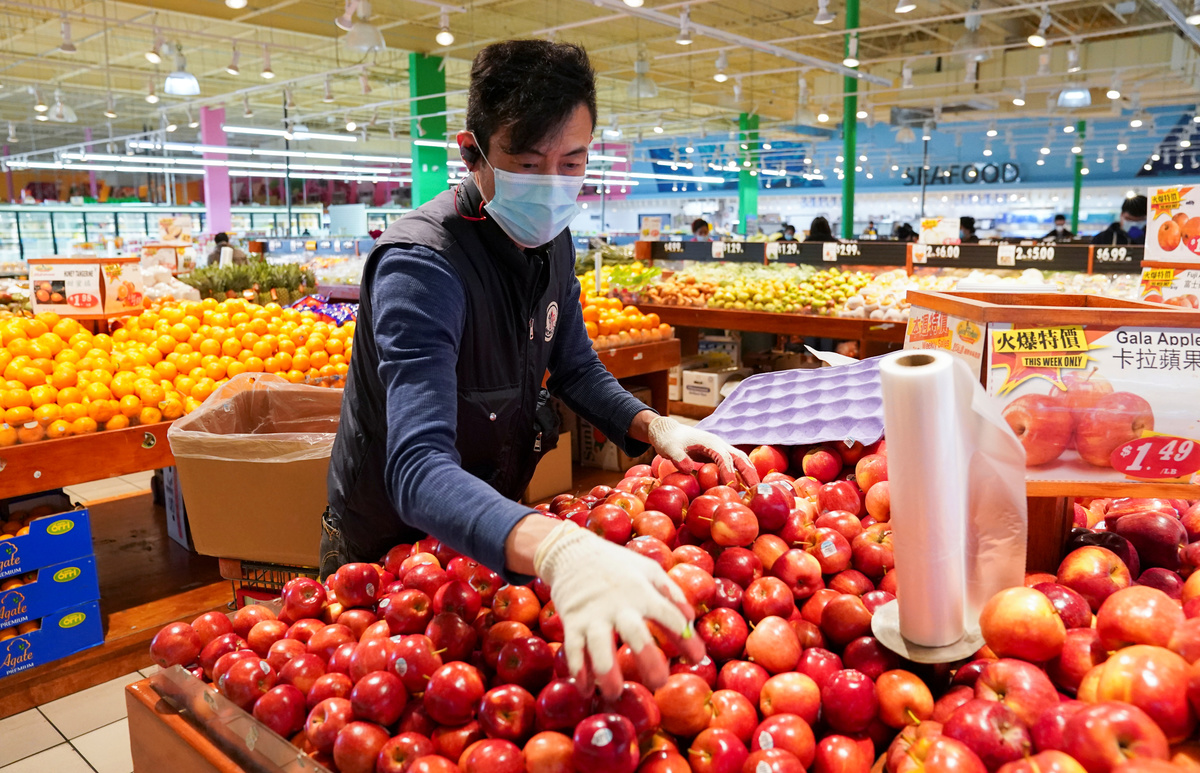
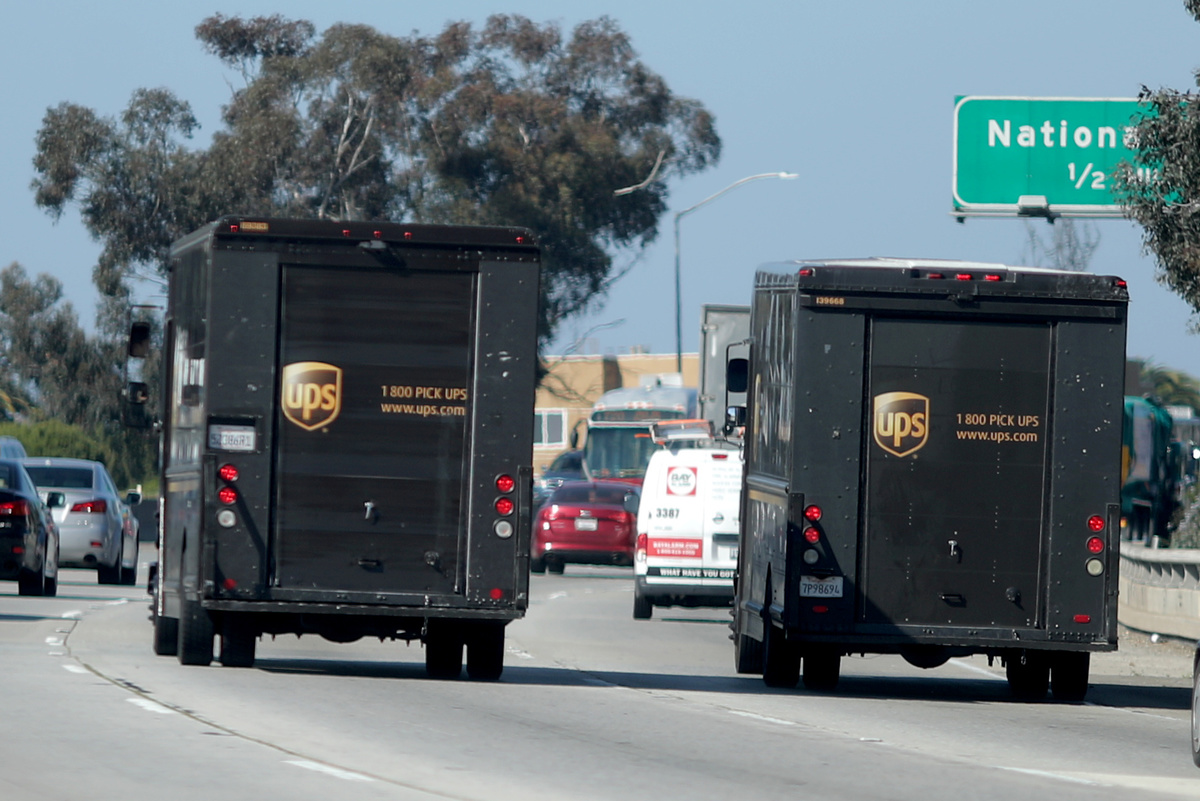
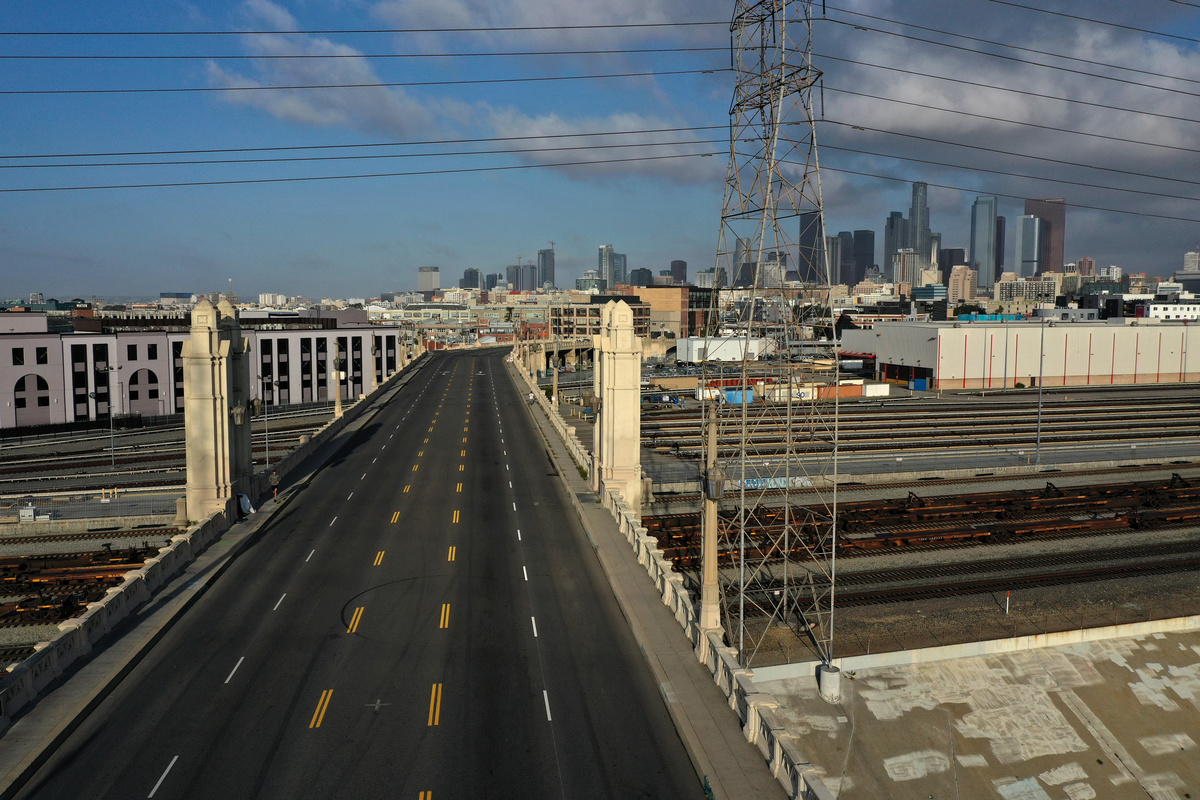
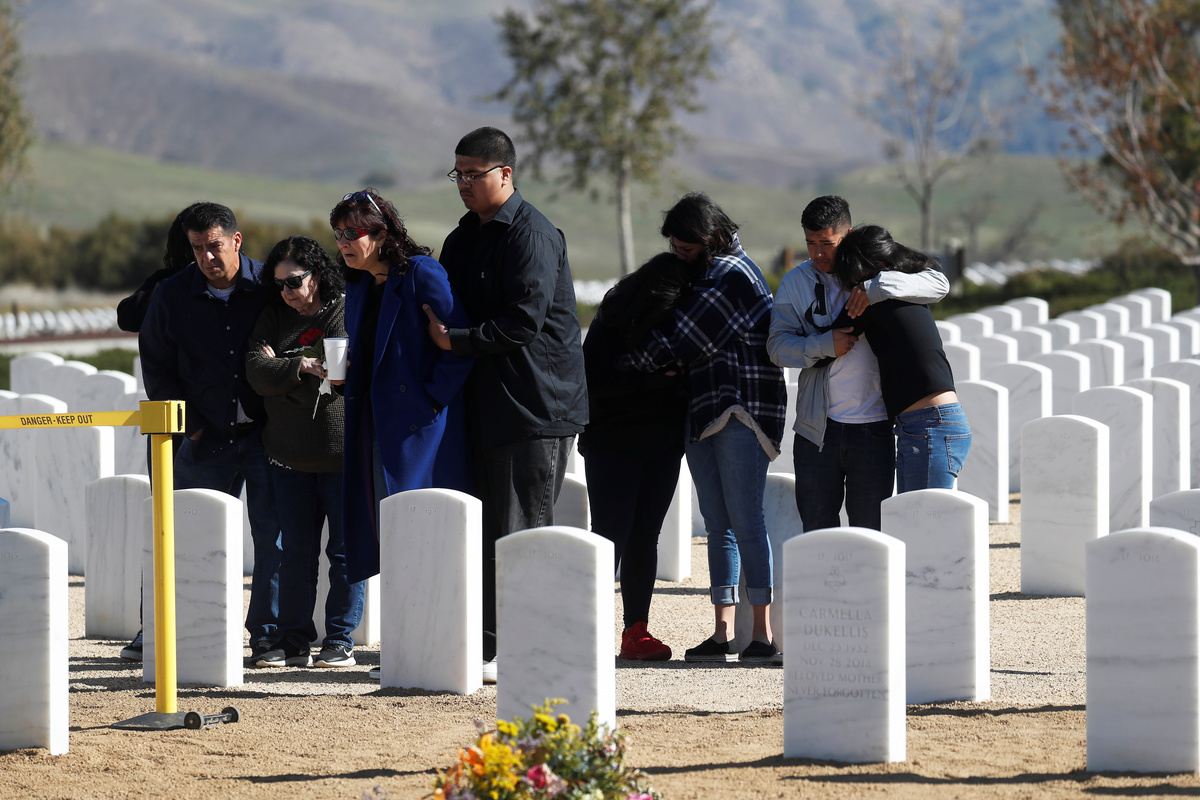
Wearing a face mask and using a stick to keep his distance to help prevent coronavirus spread, a jobless man named Paul panhandles at an intersection in Falls Church, Virginia, U.S., April 3, 2020. REUTERS/Kevin LamarqueRhode Island National Guard Sergeant Cora Brown is fitted with protective gear during training to administer coronavirus disease (COVID-19) tests to the public in Warwick, Rhode Island, U.S. March 30, 2020. Air National Guard/Staff Sgt. John Vannucci/Handout via REUTERSPallets of surgical gowns are unloaded from an international cargo plane in response to the coronavirus disease (COVID-19) outbreak in Miami, Florida, U.S. March 31, 2020. FEMA/Handout via REUTERSU.S. Army Specialist Daulton Radler inspects his glove fit and is shown the proper procedures for donning personal protective equipment (PPE) while awaiting to forward deploy to the coronavirus disease (COVID-19) testing site in Plymouth Meeting, Pennsylvania, U.S. April 2, 2020. Pennsylvania National Guard/Master Sgt. George Roach/Handout via REUTERSA flight attendant waits for the departure of a one-passenger flight between Washington and New Orleans as the spread of coronavirus disease (COVID-19) continues, in Washington, U.S., April 3, 2020. REUTERS/Carlos BarriaA protective mask holder for healthcare workers is 3D-printed by a high school, amid the coronavirus disease (COVID-19) outbreak, in Trinity, Florida, U.S. March 26, 2020 in this still image taken from social media video April 3, 2020. PASCO COUNTY SCHOOLS/via REUTERS A high school student demonstrates a protective mask holder that he has been 3D-printing for healthcare workers, amid the coronavirus disease (COVID-19) outbreak, in Trinity, Florida, U.S. March 26, 2020 in this still image taken from social media video April 3, 2020. PASCO COUNTY SCHOOLS/via REUTERS A truck belonging to the N.F.L. team the New England Patriots arrives with a police escort at the Jacob K. Javits Convention Center as it delivers 300,000 N95 masks that will help support health care workers on the front lines of the coronavirus disease (COVID-19) in Manhattan, New York City, U.S., April 3, 2020. REUTERS/Andrew KellyParked school buses are seen after California issued a stay-at-home order as the spread of the coronavirus disease (COVID-19) continues, in Los Angeles, California, U.S., April 3, 2020. REUTERS/Lucy NicholsonWearing a mask and gloves, a worker re-stocks apples in an Asian grocery store in Falls Church, Virginia, U.S., April 3, 2020. REUTERS/Kevin LamarqueUPS trucks drive on the 10 freeway after California issued a stay-at-home order as the spread of the coronavirus disease (COVID-19) continues, in Los Angeles, California, U.S., April 3, 2020. REUTERS/Lucy NicholsonEmpty freight trains sit in front of the downtown Los Angeles skyline after California issued a stay-at-home order as the spread of the coronavirus disease (COVID-19) continues, in Los Angeles, California, U.S., April 3, 2020. REUTERS/Lucy NicholsonMembers of the Gutierrez family mourn graveside, during a non customary military burial service amid an outbreak of the coronavirus disease (COVID-19), for Robert Gutierrez, who was given a Purple Heart award for serving in the Vietnam War and passed away of a non-coronavirus related death, at the Bakersfield National Cemetery in Arvin, California, U.S., April 3, 2020. REUTERS/Shannon Stapleton
Sign up to read this article
Read news from 100's of titles, curated specifically for you.