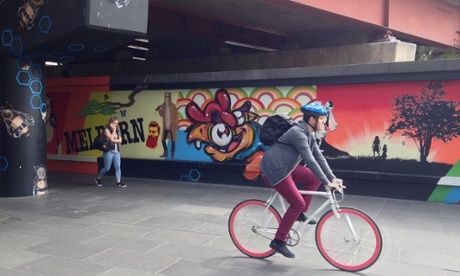
How to cycle to work, by Alan Evans
“I’d like to start cycling to work” is a popular refrain at new year, but all too often people are put off by barriers which are either imagined or easily surmountable.
In most places, there’s no reason it should be a difficult thing to do. Dig your old bike out of the garage, or pick up a cheap second-hand one on eBay, Gumtree, Craigslist or a similar site. If it’s in bad shape, take it to a bike shop for a service.
Despite some cyclists’ fondness for lycra, there’s no need to wear specialist clothes while on the bike unless you live in a climate so hot that you sweat when you cycle. If it’s raining, just wear waterproofs. If it’s sunny, wear a T-shirt.
Any small initial outlay involved – the cost of lights, for example, or a tune-up – will be offset very quickly by the savings made from not paying for public transport or petrol. One year I calculated that I’d saved well over $2,000 by cycling everywhere.
You no longer have to wait for a bus to arrive or get stuck in a traffic jam – your journey starts when you choose, takes roughly the same amount of time every day, and is not beholden to the reliability of public transport. For most journeys in cities, you’ll probably also be faster on the bike.
You’ll feel noticeably fitter within days, and the long-term health benefits associated with frequent cycling are significant – you could be adding years to your life.
There are very few things that are free, fun and good for you – and even fewer that you won’t be arrested for doing in public. Can you really afford not to cycle to work?
How to run a marathon, by Ellen Connolly
It will ruin your social life, your toe nails will turn black and fall off, and you’ll experience first-hand what it means “to hit the wall”.
On the upside, your body will be flooded with endorphins (the “runner’s high”), you will become the fittest you’ve ever been, and accomplish something less than 1% of the population has.
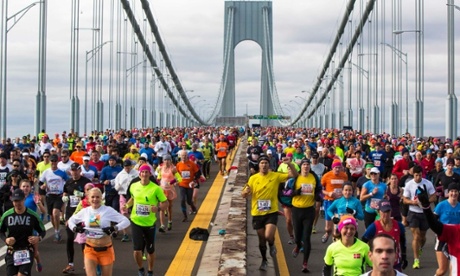
That was my experience when I ran the New York marathon in 2013 and the Gold Coast equivalent in 2010.
So how did I do it? I joined a 16-week group marathon program for expert guidance and motivation.
In Sydney, Can Too Australia provided running coaches and in return I raised $2,000 for cancer research.
In New York I joined a reasonably priced training program with a local running store. It involved midweek training sessions which focused on speed work and pacing. Every Saturday we had a long run, increasing the mileage from week to week.
My coaches also provided advice on nutrition, stretching and the all-important rest days – essential to ensure I remained injury free. (Many entrants never make it to the start line due to training injuries and note that it’s recommended to run a few half marathons first before jumping headlong into a full marathon.)
Until the marathon, I had never embarked on such an intense training regime, and I certainly underestimated how physically demanding it would be.
During the first few weeks of training, my body ached and I was constantly tired. Socially, I became very boring. Friday nights turned into quiet alcohol-free affairs in preparation for long training runs on Saturday. Seven weeks before the big day, I would find myself so tired from the 20-30km Saturday morning runs that I was incapable of doing much other than lying on a sofa and popping painkillers.
I also learned that a marathon is a mental battle. Veteran racers describe race day as 80% mental and 20% physical – and in many ways, they’re right.
I hit the wall at the 30km mark, a term used to describe the moment you feel you cannot take another step and you just want to throw in the towel. At this point, I reminded myself how I had overcome fatigue during long training runs.
When the self-talk didn’t work, I glanced around to see a guy with one leg striding beside me, and I knew then if he had the courage to tackle this race, I could too.
After four hours and 18 minutes, I finally crossed the finish line. Victory never tasted so sweet – and nor did the champagne afterwards.
How to drink less coffee, by Saman Shad
I’m not sure if you’ve heard, but coffee is so passe. Yup, so put down your mugs and move on.
But what if your addiction is well and truly advanced? It perks you up, it gives you a warm buzz, it helps you focus and it’s often at the core of many social gatherings. These are all good things, right?
Look, as one addict to another, I understand. But recently I had an epiphany – those headaches, nausea and shakes I was getting weren’t a sign of some neurological disease but my body reacting to too much caffeine. I made the decision to drink less caffeine and it’s made a big difference. I still drink coffee but I limit myself to one cup and I often get it made weak – yes, this has elicited some looks of disgust from friends and baristas alike.

While coffee in small doses is fine, Australians consume an average of 250mg of caffeine a day. This is the equivalent of four weak cups of coffee and many drink lots more than that. Too much coffee can lead to insomnia, fatigue, anxiety and other not-so-pleasant things.
So how do you drink less coffee? Like me you can make the switch to weak coffee or discover tea. The varieties of tea you can get are endless – black, green, white, herbal, fruit and many combinations of such. Giving up my coffee habit means I have developed a bit of a tea-buying habit.
You can also swap one or two of your daily coffees for decaf. This delivers the coffee taste without the caffeine hit. Or you can go cold turkey and not drink any coffee – but I wouldn’t recommend that. Going cold turkey means dealing with side effects like headaches and acting like a grouch.
Drinking less coffee does mean, though, that if you do want to give it up altogether down the line, it’s much easier to do. There are, after all, many benefits to not drinking coffee at all.
For me, however, I’m not ready to completely end my relationship with coffee. To be honest, I may never be able to.