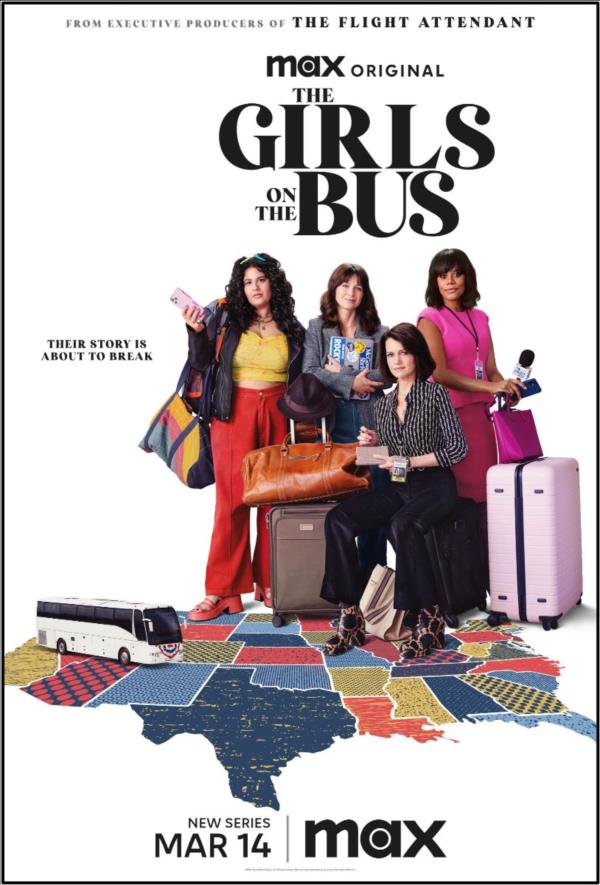
The Max series 'The Girls on the Bus' attempts to blend workplace comedy with the high-stakes world of presidential campaigns, creating a show that struggles to find its footing. Co-created by a veteran showrunner and a journalist, the series is loosely based on a memoir about covering a political campaign, but fails to offer any real insight into politics or media.
The show follows protagonist Sadie McCarthy, a correspondent for a fictional newspaper, as she navigates the competitive world of campaign reporting. Alongside her colleagues, including a Pulitzer-winning elder stateswoman and a social media star, Sadie covers the Democratic nomination race, with candidates that mirror real-life figures.
Despite its attempts at humor and drama, 'The Girls on the Bus' falls short in both its political and interpersonal storylines. The show struggles to balance its sunny disposition with the serious backdrop of presidential campaigns, resulting in a disjointed narrative that fails to engage viewers.
While the series touches on contemporary political issues, it creates a fictional timeline that ignores key events like the Women's March and January 6th. The characters' interactions and personal storylines also lack depth, relying on clichés and stereotypes rather than meaningful development.
In the end, 'The Girls on the Bus' misses the mark as a political comedy, failing to deliver the sharp wit and incisive commentary needed to succeed in its genre. Viewers looking for a lighthearted escape may find some enjoyment in the show's escapades, but those seeking substance and relevance may be left wanting.
The first two episodes of 'The Girls on the Bus' are now available for streaming on Max, with new episodes airing weekly on Thursdays.