Fish living in the depths of the ocean have developed remarkable vision that means they can navigate their dimly-lit underworld, new research has revealed.
Living up to 1.5km below the surface in the least explored habitat on Earth, these creatures see colour in what appears to be near-total darkness.
This is because they have special genes which mean they can detect bioluminescent signals from light-emitting organs.
"Down there it's very monochromatic, and most fish just perceive blue light. But we have discovered some spectacular exceptions," said deep-sea visual ecology specialist Dr Fanny de Busserolles from the University of Queensland, one of an international team of scientists that took part in the study, published in the journal Science.
Led by Professor Walter Salzburger from the University of Basel they recently analysed more than 100 fish genomes.
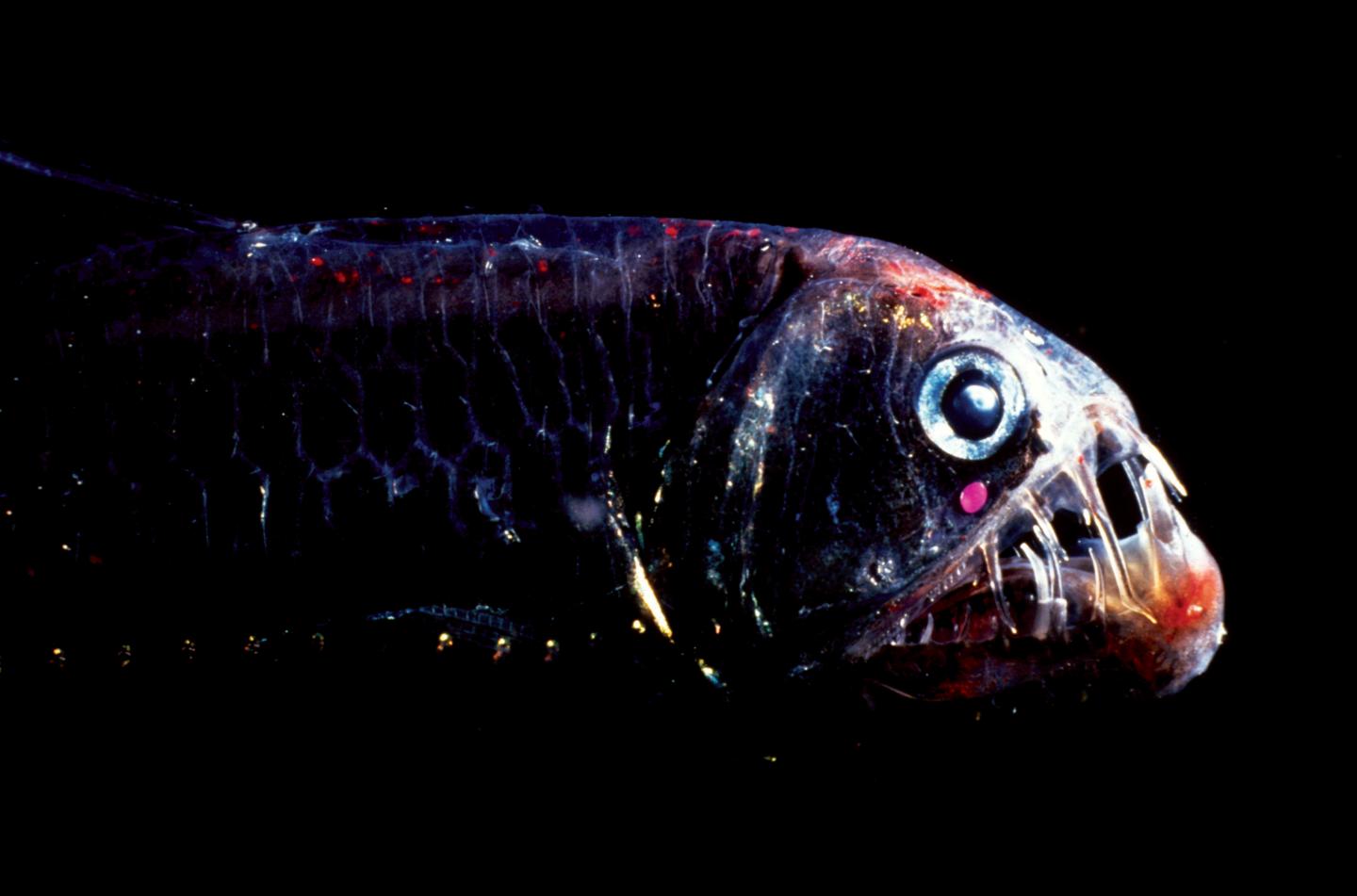
They found that fish deep-sea fish had expanded a certain gene called rhodopsin which gave them this remarkable vision.
Photopigments in the cone cells found in the retina give vertebrates colour vision. Each photopigment reacts to a certain wavelength of light.
In humans, for example, these wavelengths are red, green and blue.
However colour vision is only possible during daylight.
When it’s dark vertebrates detect light particles with rod cells, which only contain a single type of the photopigment rhodopsin. This is why nearly all vertebrates are colour-blind at night.
Zoologists found certain deep-sea fish had an increased number of rhodopsin genes. They found this by doing functional experiments on rhodopsin proteins in the lab.
The silver spinyfin fish had the best vision by far with more than 38 copies of the rhodopsin gene which means they probably see many colours.
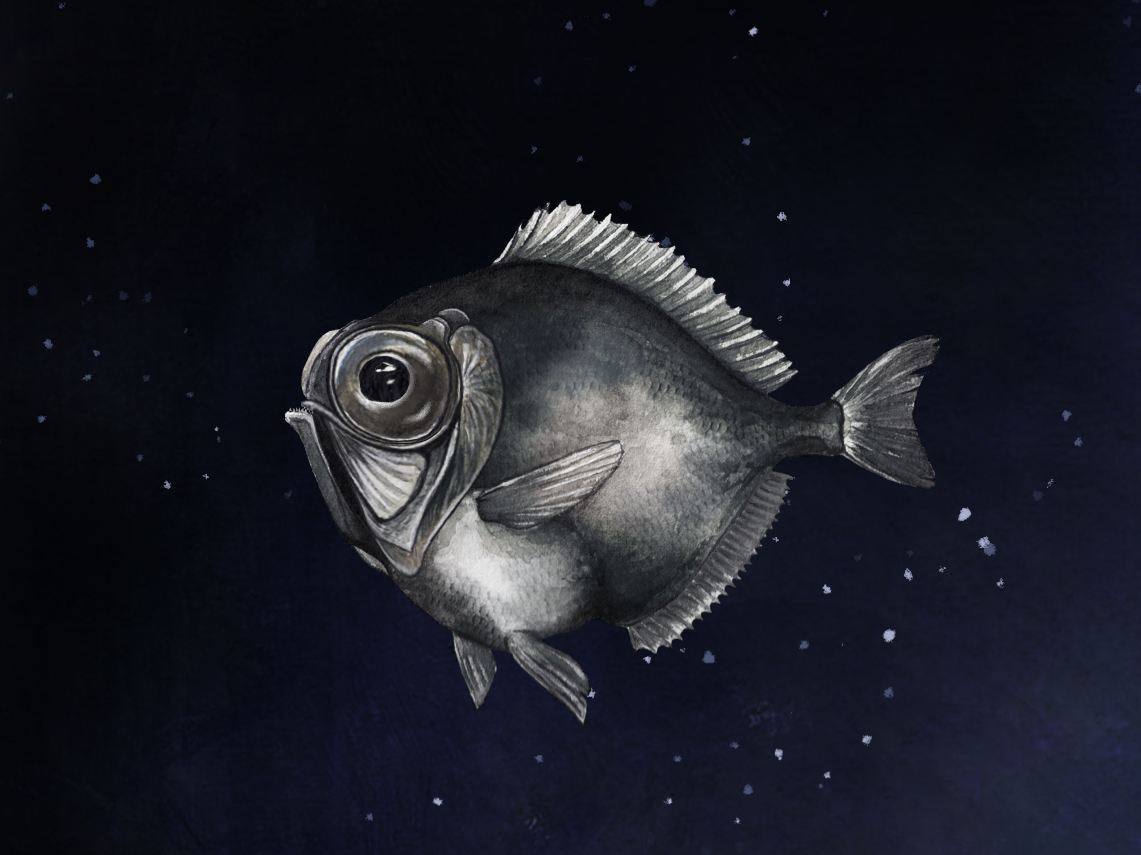
"It appears that deep-sea fish have developed this multiple rhodopsin-based vision several times independently of each other," said Prof Salzburger.
These genes mean they can see the wavelength range of light "produced" by bioluminescence. This ability could have evolved as a survival weapon.
Dr Fabio Cortesi from the University of Queensland added: "There are many colours of bioluminescence - light produced and emitted by living organisms - down there, and it mainly appears in flashes coming from other fish. If you want to survive down there you need to quickly decide if you are seeing a potential predator or potential prey.”