MUMBAI/HYDERABAD: Taliban seizing control in Afghanistan presents a fresh challenge to Indian companies inking new business deals in the strife-torn nation.
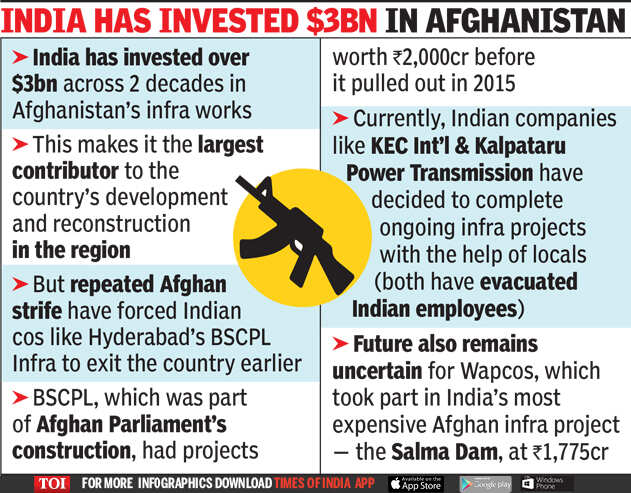
Though companies such as KEC International and Kalpataru Power Transmission will complete ongoing infrastructure projects in Afghanistan through locals, they face business uncertainty following the changed situation on the ground. Both companies have recalled their Indian employees.
While the existing projects are financed by international agencies and are insured, Indian companies are wary of business prospects under the Taliban regime.
“We are following the emerging situation in Afghanistan. We will wait and watch and then decide. It’s very early to comment on new contracts,” said KEC International chief executive Vimal Kejriwal.
Concurring with Kejriwal, a Kalpataru Power Transmission spokesperson said, “The overall situation in the region is still evolving and it would be premature to speculate on its long-term outcomes.”
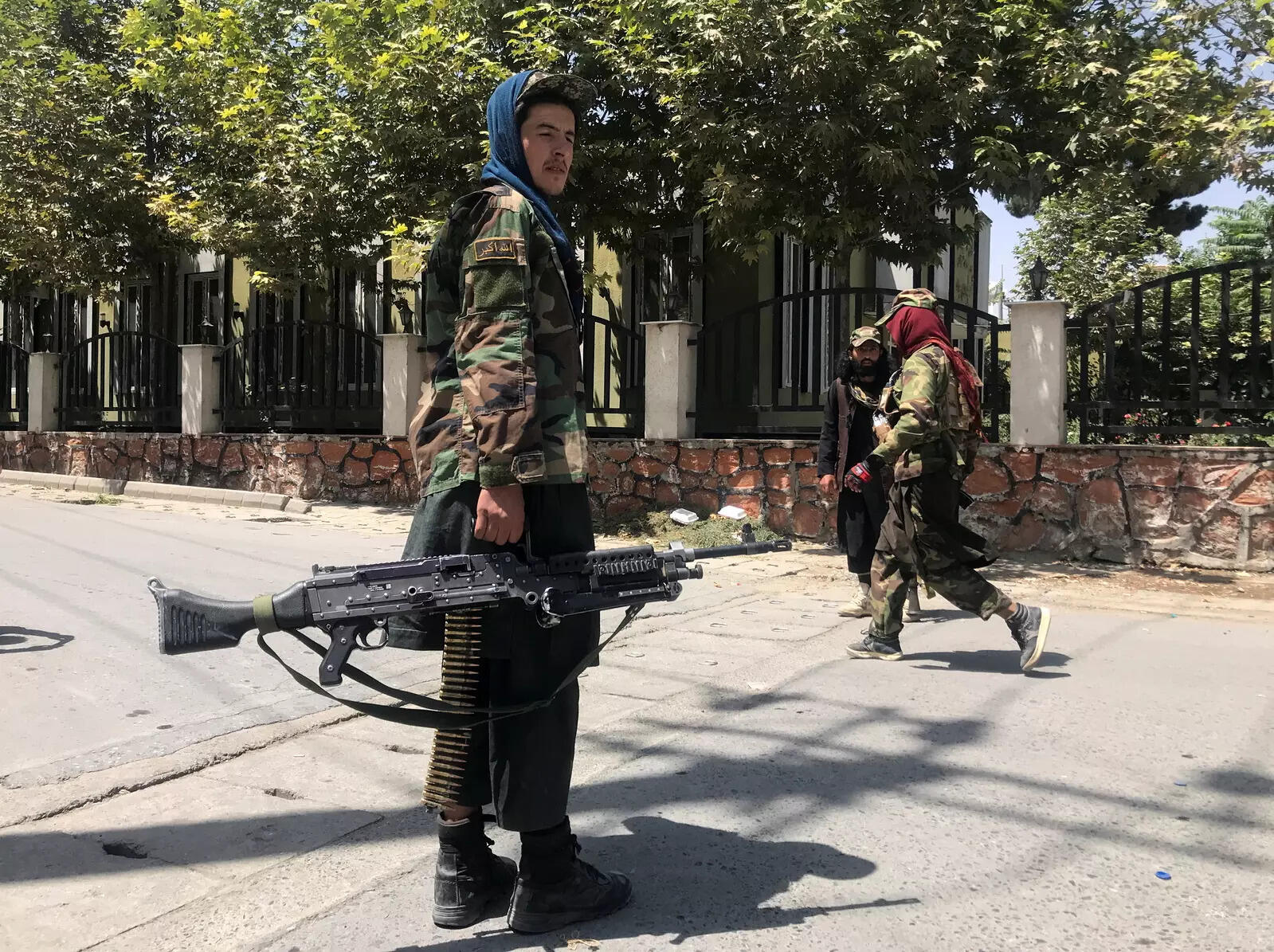
Taliban took control in Afghanistan after two decades following the drawdown of the US military. In its first presser on Tuesday, the fundamentalist Islamic force said Afghanistan’s interactions with foreign countries will continue and assured security to international organisations.
However, Wapcos, a public sector agency offering services in water, power and infrastructure development, isn’t certain if it will bid for new projects in Afghanistan, executive director A N N Prasad told a financial daily.
India has been the largest regional contributor to Afghanistan’s development and reconstruction projects, investing more than $3 billion in the Islamic nation, in the last two decades. The period also saw the entry and exit of some Indian companies such as Tata Motors and Hyderabad-based BSCPL Infrastructure.
The challenging situation on the ground forced BSCPL to exit Afghanistan after more than a decade in 2015, said MD Bollineni Seenaiah. “We did not want to take any further risk because of our employees. Hence, decided against participating in new projects,” said Seenaiah.