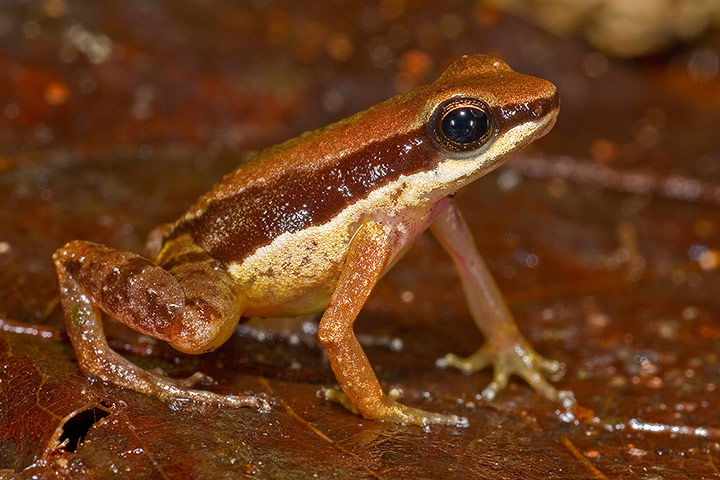
A new endangered species of poison dart frog was discovered during a 2013 study to determine the impact of tourism on biodiversity in a tract of rainforest known as 'the Lost World' in Guyana. The frog was discovered near Turu Falls, a waterfall at the foot of the Iwokrama Mountains. The thumbnail-sized frog has been given the Latin name Allobates amissibilis meaning 'that may be lost', because it thrives in an area that could soon be opened up to tourism Photograph: Philippe Kok/WWF
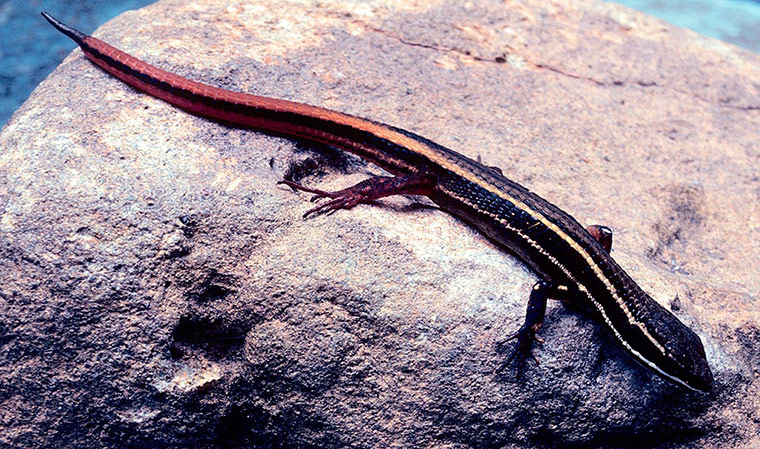
This lizard was described in 2012 from the hatchlings of eggs collected by scientists in the Colombian Amazon. The species is endemic to the area in which it was found and is known only from this specific location in the region. The species’ name refers to the Latin word hypnum, meaning 'old lichen', in reference to the luxuriant moss growth found that characterised the lizard’s habitat and egg deposition sites Photograph: Tiffany M Doan/WWF

Among the new plant species are a large number of new orchid species, including this splendid pink species officially described by scientists in 2010, from Roraima in the Brazilian Amazon Photograph: Andre Cardoso/WWF
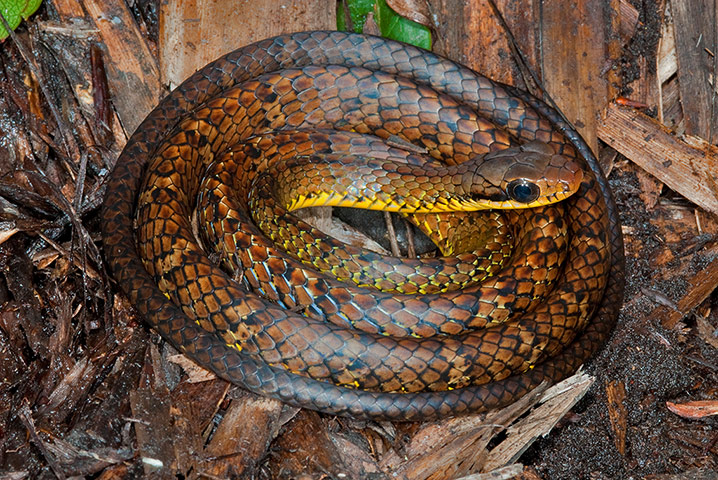
In 2010, a new species of snake was described at Maringma Tepui, a flat-topped, sandstone mountain in the Pakaraima Mountains on the Guyana-Brazil border. The snake was found at 1,500m of elevation. The new species is named after Arthur Conan Doyle's fictional character Professor George Edward Challenger in the 1912 novel the The Lost World Photograph: Philippe Kok/WWF
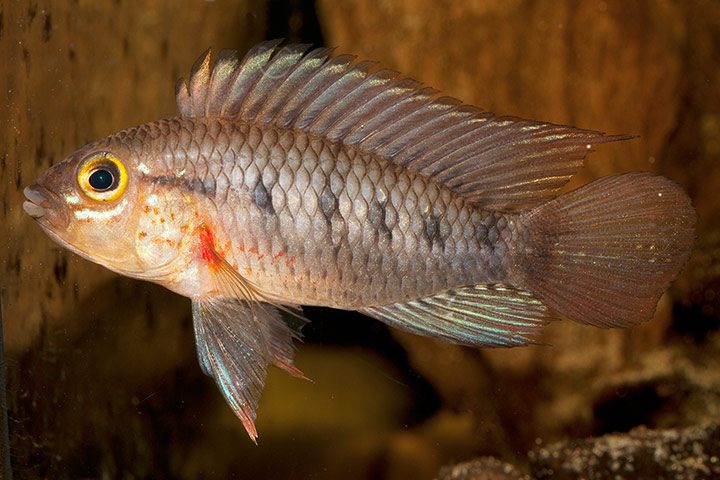
A new species of Apistogramma was found in a small forest lake in the wider catchment of the Rio Itaya, about 80km south of Iquitos, Loreto. Most Apistogramma species are adapted to extreme low oxygen levels in their environment - specimens have been found in water with temperatures of 33C and an oxygen content of 0.7 mg/l, which is extraordinary according to scientists. Adaption to extremely low oxygen levels may be the successful innovative strategy of these small fish to escape predation pressure of larger fish in deeper water with higher oxygen levels Photograph: Dr. Uwe Roemer /WWF
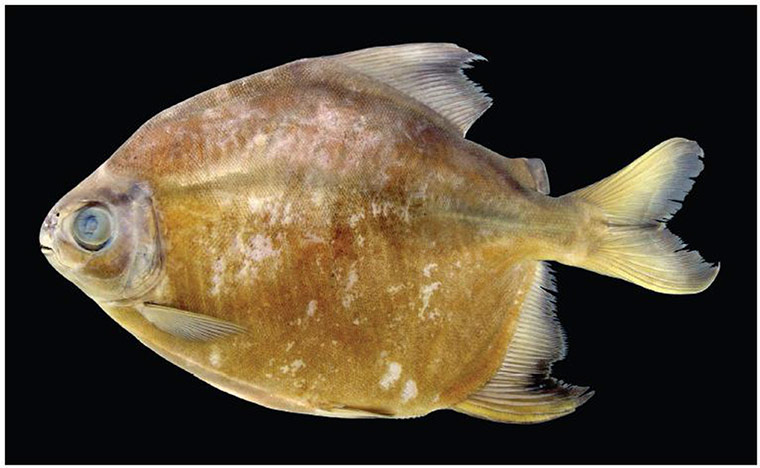
The strictly herbivorous fish inhabits rocky rapids where its main source of food, Podostemaceae aquatic herbs, is found. However, dam projects and mining activity are threatening the health and flow of its river habitat Photograph: Tommaso Giarrizzo/WWF
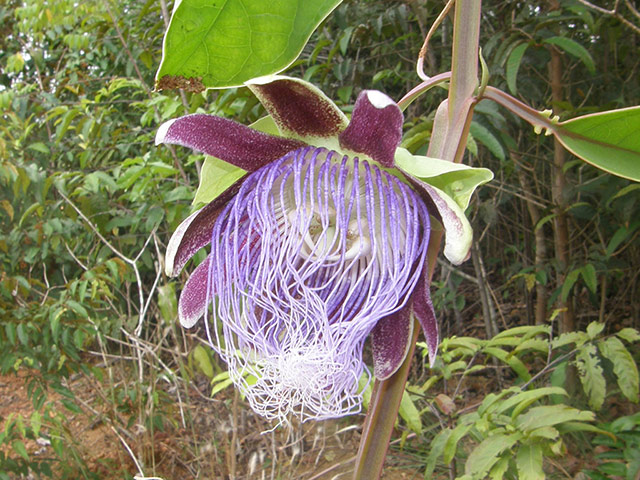
A new species of passion flower was discovered in the rainforests of the Brazilian state of Para in 2013. Together with vivid purple petals, the new species displays fantastic and quirky 'noodles' or 'spaghetti' (corona filaments) that burst out of the flower's centre. The new species was collected in a six-year-old reforested area of Saracá-Taquera national forest, Pará state, in north-eastern Brazilian Amazon Photograph: João Batista Fernandes da Silva/WWF
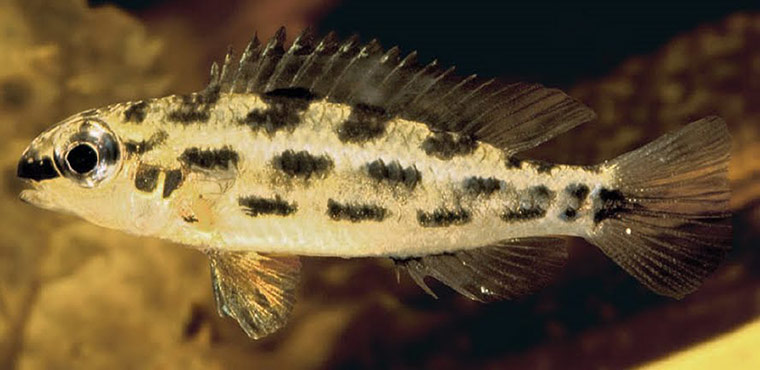
This charismatic species is endemic to the Tapajos River system in the Brazilian Amazon. The species is named after Frank Martin Warzel, a skilled German aquarist who collected the type specimens and who first imported the species from the Rio Tapajos to Germany, as well as observed its behaviour, including reproduction in the field in Brazil and Colombia Photograph: Frank Warzel/WWF
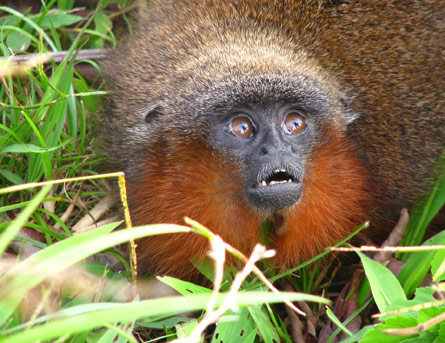
The new species, named the Caqueta titi monkey or Callicebus caquetensis, is one of about 20 species of titi monkeys, which all live in the Amazon basin. The population size has been estimated at less than 250 individuals, and its habitat has been fragmented by clearing for agricultural land. It is classified as critically endangered by the IUCN. According to scientists, titi monkeys are among the few species of primates that are monogamous. 'All of the babies purr like cats too,' said Thomas Defler, who was part of the team that discovered the species. 'When they feel very content they purr towards each other, and the ones we raised would purr to us' Photograph: Thomas Defler/WWF

This extraordinary-looking species of lizard was discovered in the part of the Amazon that extends into Guyana. Despite its extraordinary colouring, this lizard is very shy and has a tendency to avoid being seen by humans
• The report was produced for I Love Amazon Week, a WWF and Sky initiative asking people to help keep rainforests standing by pledging to be forest-friendly Photograph: Philippe Kok/WWF