PITTSBURGH _ You know the security checkpoint drill: Remove your laptop from your carry-on and place it in a plastic bin for scanning.
At Pittsburgh International Airport, that ritual might be a thing of the past _ or close to it.
The U.S. Transportation Security Administration has installed a new state-of-the-art CT scanner at the main checkpoint _ similar to those used in hospitals _ that gives officers three-dimensional views of the contents in carry-ons.
One big benefit of the new technology is that travelers no longer will have to remove laptops or other electronics from their carry-on bags while they are being screened.
And since the 3D technology enables officers to get a better view of what's in the carry-on, it should lead to fewer bag searches _ meaning one less handling during the COVID-19 pandemic.
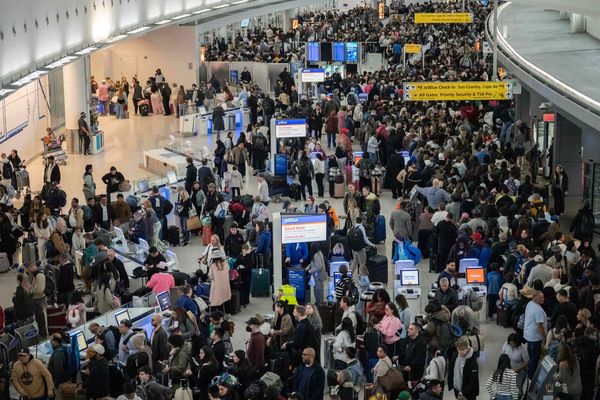
TSA officers started using the new scanner at the checkpoint Sunday. Given the low traffic volume these days because of the pandemic, it should be used for the majority of travelers who are flying, said Lisa Farbstein, TSA spokeswoman.
The new scanner is one of two that will be installed at Pittsburgh International. The other will be used at the alternative checkpoint on the ticketing level of the landside building once the airport makes some improvements to accommodate it, Farbstein said.
With the new scanner, TSA officers are able to manipulate and rotate the 3D image to get a better view of the contents inside a carry-on.
The system, similar to that used for checked bags to screen for explosives, "improves the capability for TSA officers to determine whether an item inside a carry-on bag is a possible threat," the agency stated. Bags that require further inspection still will be handled manually by officers.
With the new scanners, Farbstein said, the checked-bag system technology has been "right-sized" for use at security checkpoints.
The TSA awarded a five-year $96.8 million contract to Maryland-based Smiths Detection Inc. for 300 of the scanners in March 2019. The agency began experimenting with and testing out the scanners in 2017 at select airports before deciding to move ahead with the technology.