New satellite imagery suggests North Korea is building a new uranium enrichment plant at one of its nuclear sites, part of Kim Jong Un’s 2025 plan to “exponentially” bolster the country's nuclear arsenal.
The images, taken in October and November and analysed by the Washington-based monitoring group 38 North, indicate a “continuation of modernisation and expansion efforts throughout” the Yongbyon Nuclear Scientific Research Centre, experts said.
The facility is North Korea’s most important site for producing plutonium and enriched uranium – the two main materials used to make nuclear weapons.
The analysis of the pictures shows that Pyongyang is likely building a large, heavily secured compound northeast of the site’s radiochemical laboratory.
The structure – a two-storey building with a central hall measuring roughly 120m by 47m – closely resembles the design and footprint of Kangson, another suspected covert enrichment plant long believed to support the North’s nuclear weapons programme, according to a report by 38 North.
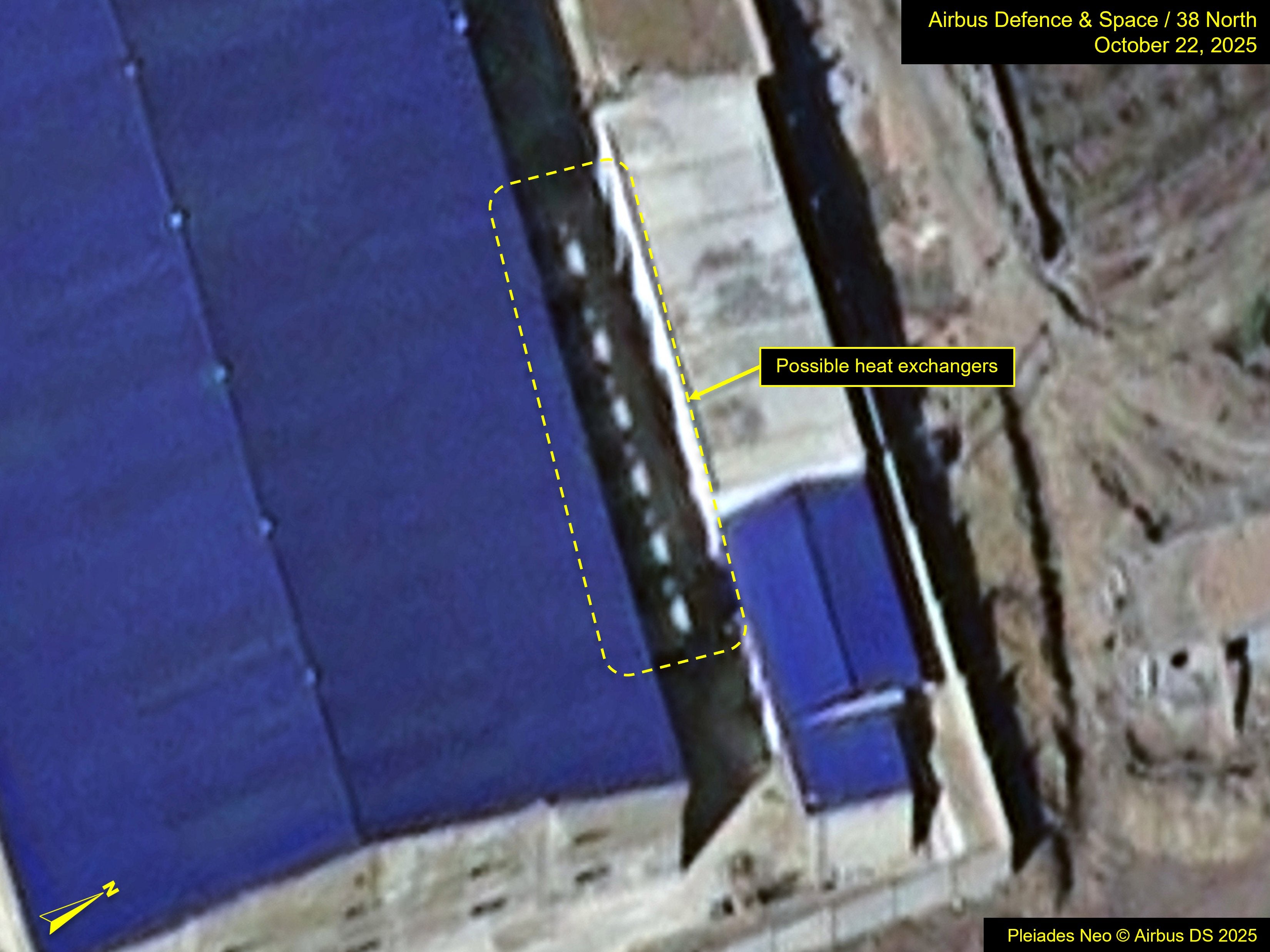
The new facility is growing “most active since the start of 2025”, with six possible heat exchangers recently appearing on the building’s southeast side. The exchangers are typically used to cool centrifuges and maintain the stable temperatures required for uranium enrichment.
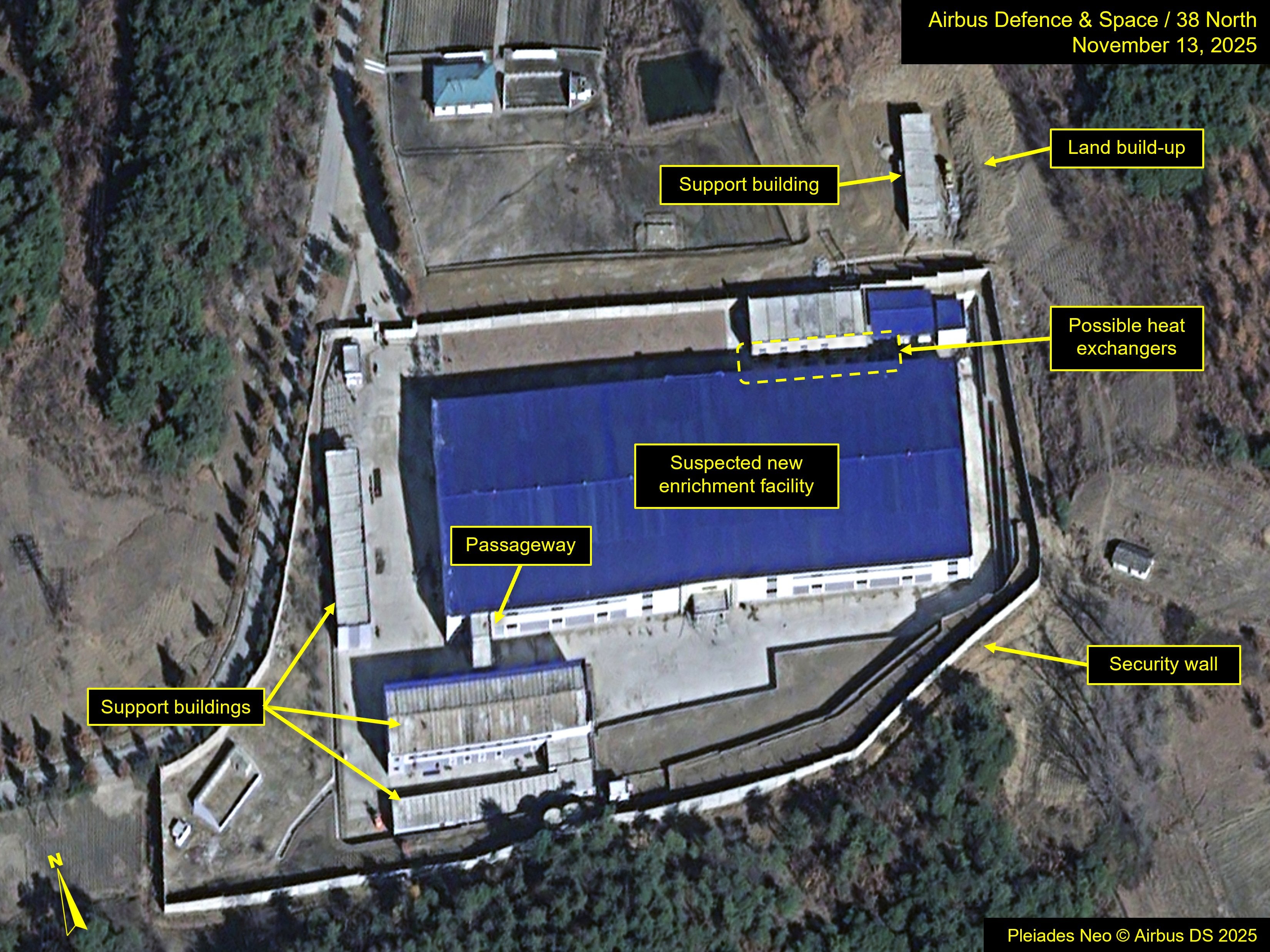
Analysts say the installation of these units suggests that interior work is well underway, even as support buildings and connecting corridors continue to take shape around the compound.
“Work to build up land surrounding a support building to the south of the suspected uranium enrichment site appears to be underway. The purpose of this building is unknown,” according to the analysis.
The new activity comes as Yongbyon – the heart of North Korea’s nuclear production infrastructure – undergoes a wider modernisation. The complex is the country’s only known producer of plutonium and a major source of enriched uranium.
The latest development at the facility is in line with Mr Kim’s instruction earlier this year to accelerate nuclear material production. During visits to weapons-related institutes in January, he described 2025 as a “crucial year” for “bolstering up the nuclear forces” and called for “overfulfilling” plans for weapons-grade output.
“These improvements all serve to help fulfil Kim’s call for exponential growth of its nuclear weapons arsenals,” according to the report.
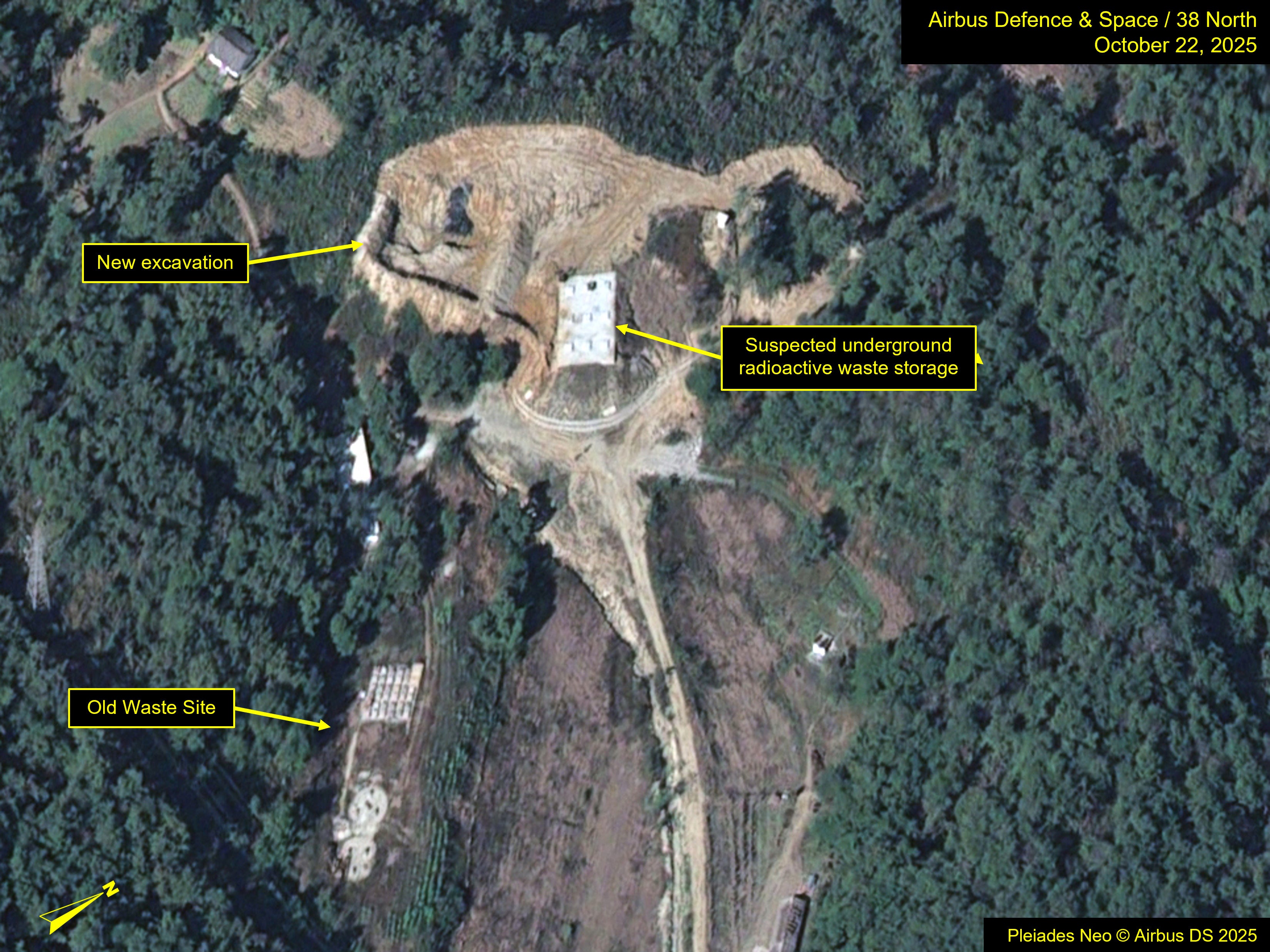
Satellite images also show a rapid expansion of radioactive-waste storage near Yongbyon’s Old Waste Site. A new semi-buried concrete facility with nine roof hatches appears covered with earth, and fresh excavation nearby suggests another vault, the report notes.
In September last year, North Korea provided a rare view into a secretive facility built to enrich uranium for nuclear bombs. The much-publicised images were believed to be from one of its two known plants in the towns of Yongbyon and Kangson, both near Pyongyang.
The images published by the state media showed Mr Kim talking with scientists and military officials in a hall tightly packed with gray centrifuge tubes about the height of his shoulders.
North Korea’s progress in its uranium enrichment programme is a major concern for rivals and neighbours. Highly enriched uranium is easier than plutonium to engineer into a weapon. And while plutonium facilities are large and produce detectable radiation, making them easier for satellites to detect, uranium centrifuges can be operated almost anywhere, including small factories, caves, underground tunnels, or other hard-to-reach places.
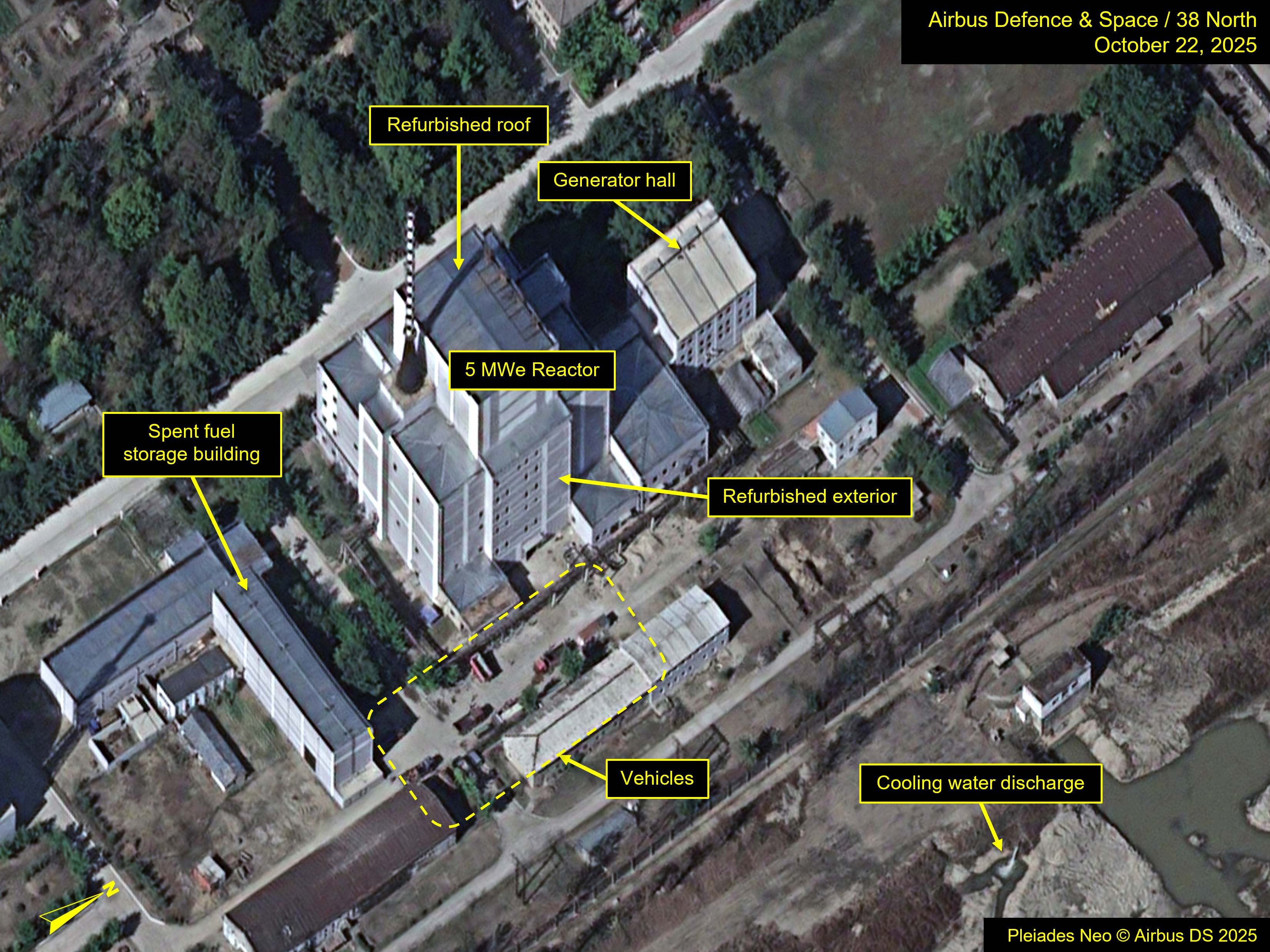
The images also show the key plutonium-producing 5MWe reactor operating consistently since late 2024 despite roof repairs and exterior refurbishment earlier this year.
The “5MWe” means it can generate 5 megawatts of electricity.
The new analysis came after South Korea warned against the risks of accidental clashes with North Korea, saying Seoul must accelerate efforts to resume dialogue with Pyongyang in order to reduce such risks.
South Korean president Lee Jae Myun said “we are in a very dangerous situation where accidental clashes could break out at any time” ahead of his trip to Turkey.
"We have no intention of pursuing unification by absorption," he said, adding that his country was committed to the Nuclear Non-Proliferation Treaty and would not seek its own nuclear arsenal.
Teams sending uncensored news into North Korea now face major crisis
Japanese government report expresses alarm at ‘new world order’ of three ally nations
‘Return’ to China not an option for Taiwan, premier says after Xi’s comments to Trump
K-pop singer’s social media post fuels diplomatic row between China and Japan
Leader of South Korea’s biggest Telegram sex abuse ring gets life sentence
South Korean rapist jailed for life over online blackmail ring that shocked country