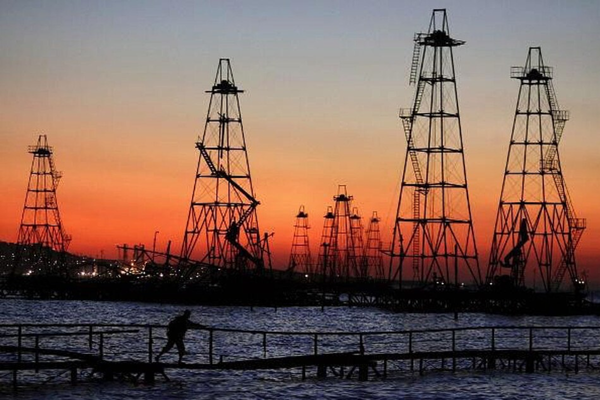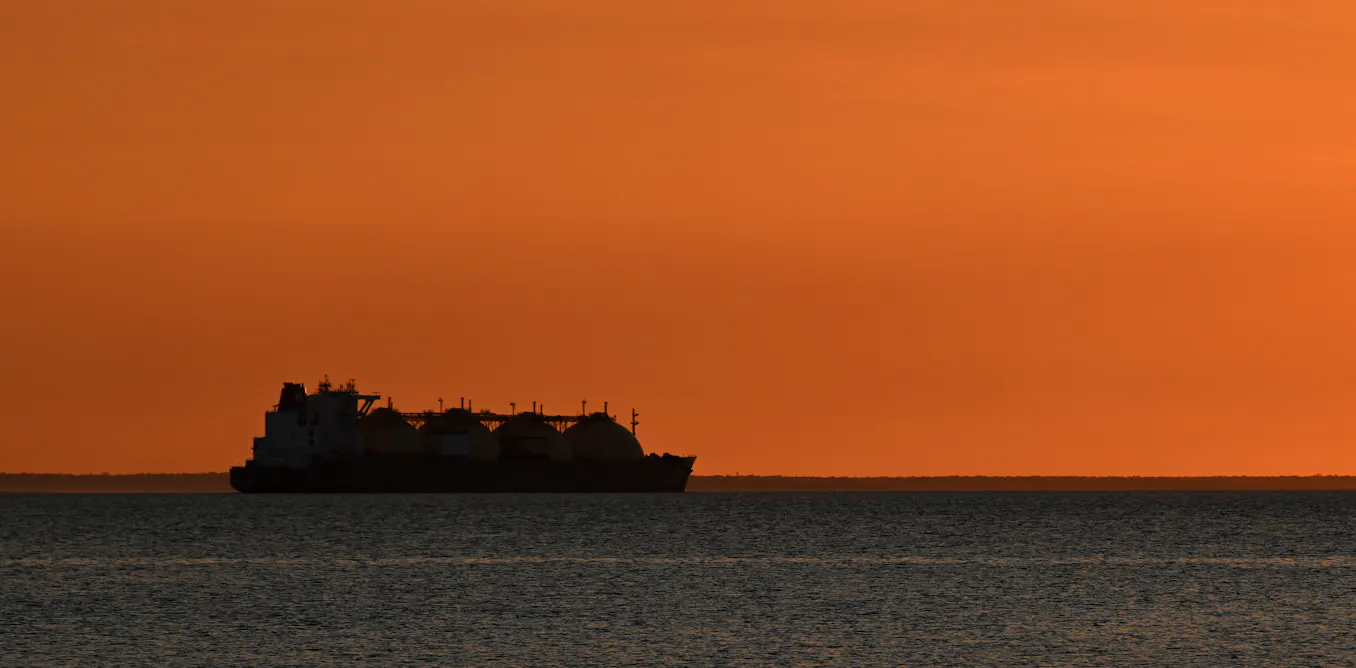
The closure of the Strait of Hormuz in the US-Iran war has brought home how vital maritime trading routes are to a country like Australia, which conducts 99% of its global trade by sea.
Protecting Australia’s supply of critical goods – and exports of minerals, liquefied natural gas and agricultural products – requires maintaining maritime security across vast distances and countering threats far from Australia’s coasts.
This task is becoming increasingly challenging as China’s naval presence expands in the Indian Ocean.
Recently, a team of researchers from Stanford University, La Trobe University and Australian National University conducted a series of simulations to test the vulnerability of Australia’s economic and strategic lifelines.
We conducted a two-day war game involving nine former senior military and defence officials from Australia, India, the United States and Japan. The simulations tested the abilities of the Australian, US and Indian militaries to respond to two possible crisis scenarios involving China.
Our game demonstrated that maritime trading routes required protection across the full length of the Indian Ocean, not just in waters close to Australia.
For example, under certain conditions, we found even a single successful attack on shipping in the central Indian Ocean could severely disrupt trade across the entire region. It could trigger prohibitive war-risk premiums from shipping insurers, costly route diversions, or the withdrawal of commercial traffic from the Indian Ocean altogether.
Why the Indian Ocean matters
These findings come at a time when the commitment of the Trump administration to the Indo-Pacific region is being questioned.
The US Defence Department recently announced, for example, the Indo-Pacific Command will revert to its former name, US Pacific Command.
The command’s area of responsibility – from the US West Coast to India’s western border – will remain unchanged. But the move has prompted speculation about what it could mean for the US approach to the Indian Ocean.
Australia has the world’s largest Indian Ocean coastline. Despite this geographic reality, Canberra’s focus rarely extends beyond the part of the ocean closest to Australian territory.
Both the 2024 National Defence Strategy and the 2026 National Defence Strategy identify this part of the northeast Indian Ocean as Australia’s primary area of military interest, alongside maritime Southeast Asia and the Pacific.
In some ways, this makes sense. As a middle power, defence planning must be aligned with available military capabilities.
But China’s underwater capabilities – both manned and unmanned – pose a growing challenge to Australia’s security interests across the entire Indian Ocean.
In peacetime, China’s submarine presence in the ocean is constrained by the vast distances from its mainland bases. However, access to ports in partner countries such as Djibouti or Pakistan could potentially allow Chinese submarines to spend longer periods of time in the region.
Even a relatively small number of Chinese submarines in the Indian Ocean could force Australia and its partners to devote substantial resources to anti-submarine warfare and maritime surveillance.
Other actors could further boost China’s capacity to disrupt Australian interests in the ocean. These include Iran and the Houthi rebels in Yemen, who are now blockading Saudi ports in the Red Sea.
These actors would not need to coordinate closely with China. Nor would they even need to pursue identical objectives. Simply creating disruptions at key points across the Indian Ocean could make it harder for Australia and its partner navies to maintain sea control and protect commercial shipping.
Australia needs its partners
Australia’s defence strategy in the Indian Ocean relies on its partnerships with the United States and, increasingly, India.
Yet, the Indian Ocean is not the principal strategic focus for either country. Washington’s priorities remain concentrated on the Middle East, the Western Hemisphere and the Western Pacific. India’s focus is divided between the Indian Ocean and territorial threats on its land borders, including the one with China.
In our war games, for example, the US Navy chose to relocate its main battle force from the western to the eastern Indian Ocean. When it did, the Australian Navy had no real option but to follow. It lacked the capacity to sustain operations on its own far from the Australian coast.
The exercises revealed an uncomfortable degree of Australian dependence on the US. But at the same time, the simulations showed that military cooperation improves operational effectiveness and brings strategic dividends.
For Beijing, this cooperation is concerning because it could eventually outweigh China’s own capabilities.
Protecting sea lanes and tracking underwater threats in the ocean will require Australia’s partner countries to seamlessly share data and intelligence during a crisis. And building these lines of communication now will be far easier than doing it when problems emerge.
This article is part of a research project, “Enhancing Military Cooperation on the Indian Ocean”. Also contributing to the research: Peter Dean, a professor of strategic studies at the Australian National University, and Ambika Vishwanath and Hannah Bourke at the Centre for Global Security at La Trobe University.
This article was originally published on The Conversation. Read the original article.