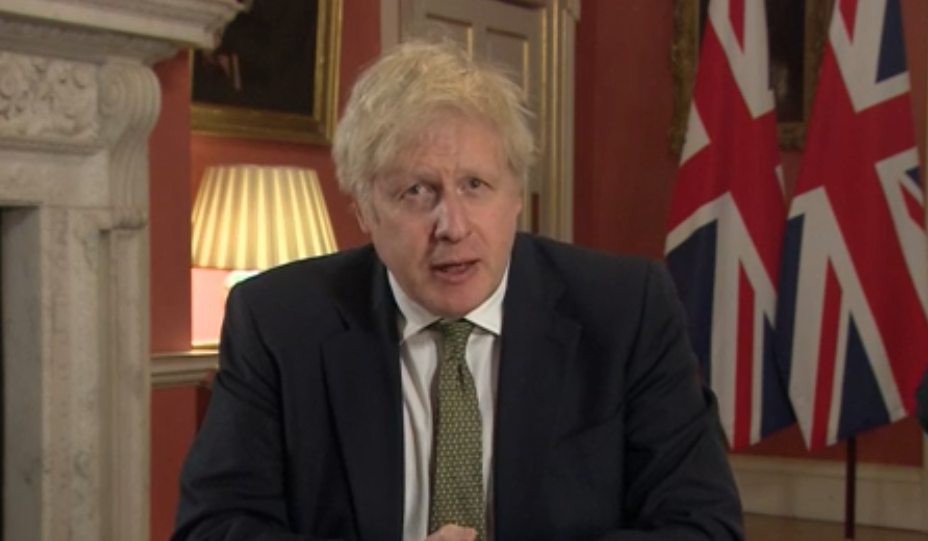
Boris Johnson has announced a new national lockdown with emergency measures to control the rapid spread of coronavirus, following intense pressure from ministers and unions to do so.
During a televised address on Monday, the prime minister announced tougher restrictions that came into force in the early hours of Wednesday.
The UK saw a record 60,916 more lab-confirmed coronavirus infections, with a further 830 deaths on Tuesday.
The new lockdown will remain in place until at least the middle of February, with ministers keeping the measures under constant review, Mr Johnson said.
The new national lockdown goes further than the previous tier 4 restrictions, which covered over three-quarters of England’s population, and closer resembles the lockdown imposed last March than the second one in November.
Non-essential shops will be closed, household mixing banned and people will only be allowed leave their homes for a limited number of reasons, such as work, childcare and medical reasons – the same as tier 4 rules. But, crucially, schools will also be closed, and exercise limited to once a day.
People should only leave home to go to work if it is “impossible” for them to work from home, such as workers in the construction industry. They should only shop for necessities and outdoor exercise – which can include one other person – should ideally be limited to once a day.
This is stricter than the tier 4 rules, which allowed people to do unlimited amounts of exercise outdoors. Outdoor sports venues such as tennis courts and golf courses will have to close.
After teaching unions piled pressure on the government to keep schools closed due to the “serious risk” of staff falling ill while the rate of infection was so high, the government has announced that all primary schools, secondary schools and colleges in England must close and switch to remote learning except for vulnerable children and children of key workers.
Early years settings such as nurseries and childminders can remain open, and existing childcare bubbles will be allowed to stay in place.
As for university students, they will not be allowed to return to campus and will be expected to study remotely from their current residence. In-person university teaching will only take place for a small number of critical courses.
Places of worship can remain open but must adhere to social distancing rules.
Restaurants – most of which had to stay closed for dining for weeks under tiers 3 and 4 – will see a new rule put in place that bans them from offering takeaway or click and collect of alcoholic drinks. They can continue offering food delivery or takeaway.
Weddings and civil ceremonies can still take place, but only in “exceptional circumstances” and only six people will be allowed to attend. Funerals can still have a maximum of 30 guests, but wakes and other ceremonial events will be restricted to six people.