Full-size SUV has been redesigned with even higher levels of comfort and new 48V mild hybrid tech.
That’s a swift response!
It’s not that Mercedes-Benz never had a full-size SUV. In fact, it has been selling one for over a decade already.
But the timing comes nicely for this third generation model called GLS (previously dubbed GL in the pre-facelift of the second generation) because it was only last month that BMW launched its first-ever X7.
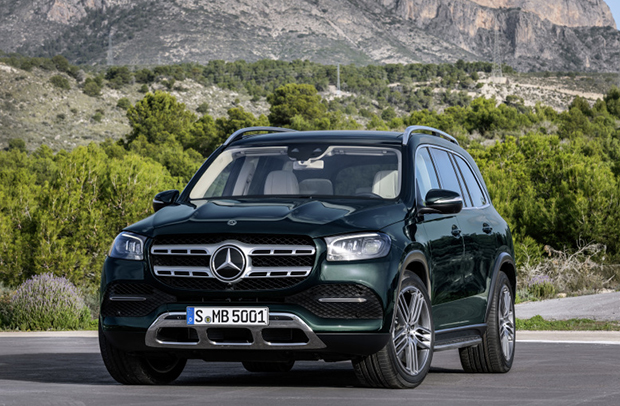
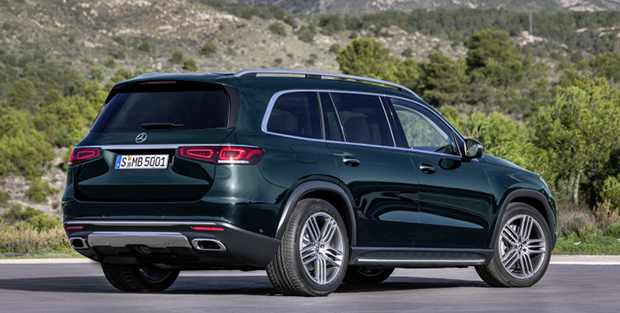
The GLS has been completely redesigned with a longer and wider body, as well as sitting on a platform shared with the smaller GLE.
Measuring more than 5m in length and over 3m between the front and rear axles, the GLS remains a spacious three-row SUV to stay competitive against the similarly sized X7.
Although the side profile looks a bit like before, the front end is similarly penned as in the GLE.
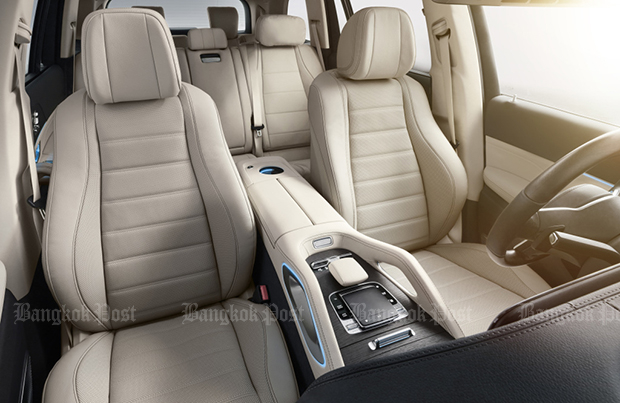
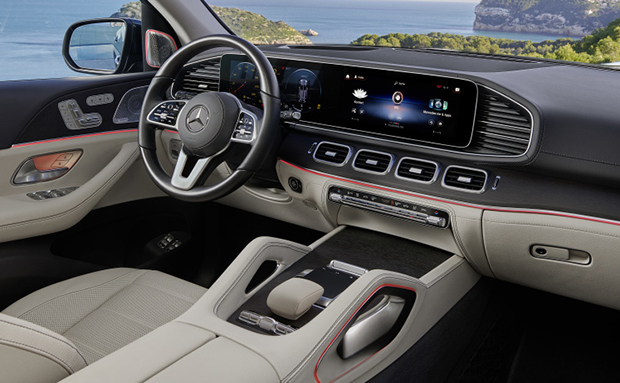
The interior has been restyled to accommodate the brand’s digital screens and MBUX voice control system. Some convenience items include easy-folding seats and five-zone climate control (the X7 has four).
Like before, the GLS is said to offer high levels of comfort and refinement on the move thanks to some chassis tricks like air suspension and active roll system.
Is there also a plug-in hybrid version?
At this stage, the GLS comes with only petrol and diesel engines to choose from, all mated to nine-speed automatic and 4Matic all-wheel drive.
For the sake of lower CO2 emissions, the petrol derivatives come with 48V mild hybrid tech that can additionally provide short bursts of power.
While the GLS580 receives 489hp V8, the GLS450 sees 367hp inline-six. The mild hybrid system in both models provide an additional 22hp of power.
Diesels include 330hp GLS400d and 286hp GLS350d, the latter capable of 12.7kpl on the average.
Will the GLS350d still be the choice for Thailand?
Like before, the GLS350d should be the variance chosen for Thailand for two good reasons, apart from having the lowest price point.
First, it’s the most economical engine of the four, if that really matters to buyers with some eight million baht to spare.
Second, diesels have strong mid-range punch and suit XL-sized SUVs like the GLS. Torque for the GLS350d is rated at 600Nm, just 100Nm shy of that in the GLS400d.
But since the CO2 outputs in both diesel engines are practically the same at some 200g/km, the Thai Mercedes office could just go for the more powerful GLS400d.
Although there’s 265hp 30d version for the X7 elsewhere, BMW Thailand only sells the 400hp M50d at 8.999 million baht as both fall in the same CO2 tax bracket.