Greater public participation is set to become a central feature of peace talks aimed at ending the long-running insurgency in the southern border provinces.
The government's chief negotiator is seeking to bring residents -- particularly young people -- into direct dialogue with representatives of the Barisan Revolusi Nasional (BRN), the main insurgent group engaged in the peace process.
He argues that those most affected by the conflict should have a greater voice in shaping its resolution, as local communities consistently identify safety and security, rather than political demands, as their most pressing concern.
New approach
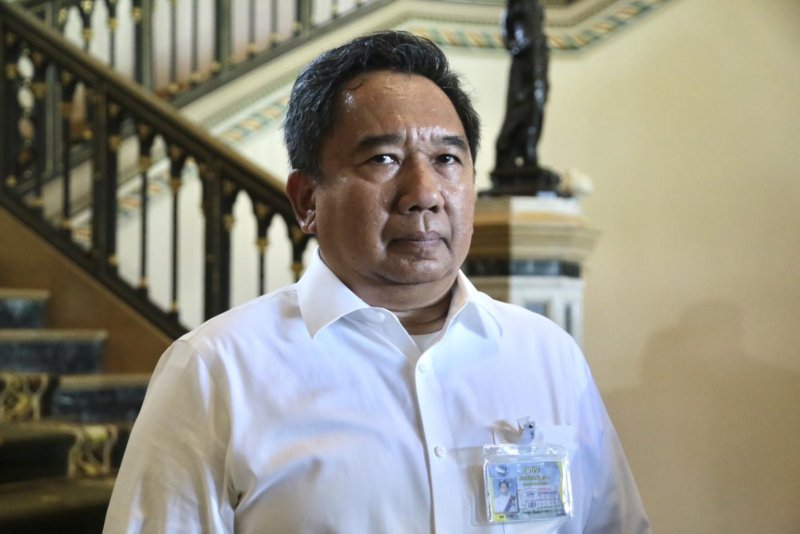
Thanut Suvarnananda, director of the National Intelligence Agency and the government's newly appointed chief negotiator for peace in the southern border provinces, told the Bangkok Post his appointment differs from those of his predecessors because he has been told to form his own negotiating team and design its working structure.
The greater flexibility, he said, allows him to determine both the composition of the team and its framework independently. His strategy centres on engagement with civil society, law enforcement agencies, intelligence services and local communities.
Based on consultations already held in the region, he has identified five key groups whose views will shape future negotiations: residents through non-governmental organisations (NGOs), state officials, academics and students, BRN representatives participating in talks in Malaysia, and, if possible, individuals who continue to engage in violence.
Mr Thanut said civil society groups already consulted include anti-violence organisations, youth groups, women's organisations and other active community networks.
Discussions with security officials, including police, military officers and civil servants, are intended to gather their assessments of the conflict and possible solutions, while academics specialising in security and the southern conflict have offered extensive experience and policy recommendations.
The final group comprises those still carrying out attacks, whom negotiators hope to better understand, including their organisational structure and links to the BRN's political representatives.
Local priorities
Consultations have shown residents overwhelmingly place personal safety and protection of property above all other issues, Mr Thanut said. This is closely followed by concerns over the economy, investment and employment, all of which continue to suffer because of persistent violence.
"The southern economy depends on only a few engines of growth, and the weakest are industry and agriculture," he said. "Investment will not come while attacks continue on a daily basis. Local people want the violence to stop because only then can the southern border provinces develop."
Residents also highlighted drug abuse, school dropouts, youth issues and family problems, which many see as closely connected to the prolonged unrest.
Some academics and local representatives have also argued for greater decentralisation, particularly allowing more locally collected tax revenue and public resources to remain in the region so communities can direct their own development.
Mr Thanut said such proposals should not automatically be interpreted as calls for separatism.
"People in the three southernmost border provinces [Pattani, Yala and Narathiwat] ask whether they could receive a larger share of the taxes collected from them," he said.
"These provinces [Yala and Narathiwat] have ranked among the poorest in the country for decades. They want resources that allow them to develop themselves because many centrally planned development projects have failed to benefit local communities."
Talks press on
Mr Thanut described last month's meeting in Malaysia, the first under the current government, as an introductory session rather than formal negotiations.
Normally, technical teams from both sides meet first to determine the agenda for the main round of talks and identify the issues to be addressed, he said.
Each side will then take the outcome back to its respective organisation for internal consideration before proceeding to formal negotiations between the two parties, with Malaysia serving as facilitator.
Although the process has occasionally lost momentum due to frequent changes of government in Thailand, he said it has never completely stopped. In contrast, insurgent groups have generally been able to pursue long-term strategies without interruption.
The framework has also evolved. Earlier negotiations involved several groups under the umbrella organisation MARA Patani, while current efforts focus more directly on BRN.
Addressing scepticism among some Thais regarding Malaysia's role as facilitator, Mr Thanut said the neighbouring country remains the principal mechanism for dialogue despite periodic changes in its own facilitators resulting from domestic political developments.
He said that while violent incidents continue, both their frequency and severity have declined. Around 503 incidents were recorded last year, substantially fewer than the hundreds or even thousands annually during the conflict's most intense years.
Targets have also changed. Most attacks now focus on armed personnel, including soldiers, police and volunteer defence forces, rather than civilians such as children, women and teachers.
"One reason is that those using violence have learned that attacking innocent civilians damages their standing both in the peace process and internationally," he said.
Building trust
Traditional peace talks have focused on ending violence, public consultation and political solutions.
However, Mr Thanut said listening directly to residents revealed different priorities: security, livelihoods, education and tackling narcotics.
He has therefore proposed allowing community representatives, civil society groups and young people to meet BRN representatives directly in Malaysia.
Discussions would initially take place in separate groups to encourage meaningful exchanges without becoming unwieldy.
Any future proposals on decentralisation or special forms of local administration, he said, would still have to pass through legal and parliamentary processes and should not be viewed as immediate policy changes or evidence of separatist intentions.
Balancing security operations with human rights remains another major challenge.
Mr Thanut observed that more recent suspects killed or arrested have tended to be younger, suggesting new generations continue to be drawn into the conflict through ideology, online information or perceived injustice.
"We must bring young people back into the peace process and reduce the factors pushing them towards violence," he said.
He also warned misinformation and allegations branding individuals as insurgent sympathisers have placed considerable psychological strain on local communities.
Rather than telling people to ignore rumours, authorities should create transparent and safe channels for communication where affected individuals can explain their perspectives.
"The most important goal is to reduce loss of life and find ways for everyone still using violence to come together through dialogue," Mr Thanut said.
"Lasting peace would require carefully building trust while listening to the needs of local people, keeping communities informed of progress, and ensuring the wider public remains aware that efforts to resolve the conflict continue," he said.