New Jersey water companies are warning customers they may be drinking saltier water because salt used to reduce snow hazards in the winter is seeping into lakes and streams.
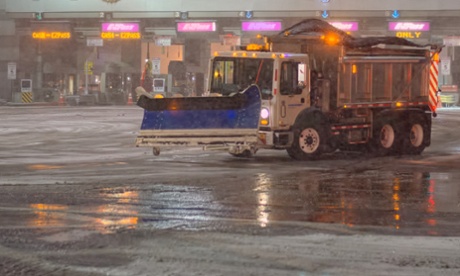
Government agencies spread salt across roadways and sidewalks in order to melt ice and snow. This salt then washes off roads and sidewalks and into rivers and lakes that are sources of drinking water.
Water companies are therefore cautioning customers, especially those who must reduce their intake of sodium because of health conditions like high blood pressure and kidney and liver disease, about increased salt levels in drinking water.
United Water, which provides water to parts of New Jersey, has notified dialysis treatment centers and hospitals about increased sodium levels.
Only one water company facility in New Jersey is equipped for desalination. Some, like the Passaic Valley Water Commission (PVWC), are therefore mixing the higher sodium water with water from more isolated sources.
The PVWC director, Joe Bella, told New Jersey newspaper the Record his organisation had detected higher sodium levels in its supply, but customers had not reported a change in the water’s taste.
“So far we have not had complaints about a salty taste,” Bella said. “It has gotten high, but not to the level of last year. That’s not to say it won’t rise further once we get our first big rain.”
While salt offers a simple way to melt snow, it is affected by supply problems and concerns about its impact on the environment. Scientists have warned that road salt can affect the habitats of amphibians and plants. And after 13 measurable snowfalls this winter, New Jersey’s salt supply is dwindling.
Across the US, some municipalities have reduced the amount of salt used to combat snow. However, chemical alternatives like calcium chloride and potassium chloride also pose environmental and economic challenges.