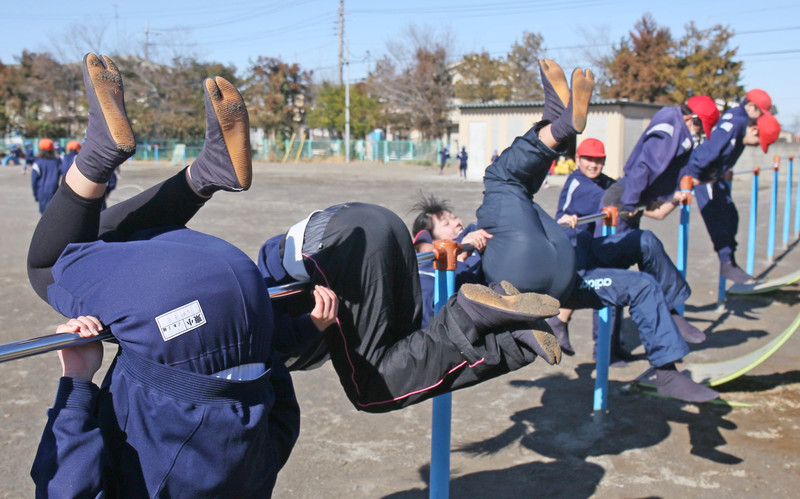
GYODA, Saitama -- Every day at Gyoda city-run Higashi Elementary School, all the students spend time wearing tabi socks. Tabi are traditionally worn with a kimono. The big toe is separated from the others, and they are fastened with kohaze clasps.
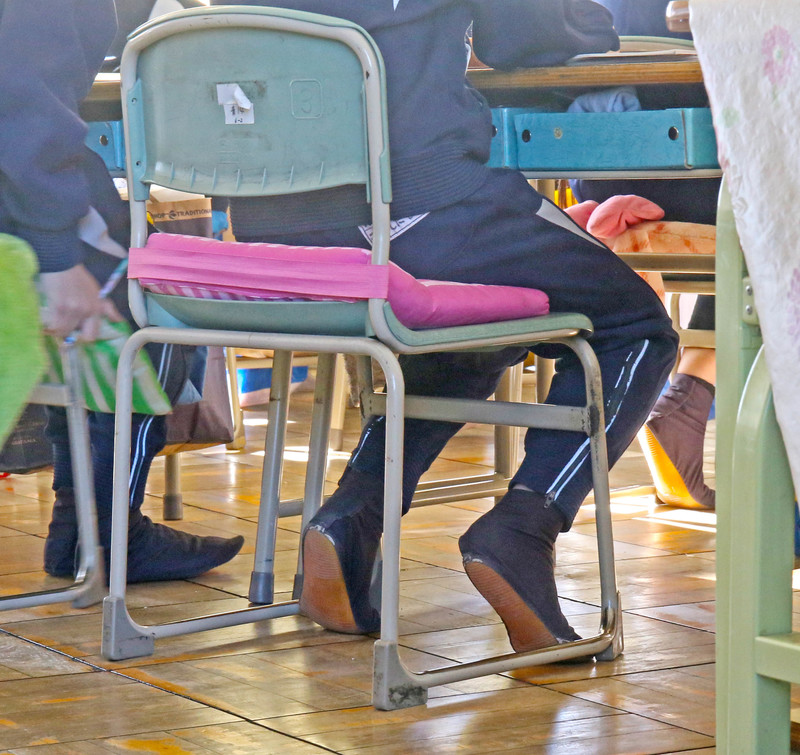
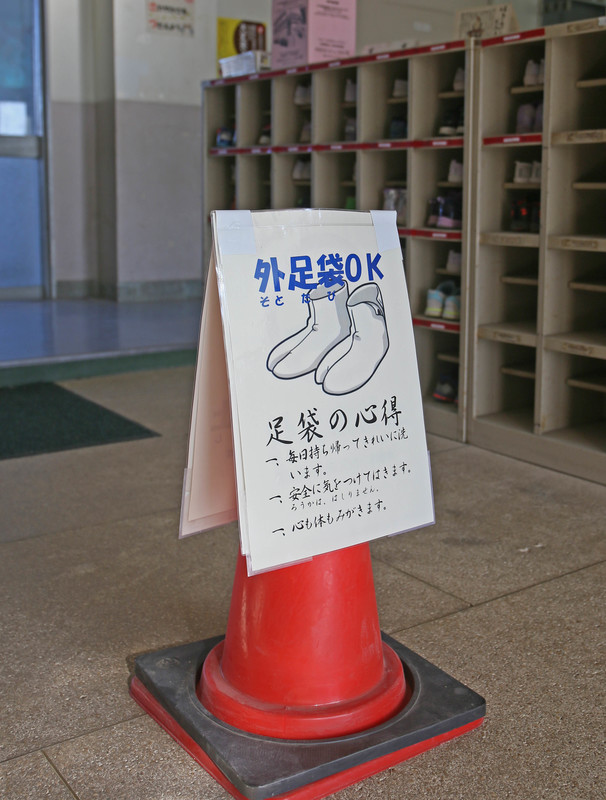
The school, located in northern Saitama Prefecture, has nearly 400 students. They take off their shoes at the entrance, go to their classrooms with regular socks on and then change into tabi. They walk around the school building, gym and even the schoolyard -- when conditions permit -- wearing their traditional socks.
Specifically, they wear rubber-soled matsuri-tabi, or festival tabi socks. The socks are made locally and given to the students for free. The tabi are washed at home, and the students bring a pair to school every day.
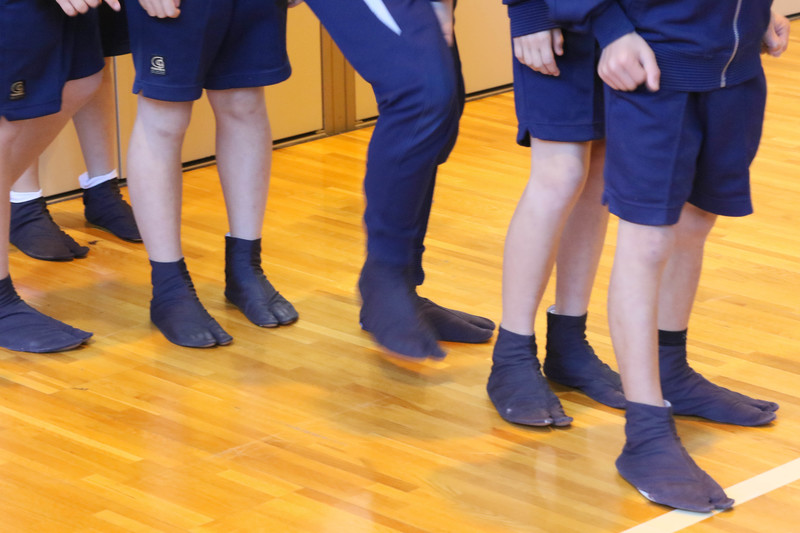
The practice of wearing tabi started last September with second- and fifth-grade students. By October, the practice had spread to every grade.
"They're light, flexible and comfortable," one sixth-grade student said.
The tabi-wearing movement is part of a project to revitalize Gyoda as "a city of tabi." The aim is to foster ties with the local industry and nurture a love among the people for their home district.
The Gyoda city government, jointly with Chukyo University's School of Health and Sport Sciences in Toyota, Aichi Prefecture, plans to have the school's second- and fifth-graders wear tabi until this coming September. They will then check for any changes in such things as the students' toe grip strength and height of their feet arches.
Jun Kaneko, an associate professor of the university who is in charge of the project, expressed hope. "Wearing tabi, which is closer to being barefoot, should prevent hallux valgus [deformities] and also help develop the arch properly. By having more stable feet, we expect children's abilities to concentrate will also improve."
The study team will compare the data with that of students in another elementary school in the city who are not wearing tabi. The team will then compile a report by the end of the 2019 school year on the effects tabi could have on such aspects as the formation of the feet and overall health.
Tabi production began in the Gyoda area in the Edo period (1603-1867). The area was suitable for producing cotton and indigo, both used in tabi, and it is believed that production of tabi for travel and work flourished there due to the nearby Nakasendo main route.
At its peak in around 1938, Gyoda was producing about 80 percent of the nation's tabi products -- or about 84 million pairs annually. Since then, demand has declined due to factors such as the westernization of Japanese people's clothing.
Last April, the Cultural Affairs Agency listed Gyoda as part of Japan Heritage for its tabi warehouses. Last autumn, a TV series drama featured a fictional old tabi maker believed to be located in the city.
Tabi, it seems, still have the power to put a spring in the step of local communities.
(New Japan, Old Japan is a series exclusive to The Japan News)
Read more from The Japan News at https://japannews.yomiuri.co.jp/