
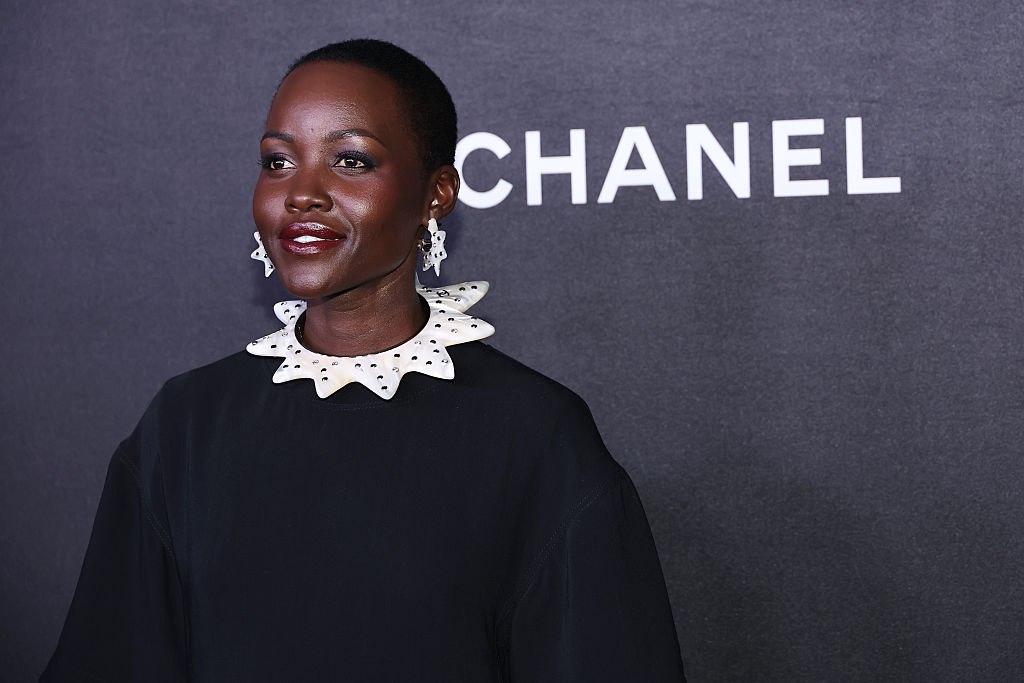
The backlash surrounding Lupita Nyong’o’s casting as Helen of Troy — and her sister Clytemnestra — in the upcoming epic “The Odyssey” has quickly evolved into another online culture-war battle over race, beauty and representation in Hollywood.
The controversy intensified after Elon Musk amplified social media criticism in quite a few posts and reposts on X, questioning both the casting and whether Nyong’o could plausibly portray Helen, the mythological figure long associated with extraordinary beauty. Conservative commentator Matt Walsh argued on X that “not one person on the planet” views Nyong’o as “the most beautiful woman in the world,” a post Musk replied to with a one-word endorsement: “True.”
Not one person on the planet actually thinks that Lupita Nyong’o is “the most beautiful woman in the world.” But Christopher Nolan knows that he would be called racist if he gave “the most beautiful woman” role to a white woman. Nolan is technically talented but a coward. Too… pic.twitter.com/wwzF9RkrWI
— Matt Walsh (@MattWalshBlog) May 12, 2026
The comments drew immediate backlash online, with critics accusing Musk and others of reducing beauty to narrow Eurocentric standards. Actor Alec Baldwin publicly defended Nyong’o, calling her “the most beautiful woman” while criticizing the reaction surrounding the casting.
Getting lost in the debate over the race of fictional characters is that Musk and others also oppose the casting of Elliot Page as Achilles, questioning the masculinity of a trans man playing a mythological symbol of what they consider traditional masculinity.
This debate over race mirrors earlier controversies surrounding Halle Bailey starring in “The Little Mermaid” and other diverse casting choices in fantasy and literary adaptations. In many cases, critics frame objections around “historical accuracy” or fidelity to source material, while supporters argue mythology and fiction have always evolved through reinterpretation and artistic adaptation.
That distinction is especially relevant in discussions surrounding “The Odyssey,” a mythological epic that has been reimagined across centuries through theater, literature, film and visual art. Supporters of Nyong’o’s casting note that Helen of Troy is not a historical figure bound to a single visual interpretation, but a literary and symbolic character whose meaning has shifted across cultures and eras.
Some critics of the backlash have also pointed out that online outrage over “accuracy” often appears selective, emerging most forcefully when Black actors are cast in traditionally white roles. The controversy has therefore become less about Homeric mythology itself and more about ongoing cultural disagreements over representation, identity and who audiences view as worthy of iconic roles in modern entertainment.