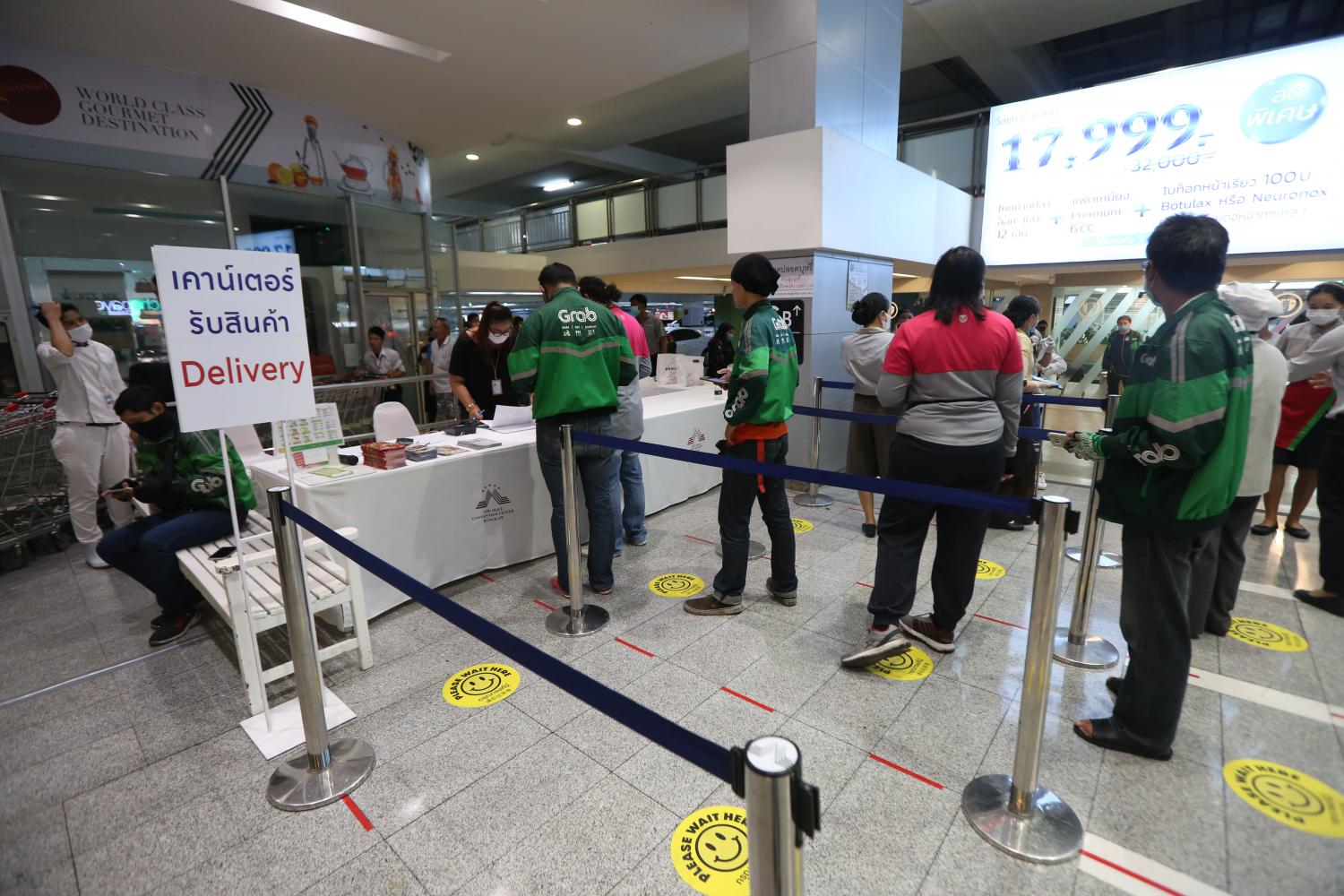
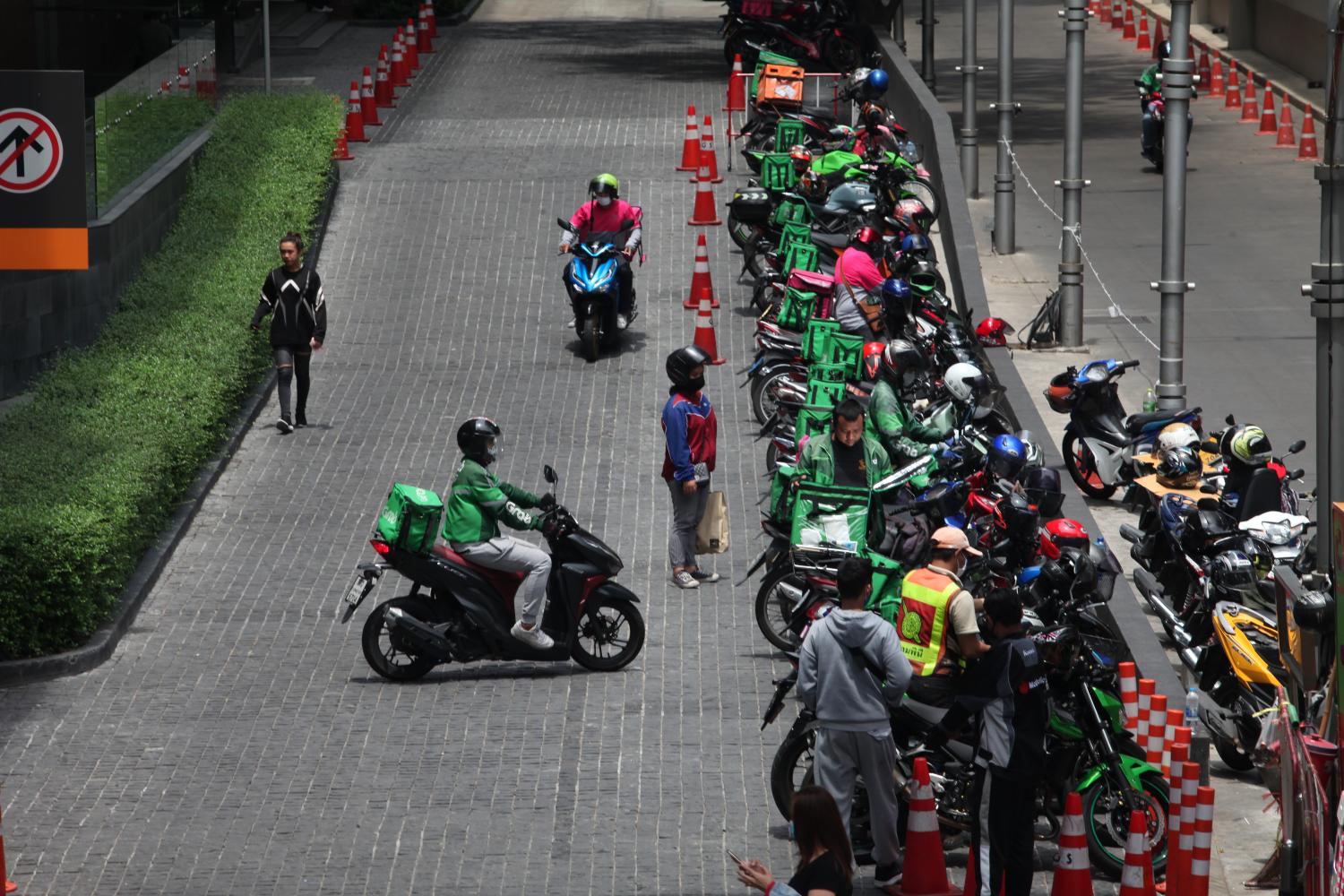
Given mounting complaints about unfair treatment by major food delivery platforms towards restaurants and drivers, the Digital Economy Promotion Agency (Depa) plans to address the problem.
The agency designed its own food delivery platform called eatsHUB through collaboration with SET-listed TV Direct (TVD), a home shopping operator.
The eatsHUB platform is set to launch next month nationwide, aimed at promoting small eateries and street food vendors, according to Depa.
The platform hopes to serve as an alternative in the hotly contested food delivery market as well as support community eateries and drivers.
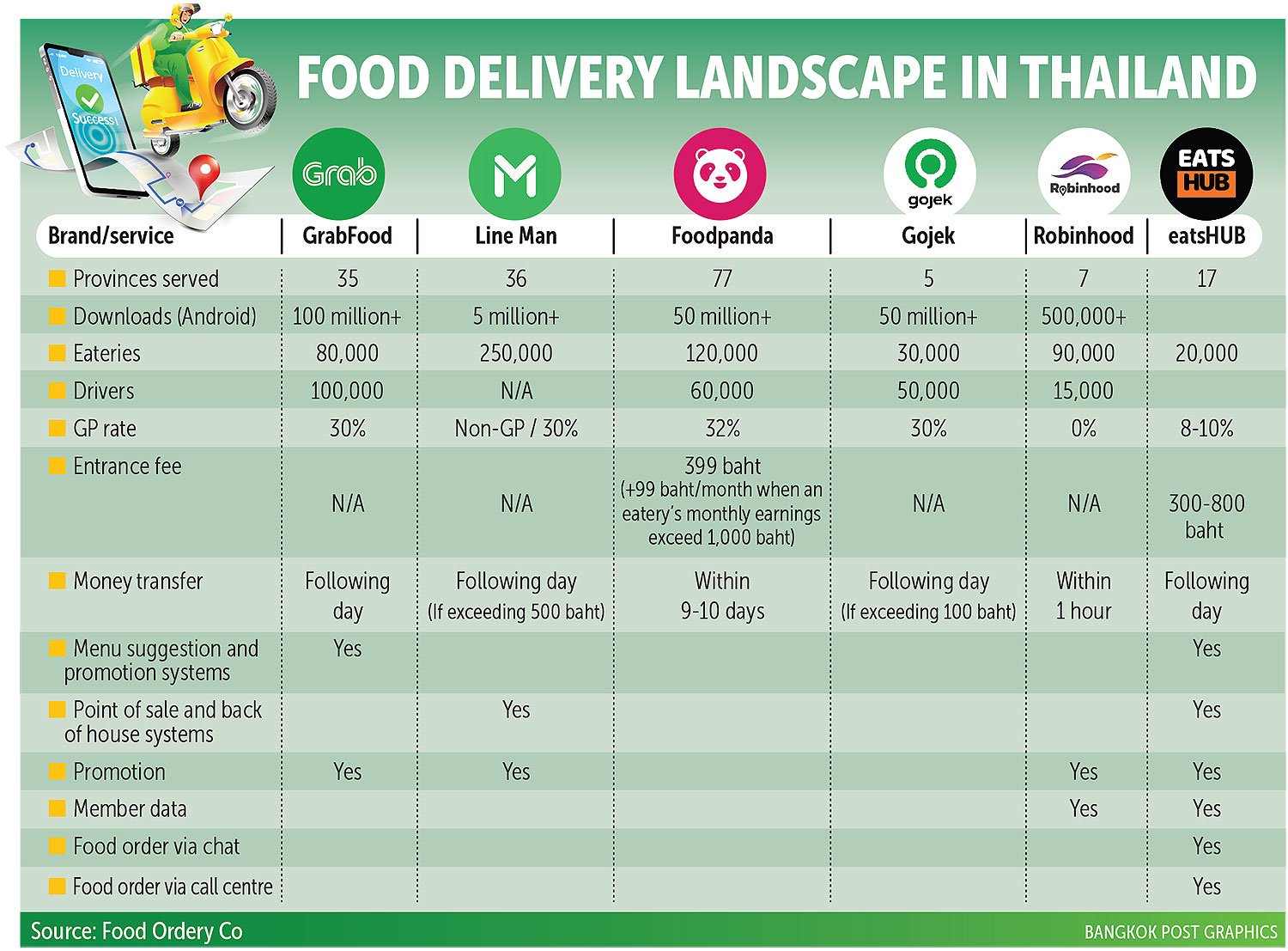
A big difference between eatsHUB and other major platforms is the commission fee collected from eateries, also known as gross profit (GP).
The platform seeks a GP rate of only 8-10% during its initial stage, compared with at least 30% from other major platforms.
Depa president and chief executive Nuttapon Nimmanphatcharin told the Bangkok Post he understands small restaurants and street food vendors are the lifeline of each community, where locals struggle to make ends meet during the pandemic.
People spend more time at home now to avoid infections, and this means they rely more on food delivery services, said Mr Nuttapon.
He said eatsHUB is designed to make eateries feel they partly own the platform.
The platform focuses on services for each community that involve eateries and drivers within 1-5 kilometres, with various features provided, including a point of sales (POS) system, self-promotion campaigns, messaging service and a call centre.
"Our challenge is how to connect, support and maintain these small restaurants," said Mr Nuttapon.
"Each of them is a vital cog. When they join together, they can drive the community economy, which is sluggish because of the pandemic and lockdown measures."
EatsHUB was recently established as a subsidiary of TVD.
Depa set aside 45 million baht to run the company and another 45 million is expected to be allocated by TVD in the future.
The platform initially provides service in 17 major provinces.
Depa is responsible for training around 20,000 local restaurants and potential drivers interested in joining the system.
Local startups engaged in activities linked with the delivery business are also welcome to come support the operation, he said.
TVD is in charge of providing support systems, such as the call centre, POS system and back-up operations.
"This should be considered a local delivery platform operated by a medium-sized company," said Mr Nuttapon.
The platform aims to help small restaurants and food stall vendors as well as delivery drivers who lost their jobs during this difficult time, he said.
CLOSE TO COMPLETION
According to Depa, the platform is 99% complete.
The platform is expected to be launched in September once all the systems are 100% ready.
The platform set a GP rate of 8-10% for delivery within a 5km radius. The rate increases along with the delivery distance past 5km.
"EatsHUB has an advantage over other platforms as it offers a range of features, such as a promotion system, POS, and a chat system and call centre for food orders," said Mr Nuttapon.
All registered restaurants can use any of the features they wish, he said.
One goal for the platform is to create a strong connection between eateries and drivers in the community, which should enable benefit-sharing in their social enterprise networks, said Mr Nuttapon.
"The initial 90 million baht allocated for operations is projected to be spent the first 18 months," he said.
The platform expects to generate a return on investment in the third year of operation, said Mr Nuttapon.
He said eatsHUB would also support the delivery of other items.
"This means we are not a short-term operation and will continue after the pandemic is controlled," said Mr Nuttapon.
QUESTIONS RAISED
The new competitor in a fierce market is not expected to tip the balance among powerful players in the early stages.
Pisut Ngamvijitvong, a senior analyst at Kasikorn Securities, said the delivery business involves huge costs and constant investment, with a "winner take all" model.
"With a small scale of investment and capital, it is hard for any operator to grow in the market. Even Grab is now operating with a loss of around US$1 billion globally," he said.
Access to capital and information regarding consumer behaviour are key factors that will influence the delivery business in the long run, said Mr Pisut.
The delivery business is making a bet on consumers changing their behaviour over the long run, he said.
Small-scale delivery providers face a huge challenge in getting consumers to download their apps as there are many others available, including some people use on a daily basis, Mr Pisut said.
He said consumer shopping behaviours hold the key to success in this segment.
The country's largest mobile operator, Advanced Info Service, launched in April a virtual shopping mall through v-avenue.co as another channel to assist small businesses.
Mr Pisut called the campaign "a good move", but still insufficient to attract businesses.
He provided as an example food delivery operator Robinhood, the brainchild of Siam Commercial Bank that was launched last year. It has an interesting business model, featuring no commission rates.
However, many customers have found it difficult to get their orders confirmed as there may not have been enough drivers available, said Mr Pisut, leading some consumers to switch to other platforms instead.