The new £1 to the round pound coin has gone into production at the Royal Mint ahead of its introduction in circulation in 2017.
It is said to be the most secure coin in the world.
Its design features, including its 12-sided shape, make it a lot harder to copy that the round pound.
The 12-sided shape is in the same style as the 50p and 20p coins, but it had to go through many tests to make sure it would still roll in vending machines.
Still every vending machine and parking machine in the country will have to be updated to accept the new coin over the course of years.
There are some other, more subtle design features that also make it safer.
1. Uneven sides
The 12-sides of the coin are uneven, to make forgery tougher.
2. Secret messages
The Government has employed a security technology company called iSIS to fit the new coins withy special plating that can contain electromagnetic signatures. It's also said to be especially hard to remove.
3. It's made of two metals
Like the £2 coin before it, the new pound will be made of two metals: nickel-brass on the outside and nickel plated solid alloy on the inside. This, plus the 12-sides, is believed to make the coin safer than ever.
4. A bigger coin
The new £1 will be just under a milimetre wider than the current one, at 23.43mm compared to 22.5mm.
5. Grooves in the sides
The new £1 will have grooves in the sides, known as milled edges.
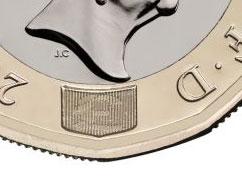
6. Secret images
Not only can the plating contain secret messages, but the design of the coin itself contains secret images, known as latent images. It refers to pictures etched into the metal that you can only see when the coin is tipped to the light.
The Mint called time on the 32-year-old round pound because of counterfeiting concerns.
More than 45 million fake round £1 coins are estimated to be in circulation – the equivalent of 3 per cent. That's a huge proportion of the 2.2 billion round coins produced by the Mint.
George Osborne announced in the Budget that the coin would be replaced by a new model that recalls the design of the old threepenny bit that was in circulation between 1937 and 1971.
The Royal Mint says it is to be the most secure in the world. It has been designed with a number