Cannes Lions 2015 started with plenty of momentum but also had its detractors. Havas Media’s senior vice president of strategy and innovation Tom Goodwin trained his guns on the festival’s old-style feel. “Cannes as a place feels mightily stale,” he wrote. “It’s not just the pastiche 70s architecture and dubious gold furnishings; it’s the conversations, the Gutter Bar – it’s all both legendary and completely uninspiring.”
Some of the festival content was far from stale though. Among the agencies that kicked-off Cannes with a bang were SapientNitro, which took to the main stage on the Sunday to talk about coupling technology and human experience with Tinder co-founder Sean Rad. On the same day, Peter Kim, Cheil Worldwide’s chief digital officer, offered his predictions for the future of social media. Among other things, Kim said that brands should embrace a move away from “unfettered narcissism” on social media and look at how to encourage greater empowerment and equality.
More future-gazing came as Cannes reached its conclusion with the new Lions Innovation Festival. Designed to examine where data, technology and creativity interact, the two-day event threw up some interesting debate about the nature of innovation and how well agencies are placed to benefit.
Providing an inside view of Lions Innovation here are Shaun McIlrath of iris, who sat on the Innovation awards jury, and HeyHuman’s Dan Machen, who took part in the festival as a presenter.
Shaun McIlrath, global creative director, iris
Until recently, in common with pretty much every other ad festival in the world, Cannes did not reward innovation. Yes, it awarded innovative communication, but it didn’t have a category for pure innovation.
And yet, innovation is communication. For far too many years our focus as communicators has been on speaking eloquently. But nothing is more eloquent, or more telling, than an organisation’s body language. Or, to put it another way: the amazingness of our actions is the best advertising we can ever create.
This year, innovation’s importance at Cannes was underlined when they elevated it further, creating a new festival within the festival, the Lions Innovation.
This festival is not just entered by agencies and brands, but by startups and tech companies. Shortlisted entries get to pitch to a jury made up of tech people, media experts and yes, even the odd agency creative.
I was reminded that if you love your subject, and your subject is technology, it’s very easy to get overinvolved in the intricacies and forget about real-life application. I witnessed advertising stunts posing as business ideas fall apart under questioning on scalability.
There was also a generosity of spirit in the standout ideas, which set them apart from innovative comms. This was creativity being used to help people, not just persuade them, from the Life Saving Dot from Talwar Bindi to the Grand Prix-winning “3 Words to Address The World”.
Tom Knox at the IPA talked recently about advertising as a force for good, which is a great ambition, but one that can only be true in the broadest definition of advertising – one that includes genuine innovation in the service of consumers – and a willingness to sacrifice communication budgets to do that.
Dan Machen, director of innovation, HeyHuman
We were lucky enough to host a session in the first ever Cannes Lions Innovation festival. I shared the stage with my colleague, Felix Morgan, and Thomas Ramsøy, founder of Neurons Inc and one of the world’s leading voices in neuromarketing.
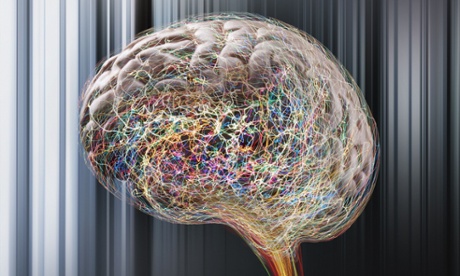
We took to the stage to talk about the battle for attention and human evolution. We had spent the past year trying to understand the impact that multi-tasking has on the human brain and how brands need to communicate in a world where everyone is doing lots of different tasks all at once.
The crux of what we found is that working on several tasks results in an increased cognitive load. A neuroscience term, cognitive load basically describes the headspace any individual has – the physical limitation to their juggling information simultaneously. The more exercises our subject went through, the more their cognitive load increased. The more distracted they became, the less emotionally engaged they were – and the harder it was for them to remember information, such as brand messaging, afterwards.
Audiences don’t have any mental capacity to dedicate to the ads we create, yet we insist on creating the same sorts of things. We have been working on a neuro-optimisation framework to help brands create new content and experiences that can cut through in this context.
Brands need to start thinking about how to use personalisation to help audiences detect relevance in our communications. When people are overloaded visually, we should place a much bigger focus on aural experiences to grab attention with audio. Finally, we need to use our key brand assets more cannily, to help people process our brands with their subconscious.
It’s early days for neuro-optimisation, but it’s going to increase in importance as people become more and more distracted by technology.
This advertisement feature is brought to you by the Marketing Agencies Association, sponsors of the Guardian Media Network’s Agencies hub