The original Devil May Cry, when it arrived on the still-fresh PS2, had undergone a massive transformation from its original conception as a potential Resident Evil 4. Inspired by the Divine Comedy (from whose writer, Dante Alighieri, came the name of the series’ iconic main character), DmC switched up its bio-weapon zombie origins for a more ancient, inherently sinister evil spreading through the world: demons, a representation of pure malice and chaos across countless religions and ironically a cannon fodder video game staple since the days of Doom. The bedrock of the series’ lore rests on the idea that demons from Hell (or Makai in the Japanese translation), beings incompatible with the natural world, are secretly invading Earth with the goal of conquering humanity — an idea that becomes unintentionally and darkly ironic when considering the fact that the game released just a month before the September 11th attacks, leading to the Islamaphobic rhetoric used to justify the invasions of Iraq and Afghanistan in the aftermath.
The first season of Adi Shankar’s animated adaptation of Devil May Cry engaged with this unforeseen juxtaposition by depicting demons as a nuanced and morally diverse species caught in a cycle of subjugation by tyrants, as well as introducing DARKCOM (a theocratic American militia dedicated to exterminating demons) in an attempt to explore the hatred, misunderstanding, and shadowy intrigue that breeds conflict. It was a move that, although compelling, earned mixed results — while some found it thematically engaging (if not heavy-handed), many fans felt like it was a bewildering deviation from the central thrust of the games, one that left Dante (Johnny Yong Bosch) mostly on the sidelines. Without abandoning the show’s allegory, Devil May Cry’s second season manages to significantly improve upon the foundation of the first, marrying its incisive depiction of the machinery of senseless conflict with the intimate familial conflict that drives so much of the first game and the resulting franchise.
The ending of season 1 sowed the seeds for a clever reversal of the first game’s basic premise, with the United States military launching a full-scale invasion of Makai at the behest of Vice President and DARKCOM commander William Baines (Ian James Corlett, who does a serviceable job fully taking over for Kevin Conroy after his passing). The drumbeat of battle and those it draws in are a running theme throughout the season from the very start of Episode 1, a genuinely harrowing opening that follows one soldier in a squadron from the moment they’re deployed on Makai to the moment of their inevitable, needless demise at the hands of Makai’s immensely powerful despot Mundus (Ray Chase). The entire mission, as it turns out, was nothing more than a diversion so that elite DARKCOM agent Lady (Scout Taylor-Compton) could steal a chalice, one of the four mythic Arcana sought after by DARKCOM’s corporate investor Arius (Graham McTavish) as a means to defeat Mundus and end the conflict.
Lady is one of the characters the show uses to explore the way in which soldiers are manipulated like chess pieces on a board: Still reeling from the revelation that her ruthlessness towards Makaians partially created the threat of the White Rabbit in season 1, Lady tries to commit herself even harder to DARKCOM’s campaign against Mundus, convincing herself that it’s the only way to truly free the citizens of Makai from their tormentors. Taylor-Compton once again does a fantastic job with the character, bringing out that shadow of vulnerability and self-loathing from behind the curtain of Lady’s abrasive demeanor, and watching her slowly deprogram from her militaristic instincts is one of the best arcs of the season.
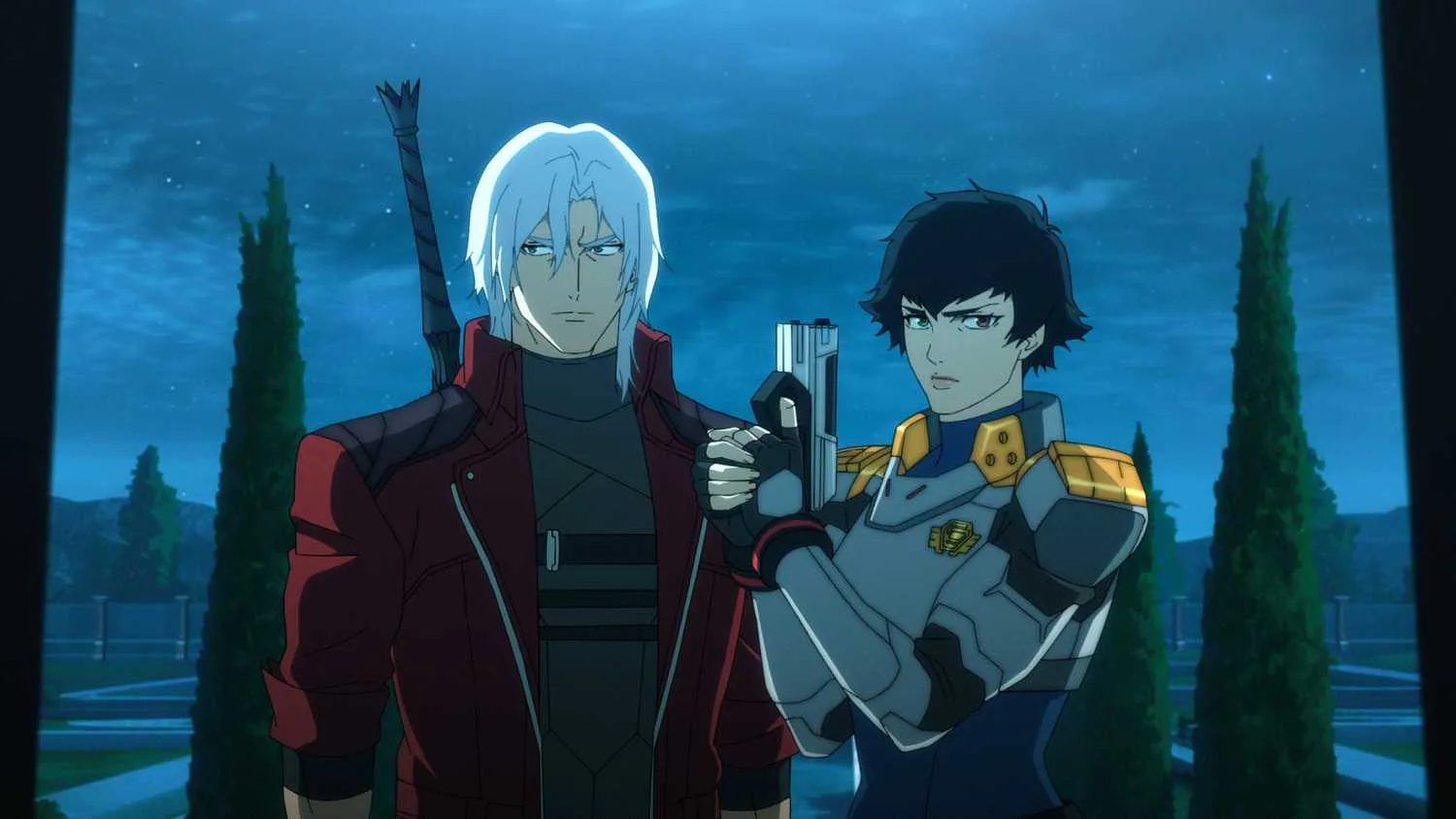
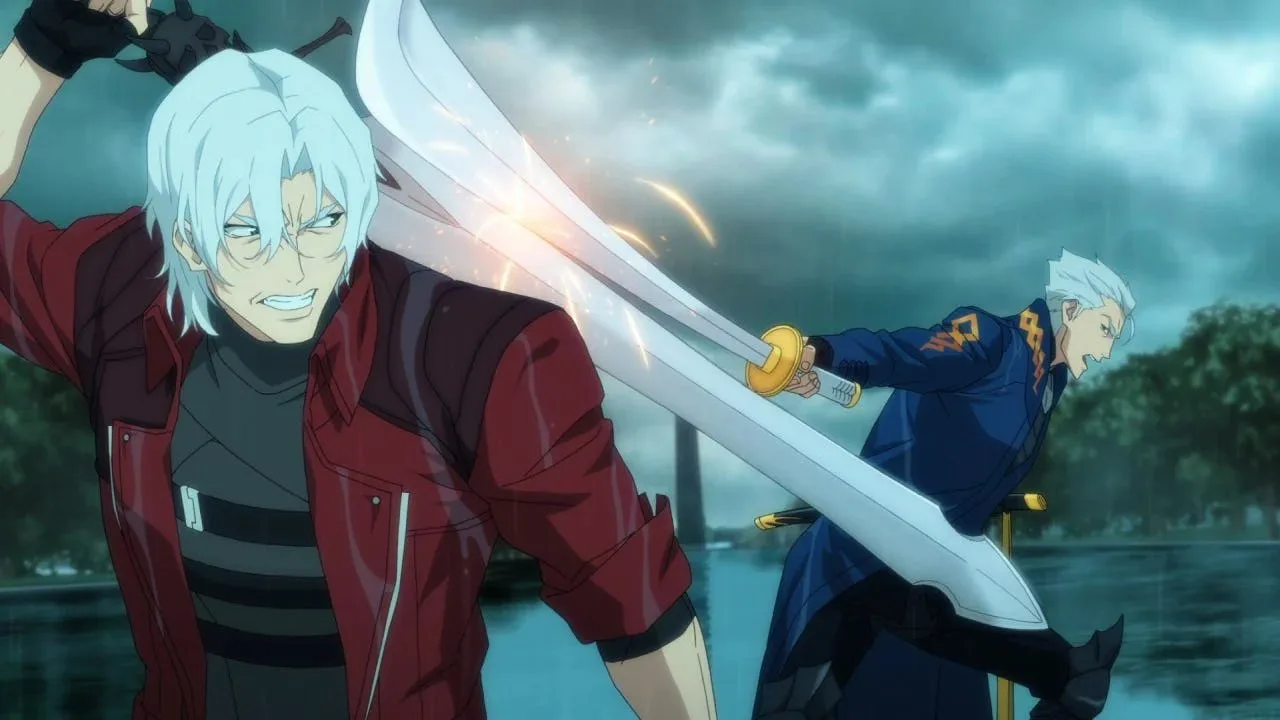
Her indoctrination into DARKCOM is echoed this season by the presence of Vergil (Robbie Daymond), Dante’s long-lost half-brother and now Mundus’ adopted son, having been trained by Makai’s king since a demon attack separated him from his brother as a child. Ruthlessly dedicated to his home and his adopted “guardian” (to a fault), Vergil’s sudden appearance as a major threat to the invasion of Makai is what convinces DARKCOM to free Dante from the suspended animation he was placed in at the end of last season, pitting the twins against each other on opposite sides of a conflict that’s not what either of them believes it to be. The relationship between Dante and Vergil this time around finally puts Dante center stage in terms of both action and character focus, and Draymond gets a lot more time than last season to make Vergil a truly complex and tortured character driven by the manipulations of Mundus, as well as his own guilt over being powerless to save his mother.
Along with the very personal battle lines drawn this season, we also get to witness the machinations of the battle between Earth and Makai from the perspective of its architects. While Baines (and his puppet president) was positioned as the head of DARKCOM last season, it’s revealed in Episode 1 that Arius and his international corporation Ouroboros are funding the organization for their own aims — fans of the games will already know what those are, but for the uninitiated, his scheming is also a thoughtful reflection of how international conflicts can often be traced back to corporate interests. We also get a far closer look at the internal structure and history of Makai — Mundus’ rule is one more link in a chain of subjugation that goes back centuries; his plan to reconnect the human world and Makai is simply another conquest that requires him to use his people as cannon fodder.
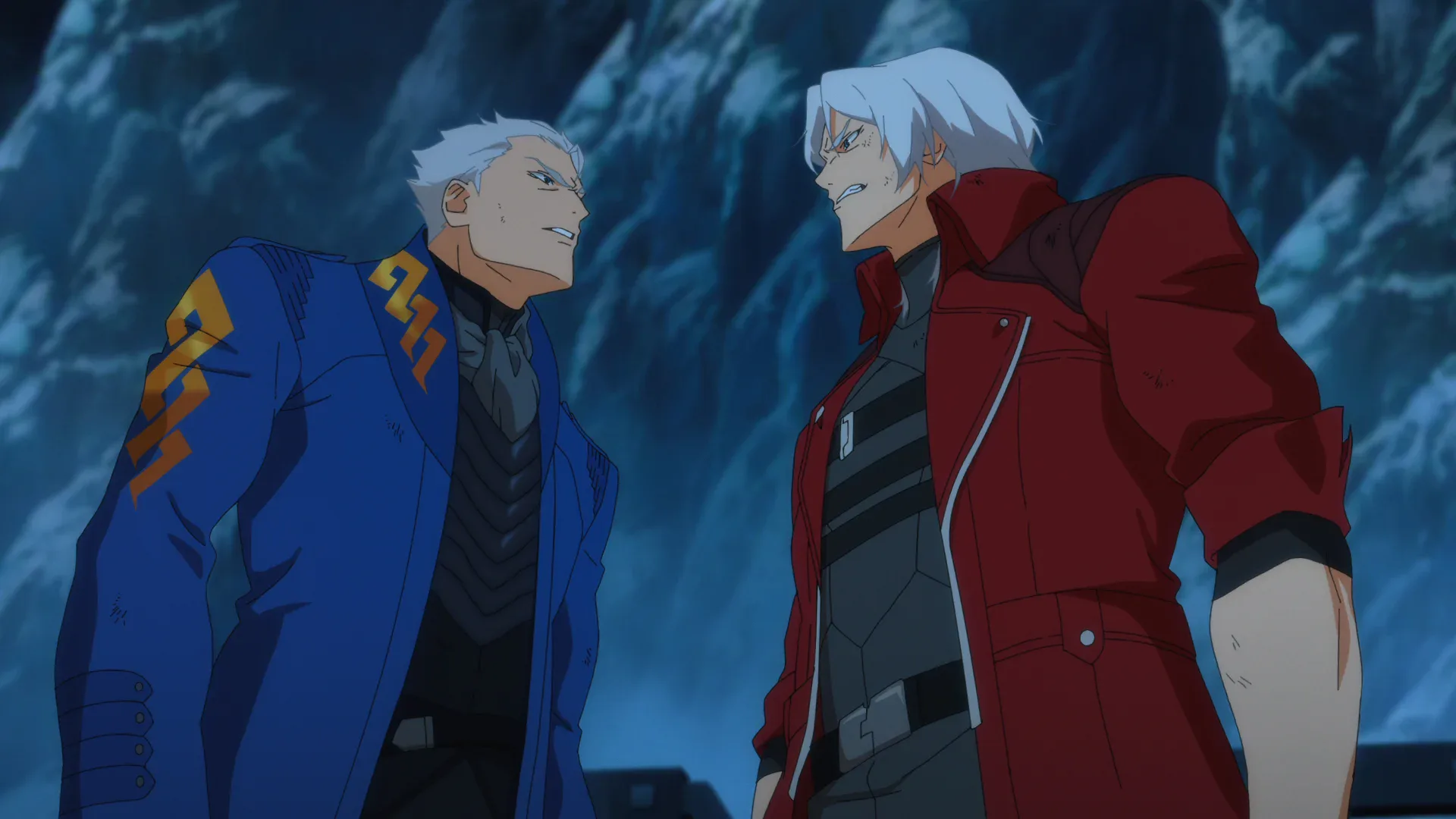
All of the differing ideologies and clashing goals help to make each of the many battles in Devil May Cry season 2 feel particularly weighty, and those emotional stakes are refined by Studio Mir’s impeccable animation. Season 1 felt fluid and electrifying in its own right but Season 2 ups the ante with fight sequences (particularly the ones between Dante and Vergil) that are as meaningful to the characters as they are flashy and kinetic, and there’s a special attention given to how each character’s fighting style reflects their journey through the story.
The downside to it all is that with everything Season 2 tries to pull off, more falls through the cracks and ends up feeling either underdeveloped or rushed. From the rapid development of Lady and Dante’s relationship, to the introduction of new characters towards the end of the season, these feel oddly tacked onto an already stuffed narrative. Even the power shifts within the authorities and DARKCOM unfold at a breakneck pace without much room to breathe before we’ve moved on to the next plot point.
It’s a balancing act that doesn’t reward every element equally, but it does wisely learn its lesson from the previous season by leaning hard into arguably the most important part of the source’s mythos: the Shakespearean family tragedy that separates Dante and Vergil. Every childhood flashback and every sword-strike in their contemporary duels builds towards one final, consequential showdown with the fate of two realms hanging in the balance. And although the entire season showcases what’s at stake for both Makai and Earth, it all comes to rest on the relationship between two brothers still grieving the family they lost and trying to protect their homes in different ways. If fans of the games were turned off by the show due to a first season that felt like it was rewriting the narrative, then they’ll be happy to know that for better and worse, it all comes down to the same bitter rivalry that kicked off the franchise 25 years ago.
.png?w=600)