Warning: this blogpost contains spoilers for the entire first season of Netflix’s Daredevil.
Better the devil you know: Netflix has announced that its morally murky Marvel superhero drama Daredevil will return for a second season in 2016. Season one launched less than two weeks ago, but proved an immediate, tangible hit with both critics and online pirates: in the week following its release on 10 April, Daredevil was illegally downloaded more than 2m times, making it the second most-pirated show in the world after HBO’s Game of Thrones.
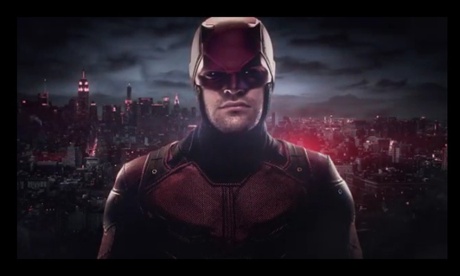
It’s a dubious badge of honour, but since the fictional Hell’s Kitchen of Daredevil is saturated with small-time hoods, corrupt officials and racketeers, even melancholy hero Matt Murdock (played by Charlie Cox) might allow himself a wry smile if he knew that it had inspired some criminality in the real world. Daredevil came billed as Marvel’s “street-level” drama: this story of a blind lawyer who, aided by his uncanny radar sense, moonlights as a roof-hopping, skull-cracking vigilante was supposed to be darker, grittier, more relatable. The final product was certainly visceral and punchy, likely due to the influence of former Spartacus showrunner Steven S DeKnight. With two new showrunners poised to take over, what lessons can be learned from season one? What did it get right? And what could be improved?
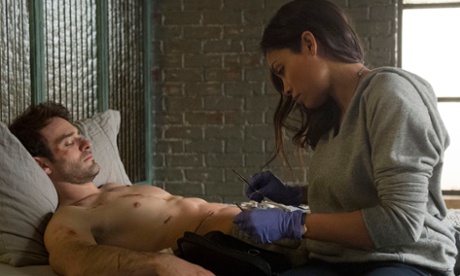
Marvel successfully goes dark
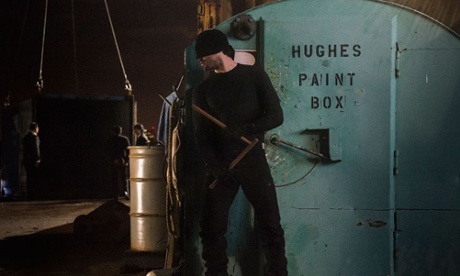
In 2008’s Iron Man, Robert Downey Jr’s performance established a certain tone – flip, bright, irreverent – that became a blueprint for the ever-expanding Marvel universe, leaving the angsty, tortured, washed-out-palette stuff to DC rivals Batman and Superman. But Daredevil deliberately went super-dark – shot in the shadows of plausibly run-down NYC locations often backlit with queasy yellow. The benighted backdrop established a distinct identity for the show that, coupled with the relentless, bruising action, positioned it a million miles away from the shiny tech and tranquilliser guns of Agents of SHIELD. The cursing – although “shit!” was about as heavy as it got – also underlined that this was a more adult take on comic books.
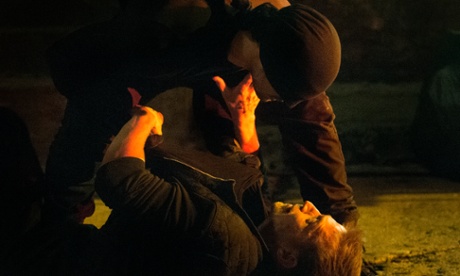
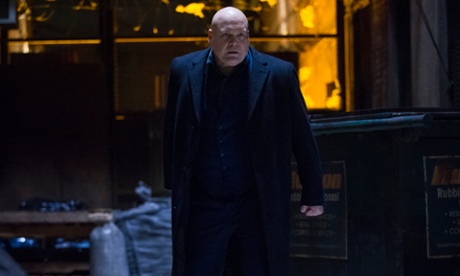
Finally, a villain as interesting as the hero …
With 13 hours to tell its story, Daredevil had enough time to set up Murdock and businessman Wilson Fisk (Vincent D’Onofrio) as characters with similar backgrounds and ambitions – to safeguard the neighbourhood they grew up in the way they thought best – and a comparable stubbornness that meant they were destined to smash into each other. Both received extensive flashbacks, allowing an exploration of the traumas that shaped them, while Fisk even got the more satisfying emotional arc – falling in love with a striking art dealer who encouraged him to emerge from the shadows (and subtly transforming him into a much nattier dresser). D’Onofrio, an actor who rarely underplays, absolutely feasted on Fisk: even placeholder lines about his crooked plans to regenerate Hell’s Kitchen sounded intriguing when delivered in that basso profondo rumble.
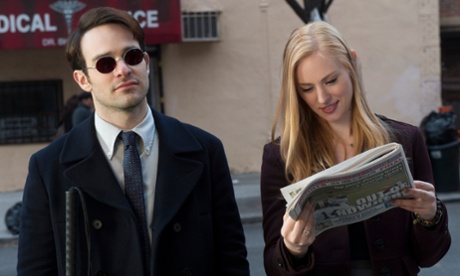
But the women still felt frustratingly underwritten
There are certainly powerful women in Daredevil: Vanessa, who captured Fisk’s heart, exerted a greater pull on the big man than his various criminal partners, while pensionable druglord Madam Gao flattened a surprised Murdoch with one chi-focused punch. But none of the female characters felt particularly three-dimensional. For all her plucky Nancy Drew investigating into Fisk’s financial irregularities, nominal female lead Karen Page (Deborah Ann Woll) was consistently relegated to the role of damsel in distress. And Rosario Dawson – as Murdock’s love interest/personal patch-up nurse Claire – flitted into and then completely out of the story, as if some scheduling conflict had necessitated a hasty downsizing of her role. At least Netflix’s next Marvel series AKA Jessica Jones – about a former costumed hero turned private eye, played by Breaking Bad’s Krysten Ritter – will have a woman at the very centre of the story.
Crucially, it was more than a mere brand extension
After creating its own isolated, mean-streets world, Daredevil wisely resisted the urge to align itself too closely with Marvel’s widescreen universe. The producers hyped the first season as a 13-hour movie, but at its best Daredevil felt like an exciting, well-constructed TV show. Binge-watching the first six episodes might have felt like a blur but after the midpoint – episode seven’s spotlight on Stick (Scott Glenn), young Matt’s absurdly grumpy martial arts mentor – but it felt as if care had been taken to craft satisfying narrative chunks that could be enjoyed separately, the way TV used to work. (Admittedly, it helped that one of these episodes feature a prolonged, bloody duel with a ninja.) The examination of Hell’s Kitchen’s corrupt infrastructure suggested the creators had seen, and admired, The Wire – to the extent they even cast Domenick Lombardozzi, old volatile Baltimore cop Herc himself. In truth, Daredevil felt more like The Shield, and not just because of the focus on a driven, dangerous, angry bald man with a Machiavellian mindset. Both shows were populated by larger-than-life characters, crackling street energy and an unsettling sense that bad things were always just about to happen to good people.
Is it Marvel’s best TV show?
In a perfect world, there would be more love for the eight-part Agent Carter, starring Hayley Atwell as a butt-kicking English rose battling Hydra and sexism in post-second world war America. But the first season of Daredevil feels like a genuine evolution for Marvel, a new foundation rather than an adjunct. It has successfully established a critical and commercial beachhead for Netflix to launch AKA Jessica Jones later this year, and two further series spotlighting Luke Cage (a principled urban brawler) and Iron Fist (a reincarnated kung fu spirit) before all four of their street-level heroes are brought together for the mini-series The Defenders. The contracts are iron-clad, but Netflix obviously believe there’s an appetite for more Daredevil. As for potential season-two storylines … perhaps a successful streaming service could hire Nelson & Murdock to prosecute internet pirates?
What did you think of Daredevil? Let us know in the comments below.