WASHINGTON _ The nation's top telecommunications regulator on Wednesday unveiled a plan to dismantle the tough net neutrality rules for online traffic that Democrats pushed through in 2015 over the objections of major internet service providers.
Net neutrality regulations are designed to ensure the unfettered flow of online content. They prohibit broadband providers from slowing internet speeds for some content such as video streams, selling faster lanes for delivering data or otherwise discriminating against any legal online material.
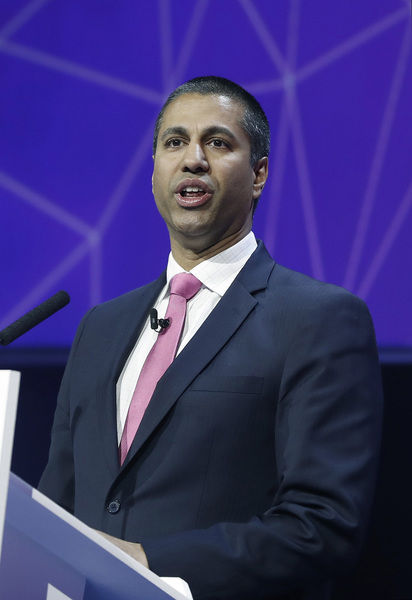
Ajit Pai, a Republican appointed by President Donald Trump to chair the Federal Communications Commission, has been an outspoken opponent of the rules because they subject broadband providers to the same utility-like oversight as conventional phone companies.
Pai said Wednesday that he had sent a proposal to his fellow commissioners that would repeal that regulatory oversight as well as the agency's vague general conduct standard, which sought to protect internet users from future unreasonably discriminatory practices.
The Republican-controlled agency is expected to vote next month to open a formal process to repeal the rules, seeking public comment on how to ensure net neutrality without what Pai called "the overhang of heavy-handed regulation."
That move is likely to trigger a repeat of the outpouring of public comments and debate that engulfed the FCC in 2014 when the agency considered the net neutrality regulations.
"Going forward, we cannot stick with regulations from the Great Depression meant to micromanage Ma Bell," Pai said in a speech sponsored by FreedomWorks, a libertarian advocacy group.
"Instead, we need rules that focus on growth and infrastructure investment, rules that expand high-speed internet access everywhere and give Americans more online choice, faster speeds and more innovation," he said.
The regulations led the nation's 12 largest internet service providers to decrease their capital expenditures on broadband by $3.6 billion, or 5.6 percent, in 2016 compared to 2014, Pai said.
"It is the first time that such investment has declined outside of a recession in the internet era," Pai said.
Net neutrality supporters have disputed that the regulations led to a decline in investment.
While there is bipartisan agreement on the goals of net neutrality, there has been a major debate for more than a decade about how to attain them.
After earlier attempts by the FCC to enforce such rules were thrown out by the courts, President Barack Obama and liberal activists pushed the agency to expand its authority over broadband.
They urged the agency to classify broadband as a more highly regulated utility-like service under Title 2 of federal telecommunications law.
About 4 million people filed comments with the FCC when it was considering the net neutrality rules during 2014, with most asking for strong regulation.
But Republicans and major broadband providers such as AT&T Inc. opposed the move, saying it threatened to stifle the internet economy with heavy-handed regulation.
Trump publicly expressed his opposition at the time.
"Obama's attack on the internet is another top-down power grab," he tweeted in November 2014.
Pai was outspoken in opposing stricter oversight for broadband service. He tweeted a photo of himself with the 332-page proposal and lamented that FCC rules didn't allow him to make public what he repeatedly called "President Obama's Plan to Regulate the Internet."
In early 2015, the Democratic-controlled FCC voted 3-2 along party lines to reclassify broadband service. Pai and Republican Mike O'Rielly voted against it. Since Trump's election, control of the commission has flipped.
On Wednesday, Pai said the push for the rules "was all about politics."
"Did these fast lanes and slow lanes exist? No," Pai said. "The truth of the matter is that we decided to abandon successful policies solely because of hypothetical harms and hysterical prophecies of doom."
AT&T Inc., other telecom companies and industry trade groups sued to block the rules, arguing the FCC exceeded its authority in approving the regulations.
In June, a federal appeals court upheld the regulations. The ruling could make it difficult for the FCC to reverse the net neutrality rules.
Pai said he rejected calls for him to simply repeal the regulations through a declaratory ruling. He said he wanted to make the decision "through an open and transparent process in which every American can share his or her views."