The latest set of net immigration figures showing a surge to 260,000 will be remembered as the day when David Cameron’s “no ifs, no buts” pledge to cut the figure to below 100,000 was finally dead and buried.
But as the prime minister prepares to announce yet another onslaught on the EU right of freedom of movement, he should perhaps consider that the data also confirm what is rapidly becoming the “new normal” – Britain’s ability to attract the most highly skilled workers on the planet.
The level of net immigration to Britain has been above 200,000 yearly for 10 years now and is an indication of rising labour mobility within Europe.
Despite the intensity of political rhetoric over immigration, the level of labour mobility within Europe is still only about 25% of the rate in the US.
It is also 10 years now since Britain officially closed the door to unskilled migrants from outside the EU. Legal migration from outside the EU has only been possible for skilled workers, students, family reunion and for refugees.
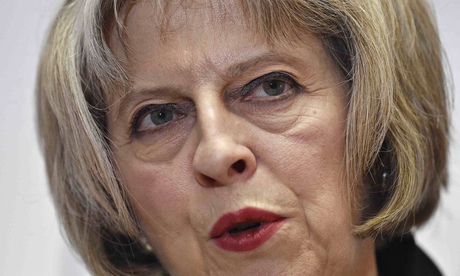
In pursuit of her arbitrary net immigration target, Theresa May, the home secretary, put a strong squeeze on those coming to study, particularly in further education, and those arriving for family reasons.
Her claim to have cut non-EU immigration back to the levels of the 1990s rests largely on diverting overseas students to other markets, keeping families separate and not providing safe havens for thousands of Syrian refugees.
Drill down into the detail of the latest rise in migration from outside Europe and it soon becomes clear that these are not immigrants in the 1970s sense. They are not poor, often large, families from Commonwealth countries such as India, Pakistan and Nigeria – whose numbers have actually dropped.
Instead, those that are now coming are entering Britain through the highly skilled tier-two route or by way of “intra-company transfers”, which are exempt from the cap on non-EU workers.
They are coming from countries such as China and the US to work in information and communications sectors (22, 275 – up 15% in past year), finance and insurance (6,255 – up 8%), health and social work (2,868 – up 51%) and professional and scientific jobs (9,824 – up 19%). They are not coming to work in coffee shops.
As the recent UCL study showed, this trend is also reflected in migration from within the EU. That revealed that 60% of recent migrants from southern and western Europe arrived here with a university degree.
Far from being cheap labour to undercut British workers, they are using their undoubted skills and education to help fuel the growth of the British economy and as the UCL study shows there has been a net gain of £20bn over a 10‑year period from European migrants alone.
As the latest labour force survey underlined, more than two-thirds of the growth in employment in Britain in the past year has gone to British workers. Only 230,000 of the 692,000 extra people in jobs were foreign nationals.
In this new normal it is essential that the impact of this high level of net immigration is managed, whether to do with schools, GPs or housing. But it is also important to understand that much of it is a reflection of an increasingly mobile workforce, including Britons working abroad, who are less interested in long-term settlement than in working abroad for a while then returning home.
This is only going to last as long as the British economy is in better shape than many others, and many economists warn that the present boom is unsustainable.
As a point of comparison it is worth noting that the level of net immigration in the only other flourishing European economy, Germany, was 480,000 last year – far higher than Britain’s 260,000 – and yet attitudes to migration there have been far more liberal than in the UK.
If the Tories’ net immigration target is now dead and buried, perhaps it is time to leave behind the 1970s-style language of the debate as well.