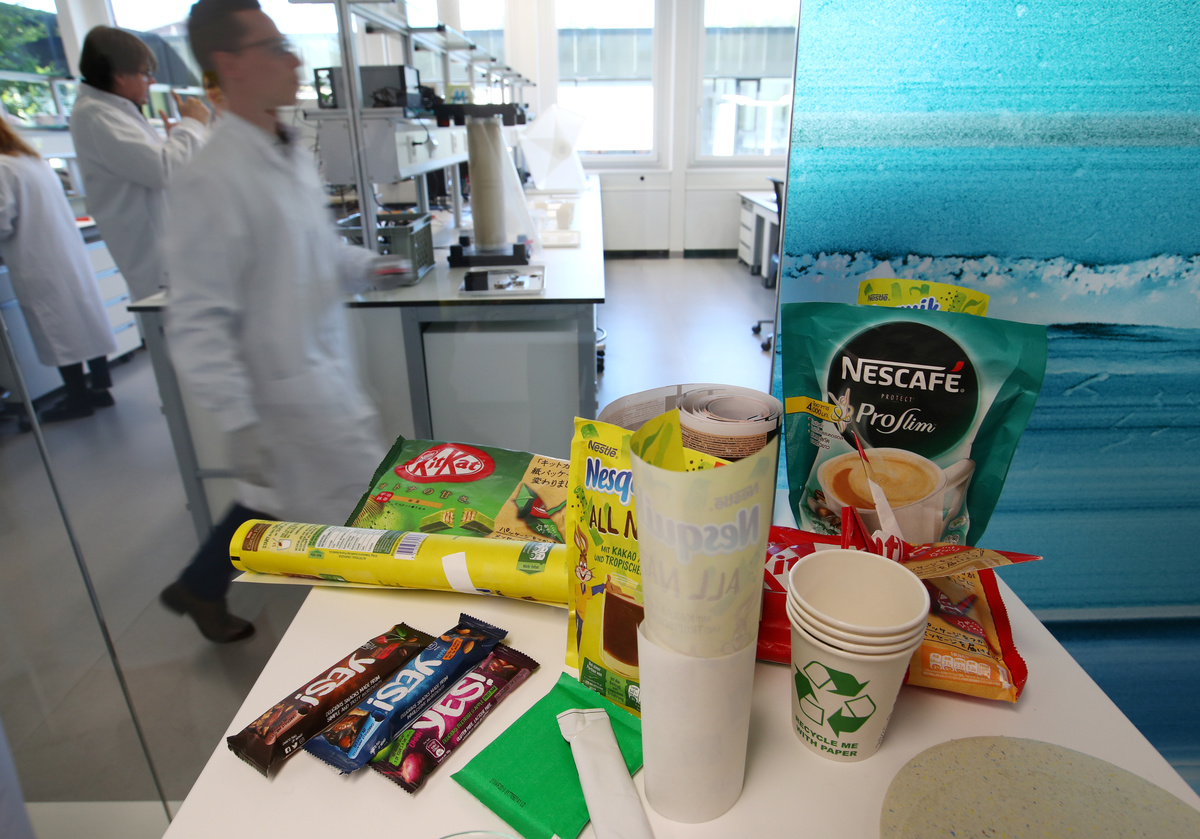
Food giant Nestle <NESN.S> will invest up to 2 billion Swiss francs ($2.07 billion) to source more recycled plastics for packaging its products and reduce its use of new plastics by a third by 2025, it said on Thursday.
Regularly cited by environmentalists as one of the top plastic polluters, Nestle is under pressure to show it is serious about addressing the waste reduction problem.
It has vowed to make 100% of its packaging recyclable or reusable by 2025.
"We are high up on the list because we are one of the largest companies out there in packaged goods and now we're also taking pretty big steps in using our size to actually solve the problem," Chief Executive Mark Schneider told journalists.
Nestle will allocate more than 1.5 billion francs to pay for the extra cost of food-grade recycled plastics.
"At the moment, outside PET bottles, there's not a lot of recycled plastic available that is suitable for packaging food," Nestle Chief Technology Officer Stefan Palzer told Reuters on the sidelines of the event. He said Nestle's readiness to pay a premium should encourage investment in the area.
Schneider said the investment would have a neutral impact on earnings.
Peer Unilever <UNA.AS> has said it wants to halve its use of new plastic by 2025. Schneider said that goal had set a high benchmark for the industry, but most of Unilever's plastic packaging did not need to be food-grade quality.
Nestle, known for KitKat chocolate bars and Maggi soups, will also launch a 250 million franc sustainable packaging venture fund to invest in promising startups in that space.
Schneider said there was a very vibrant food startup scene on the U.S. West Coast for both food and food packaging.
"There's more venture capital flowing into the food space these days because there's a lot happening there and the payback also comes quickly, after six months you know if the product is good," Schneider said.
(Reporting by Silke Koltrowitz; Editing by Michael Shields)