Nepal's newly elected government is set to issue a formal apology to its formerly untouchable and other historically excluded communities in a landmark step towards social justice.
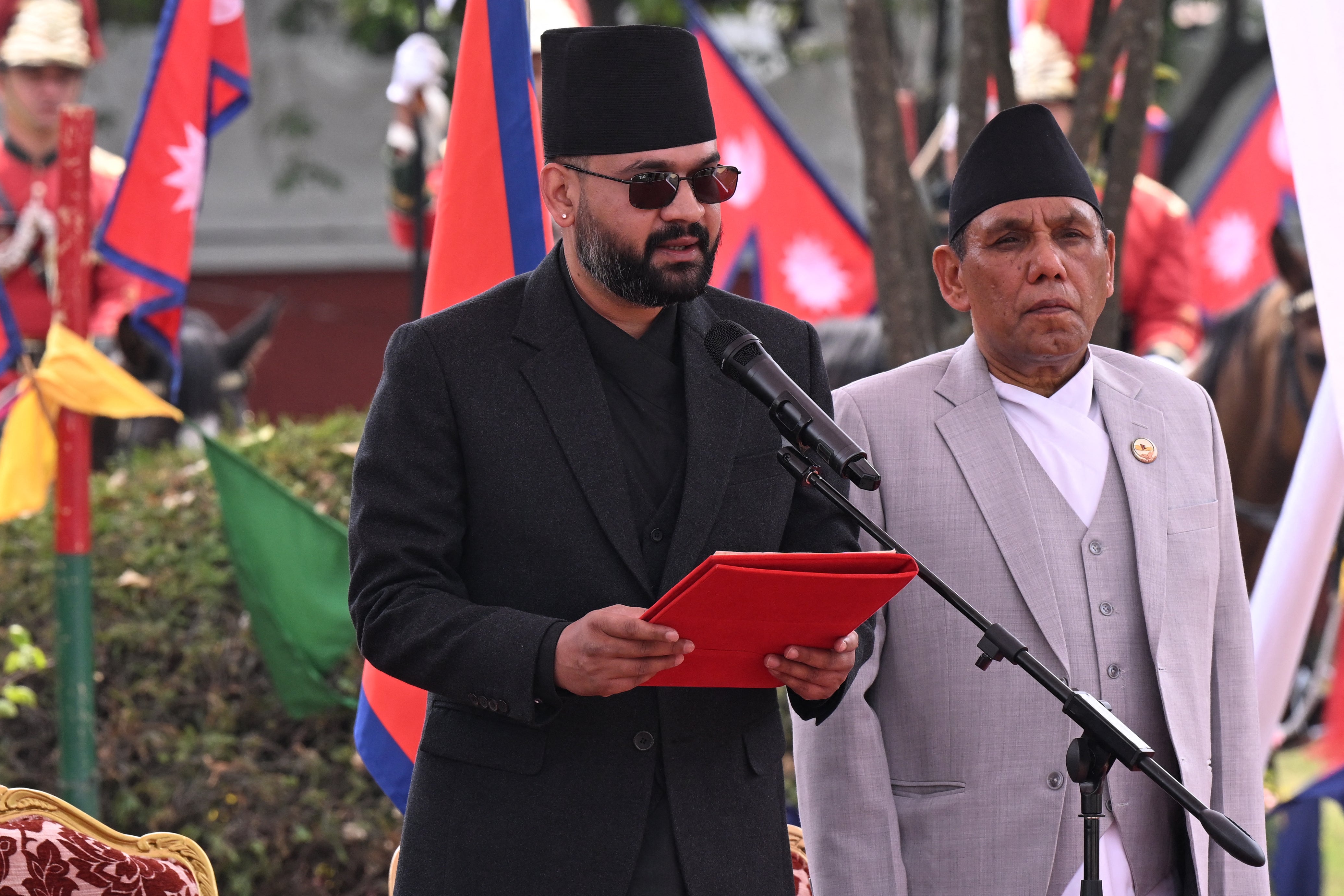
The administration of Balendra Shah announced over the weekend that the sitting government will offer the apology – for the first time ever – within 15 days under the prime minister's 100-point reform agenda.
Shah, the 35-year-old rapper and former Kathmandu mayor, is the youngest prime minister of Nepal, elected last month in a general election held almost six months after a Gen Z-led protest dismantled the then-government.
Dalits, formerly known as untouchables, are at the bottom of the ancient caste hierarchy linked to the Hindu faith and form more than 13 per cent of Nepal's 30 million population.
According to Shah’s agenda, the government will "formally acknowledge the injustice, discrimination and deprivation of opportunities inflicted on Dalits and historically marginalised communities by the state, society and policy structures".
The government said the proposed apology will be followed by measures on social justice, inclusive restoration, and historical reconciliation. Rights activists have welcomed the apology and the historic acknowledgment of generations of caste-based discrimination and exclusion.
The Dalit community, which sits at the bottom of the rigid social stratification system, has faced centuries-long severe discrimination across South Asia despite constitutional guarantees.
About 42 per cent of Dalits live in poverty, with lower literacy and persistently low representation in key institutions, according to reports.
Dalit activist Hira Lal Bishwakarma said the apology was a significant step, given that the state has previously claimed that such discrimination should not exist, but never formally admitted to persistent discrimination.
"Before moving past any historically tragic event, there must be an acknowledgment that the event occurred. Only then can reform efforts be honest," he told Nepal's digital newspaper Setopati.
Nepal in 2006 declared itself an "untouchability-free nation" and subsequently in 2011 criminalised caste-based discrimination. A decade later, in 2022, the National Assembly passed a resolution regarding the rights of the Dalit community. However, at the time, no public apology was issued by the government.
Saraswati Nepali, president of the Dalit Society Development Forum in Baitadi, said: "The state’s official apology will be like a balm for our wounds.
"But for it to heal entirely, the government must effectively ensure all our guaranteed rights. That would give us justice and ensure our dignity," she was quoted by The Times of India newspaper as saying.
Nepali recalled that she was not allowed to drink from the same water jar as her classmates as a child and was forced to walk home for drinking water. Nepal's biggest newspaper, The Kathmandu Post, in its editorial welcomed the move but warned that enacting change was easier said than done.
"The government has great authority to improve the lives of marginalised groups. It is thus vital to aggressively implement anti-discriminatory laws, expand marginalised groups’ access to education and job markets and hold those responsible for caste-based violence accountable," it stated.
Nepal’s decision to offer an official apology has promoted similar calls from India, where Dalits face similar, if not worse, discrimination.

Indian Dalit lawmaker Chandrashekhar Azad asked the lower house of parliament (Lok Sabha) to take moral responsibility for the historical injustices, drawing a comparison with Nepal’s commitment.
"When will this parliament apologise to those discriminated for thousands of years and even today face are forced to fight for basic necessities, such as food, clothing and shelter," he said in the Hindi language.
The caste system in India dates back thousands of years and is still critical in Indian life and politics, with those at the bottom rung routinely discriminated against. The Indian constitution banned caste-based discrimination in 1950, and successive governments have implemented policies to encourage greater social mobility for the “lower” castes. But across India, particularly outside big cities, the system persists to varying degrees.
There are hundreds of castes and subcastes in the country, largely based on family occupation. The nearly 200 million Dalits are on the lowest rung of the hierarchy and often targeted for discrimination.
The Indian government is set to collect caste details in its next population census, almost 95 years after it last collected such data during British colonial rule. Supporters of the caste census argue that a new count will help tailor affirmative action plans better, as the current quotas are based on decades-old data.
Bangladesh's prime minister, Tarique Rahman, shortly after his victory in the general election in February, said: "For every citizen, we want to make this country an independent country."
"Hindu, Buddhist, Christian, Dalit, Maharashtrian, Bannu, especially those who live in the mountains or in the sea, this country belongs to all of us," he said, according to the New Indian Express.
Bangladesh has never issued a formal apology to its Dalit population, estimated to be between 5.5 and 6.5 million. Most Dalits belong to the Hindu religion, with smaller numbers across Islam, Christianity, and Buddhism. Entrenched caste discrimination has left them vulnerable for centuries across nearly every socio-economic indicator.
Pakistan’s Dalits, officially classified as “scheduled castes”, number 849,614 according to the 2017 census, though activists and researchers say the true figure runs into the millions. Most of them are concentrated in the Sindh province, according to reports.
Like elsewhere in South Asia, they remain trapped at the bottom of a rigid caste hierarchy, confined largely to occupations such as manual scavenging, sewage cleaning, leather work and funeral services.
While caste discrimination in Sri Lanka is considered less severe than in other parts of South Asia, it remains deeply embedded, with some communities still denied access to religious sites and confined to stigmatised, hereditary work, according to the non-profit International Dalit Solidarity Network.
Meanwhile, the Taliban in Afghanistan has published a new penal code enshrining some of its most backward practices into the law, with women in particular set to suffer at the hands of the courts.
The criminal code effectively creates a new caste system of upper and lower members of Afghan society, allowing religious leaders or mullahs at the top virtual immunity from criminal prosecution and setting out the harshest punishments for those of the working class.
South Korea president says Iran war shows the need to ditch ‘risky’ fossil fuels
India begins world’s largest national population count. Here’s why it matters
At least 8 women killed in crowd crush at Indian temple
Tourist falls into sea as parasailing cable snaps at India beach
The country that could be the first to run out of fuel due to US-Iran war
Hundreds of thousands of Rohingya refugees in Bangladesh face food aid cuts