We are going to wrap up our liveblog for the day. Thanks for reading. Our latest news story, which leads on growing fears over the fate of thousands of people living near the quake’s epicentre, can be read here.
Our picture desk has put together a gallery of before and after photos of damaged buildings and temples. You can look at that here.
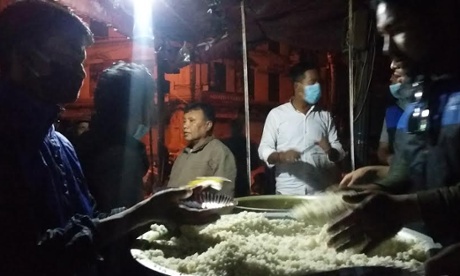
A local club in Basantapur Durbar Square is providing food for hundreds of earthquake survivors in the area, writes Ishwar Rauniyar.
He sent this picture.
UN launches $415m flash appeal
The UN has launched a $415m (£270m) urgent appeal to help estimated 8 million people affected by the earthquake over the next three months.
Here are some of the key points that lay out the scale of the needs:
- An estimate 2.8 million people have been displaced by the earthquake, as hundreds of thousands of people are afraid to return to their homes.
- More than 70,000 houses have been destroyed, a figure that is expected to rise.
- Only 14 survivors have been saved from the rubble.
- Fuel is urgently needed to pump ground water and maintain hospital services.
- Rain and thunder are forecast for the next 10 days ahead of monsoon season from June to September.
- Hospitals capacity has been overwhelmed forcing many people to be treated on roads. It said: “Managing dead bodies has been challenging and surgical facilities are overwhelmed. Many hospitals near Kathmandu have reportedly run out of medicines. Diarrhoea is already an issue in the Kathmandu valley.”
- An estimated 4.2 million people are in urgent need of water, sanitation and hygiene support.
- Some 3.5 million people need food assistance, including 1.4 million in need of priority assistance.
The appeal also raises the issue of weak government and accountability in Nepal. It says:
In the coming days and weeks coordination mechanisms will need to be strengthened and coordination support scaled-up to respond to immediate humanitarian needs. For example, in close collaboration with government and local and international partners support has been established for search and rescue coordination and will need to be pushed forward for civil-military coordination, joint response planning, assessments, relief distribution and information management to facilitate safe, secure and timely access to people in need.
In addition, engagement with affected communities is essential to ensure that they can be effectively actors in the response, taking life-saving actions at household level, accessing response programmes and providing feedback on challenges and gaps. Similarly, given local government capacity challenges and weak accountability mechanisms locally where election have not been held since 2002 due to the post-war transition, bolstering humanitarian accountability mechanisms will be essential to control.
Britain’s foreign secretary Philip Hammond has chaired a meeting of the government’s emergency committee to discuss the UK’s aid operation.
He tweeted that a UK aid flight was unloading 11 tonnes of supplies.
Just chaired COBR on UK support to #Nepal. UK flight unloading 11 tonnes vital aid in Kathmandu including search cameras, stretchers & tents
— Philip Hammond (@PHammondMP) April 29, 2015
The Telegraph’s defence correspondent, Ben Farmer, said he expects Hammond to announced the deployment of Chinook helicopters to Nepal.
Hammond expected to announce after Cobra meeting that Britain will send RAF Chinook helicopters to help rescue efforts in Nepal
— Ben Farmer (@benfarmerDT) April 29, 2015
The Nepalese police has published a list of 33 foreign nationals missing since the earthquake. It includes one British man - 23-year-old Matthew Carapiet. His parents from Maidstone, in Kent, have turned to Google Person Finder to try to track him down, BBC News reports.
There is more on other missing Britons here.
Updated
Summary
Here’s a summary of the latest developments:
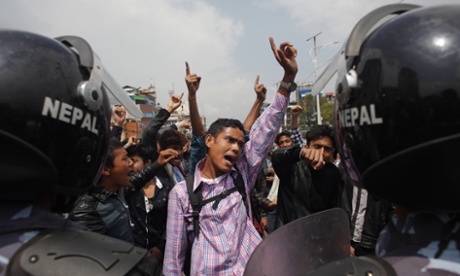
- Tensions are rising in Nepal over the slow pace of aid deliveries. About 200 people blocked traffic in Kathmandu after many faced huge queues for free bus rides out of the city. The protesters confronted police and there were minor scuffles but no arrests. There are confirmed reports that survivors broke into government offices in Dolakha district to demand relief supplies.
- Nepal’s prime minister, Sushil Koirala, was confronted by survivors desperate for relief deliveries when he visited a hospital in Kathmandu. Many survivors gathered in front of the prime minister to request to water, food and tents.
-
Aid is beginning to reach remote districts for the first time, humanitarian agencies claim. The Nepalese government has acknowledged “weaknesses” in the aid operation.
- Britain’s foreign office has confirmed the death of a non-resident British national in the earthquake. The US embassy is reported to have said that 500 Americans remain unaccounted for.
- A man pulled from the rubble of a collapsed hotel by a French rescue team more than three days after the Nepal earthquake says he drunk his own urine to survive. But hopes are fading of rescuing more survivors from the rubble. An official said the government had turned away offers of more rescue teams.
- The Nepalese authorities have confirmed that the death toll now stands at more than 5,000. On Tuesday Koirala said the eventual death toll could reach 10,000.
A risk-management expert tells my colleague Sam Jones that thousands more Nepalese people will die in future earthquakes and the country will slide further back into poverty if the government and the international community do not learn the lessons of Saturday’s disaster. Here’s an extract from Sam’s piece.
Katie Peters, a research fellow at the Overseas Development Institute (ODI), said that although significant progress had been made in retrofitting schools and hospitals and training people how to respond to earthquakes, more needs to be done to mitigate the effects of future natural disasters.
Peters, who works with Nepalese government on disaster risk, said that failure to invest in “building back better”, improving infrastructure and making sure everyone was as prepared as possible for quakes would prove costly. “There will continue to be a rise in both loss of life and economic loss from disasters,” she said. “That’s the reality – and it will cost more for the international community.”
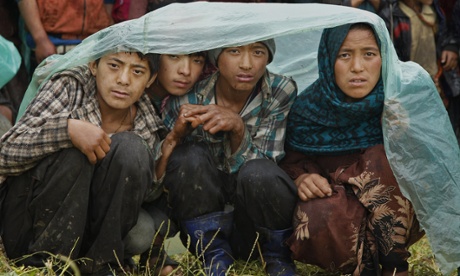
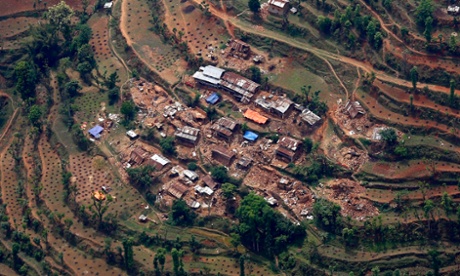
Some of the latest pictures from Nepal
Updated
The UK public donated more than £19m to Disasters Emergencies Committee’s Nepal appeal a day after it was launched.
DEC Chief Executive Saleh Saeed said: “People in the UK have, once again, shown their generosity by responding to help those whose lives have been devastated by disaster.”
“The region is hard to access and has thrown up many challenges for emergency relief teams, but aid is now getting through. Our member agencies are scaling up their efforts to provide essentials such as food, clean water, temporary shelter and medical care.”
Beware reports of violence and outbreaks of disease in the aftermath of an earthquake, writes Jonathan Katz, who witnessed first hand how the international media and aid agencies got it so wrong following the earthquake in Haiti in 2010.
Writing in the New York Times he says:
There is violence after disasters, just as there is violence every day wherever humans live. But taking a hard look back puts the lie to the idea that societies somehow become less cohesive after a natural shock, at a moment when most people are busy trying to put their lives back in order ...
As for the notion of post-disaster disease outbreaks, epidemiologists have gone looking for evidence of epidemics resulting from calamities such as earthquakes, and they have generally concluded that they don’t happen ...
Nepal is not Haiti, and 2015 is not 2010. Nepal has its own unique concerns, including high mountain passes at risk for avalanches and colder nights than we ever dreamed of in the Caribbean. Cholera, long endemic there, may spike in the coming monsoon season, as it often does. Nepal’s government is trying harder to coordinate the disaster response than Haiti’s did or could; among other things, it is asking for direct financial support online. More than in past disasters, I’ve seen many people on social media encouraging others to donate to local Nepalese organizations who know their country, and who will stay long after the relief phase ends.
Those engaged in the response, whether covering it or participating in it, now have to ask the questions we’ve failed to ask in the past: How exactly did the earthquake affect a given problem? What are the specific goals of the relief effort concerning it? And how will we know if they’ve been met? We don’t know for sure what will come of a relief effort in which everyone is asking those questions, because we’ve never really done it before. But for the people now struggling through their ordeal in the Himalayas, there’s no better time to try.
British national killed
A non-resident British national has been killed in the Nepal earthquake, the Foreign Office has confirmed, PA reports.
On Tuesday Foreign Secretary Philip Hammond said his officials were urgently investigating unconfirmed reports of a non-UK resident being killed.
Updated
The US embassy in Nepal has told ABC News that more than 500 Americans are still unaccounted for in Nepal.
More than 500 Americans unaccounted for after #NepalQuake says @USEmbassyNepal. #Nepal
— Alexander Marquardt (@MarquardtA) April 29, 2015
The Embassy’s Twitter feed says it has accounted for 436 US citizens initially reported as missing.
Since the #NepalEarthquake, the US Department of State has accounted for 436 lost U.S. citizens, helping them reconnect with families.
— U.S. Embassy Nepal (@USEmbassyNepal) April 29, 2015
Just this morning, Embassy staff located 25 more missing US citizens, all of whom are safe. #NepalEarthquake
— U.S. Embassy Nepal (@USEmbassyNepal) April 29, 2015
PM confronted by frustrated survivors
Nepal’s prime minister Sushil Koirala was confronted by survivors desperate for relief deliveries when he visited a hospital in Kathmandu today, writes Ishwar Rauniyar.
Many survivors and their relatives gathered in front of the prime minister to request to water, food and tents. The prime minister pledged to do what he could to provide basic needs, a local radio station reported.
Koirala was visiting visited Tribhuvan University Teaching hospital in Kathmandu to get the update on the crisis. He was accompanied by the chief of the Nepal Army Gaurab Sumsher Rana.
PHOTOS: Nepal PM Koirala visiting #IDF field hospital in #Kathmandu as IDF rescue teams search for survivors pic.twitter.com/8uO9EQN22X
— News_Executive (@News_Executive) April 29, 2015
Nepal will face a secondary crisis involving diseases such as cholera and potentially fatal diarrhoea in children unless water and sanitation and hygiene issue are addressed urgently, an aid agency has warned, writes Lisa O’Carroll.
“In the international community we are all concerned about moving quickly and delivering. There was some unrest here yesterday. People are hungry and concern is mounting about how long this can go on,” said Sean Casey, who is heading up the earthquake response for the International Medical Corps in Kathmandu.
There are no latrines in the camps, he said, calling for clearer leadership.
“There is not a lot of clarity about the priorities and where they lie,” he said.
IMC has scrambled a team of about 40 international and local medical volunteers together since Sunday but Casey said access to the worst-hit areas was a challenge for all aid agencies.
One of its two mobile medical units was “pushing on by foot” in the district of Dhading, close to the quake’s epicentre, because of access issues.
Although it was a race against time to save any quake survivors in the villages, it is also vital to get medical supplies out of the capital, Casey said.
“Even people who have relatively minor injuries, unless they are treated they are at risk of infection. Water and sanitation is also a serious concern for people who are isolated. This area is prone to cholera and we could see disease outbreak,” he said.
Casey visited the town of Gorkha on Sunday and said although it was badly damaged the hospital was functioning.
“The problem is getting to the northern villages, some of which are two days walk under normal circumstances. With landslides everyone is facing access problems,” he said.
The return journey to Kathmandu “took hours and hours” he said. “It was a parking lot with people living the city and there are landslides along the road to India.”

Thousands of earthquake survivors across Nepal have been venting their anger at the government for failing to address their basic needs for food, water and shelter, writes Ishwar Rauniyar.
A group of protestors broke into government offices in Dolakha district.
“Hundreds of people came to the office and vandalised it” said the senior official in the district, Prem Lal Lamichhane.
“We have been requesting for basic tents, food and water, but we haven’t received anything from the centre, so how can we provide help,” he said.
Lamichhane said the protesters did not have a place to sleep, and lack food and drinking water.
Sasmita Shrestha, 24, in Chautara of Sindhupalchowk district said people were very angry with the government. “None of the government bodies or the aid agencies have visited us to provide relief. We are still living in the open.”
She said there were chaotic scenes after the first relief packages were brought into government offices.
“It’s true we haven’t been able to reach to all the places,” said Krishna Prasad Gyawali, a top bureaucrat in the district
There are similar problems in Lalitpur district in Kathmandu valley, according to the chief district officer Yadav Koirala. He said dozens of people have gathered in the goverment offices to demand more aid.

The Nepalese government’s promise of free bus rides out of Kathmandu continues to backfire as those frustrated at queue for places vent their anger at the government.
Reuters reports that 200 Nepalis protested outside parliament, demanding the government increase the number of buses going to the interior hills and improve distribution of aid.

There have been more scuffles this time over water, AFP reports:
Desperate Nepalis clashed with riot police and seized supplies of bottled water in the capital Wednesday as anger boiled over among survivors of the earthquake.
Supplies are running thin and aftershocks have strained nerves in the ruined city, home to some 2.5 million before it was shattered by Saturday’s 7.8 magnitude quake.
Desperate to leave, thousands of people began gathering from before dawn outside the main bus station after the government promised to lay on special services to far-flung rural areas.
But when the buses failed to materialise, anger began surging and scuffles broke out between the crowds and riot police who were sent in to try to contain the situation near parliament.
Some protesters forced a truck carrying drinking water off the road and climbed on top of it, throwing the bottles into the crowd.
Columns of riot police stood behind rolls of barbed wire as rioters armed with sticks surged into the street, attacking buses and other vehicles.
At one point a young woman was pulled from her scooter and assaulted by an angry protester. Onlookers screamed at him to stop before riot police pulled him away.
The government acknowledged it had been overwhelmed by the devastation.
“There have been some weaknesses in managing the relief operation,” Communications Minister Minendra Rijal told Nepal’s Kantipur Television.
“The disaster has been so huge and unprecedented that we have not been in a position to meet the expectations of the needy people. But we are ready to accept our weakness, learn and move ahead in the best way possible.”

Updated
Nepal’s police spokesman Kamal Singh Bam has acknowledged that many Nepalese are “dissatisfied” by the slow pace of relief supplies, writes Ishwar Rauniyar.
Bam said: “We are trying our best with our available resources. We lack expertise and human resources to act promptly.”
He added: “We have sent relief packages to different districts including Kathmandu valley, Kavre Sindhupalchowk, Dolakha, Dhanding, Gorkha and others, so we hope people will get some respite soon,” Bam said.
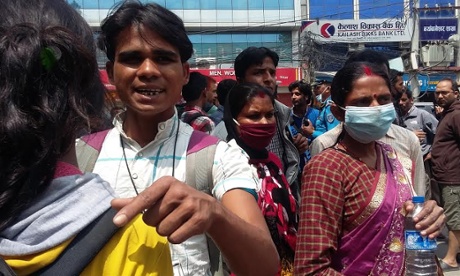
Dozens of people in Kathmandu expressed anger when they were denied free bus tickets promised by the government.
“The government is neither helping us to go out of Kathmandu, nor providing us proper relief,” said Ramesh Mahato (pictured) 25, from Sarlahi district. “We are living under the tent, with no water and food,” he added.
Reuters has more on the tensions over rescue flights and relief supplies among trekkers and locals.
It said Israeli trekkers fought for food and for places on rescue helicopters after being denied shelter by locals in the aftermath of the earthquake.
Up to 250 people were feared missing immediately after an avalanche on Tuesday hit a village in Langtang, a national park north of the capital Kathmandu. In the event, there were no confirmed deaths or serious injuries.
Hundreds of trekkers, many of them cold and hungry, were unable to make it back to safety because roads and paths had been blocked, while some guest houses damaged in the quake shut their doors to visitors.
Israeli trekker Lily Milkovich said there had been fights to get on the choppers, but tensions eased when it became clear that there would be enough flights to bring everyone to safety.
One Israeli rescuer described the situation in Langtang as “tense”, and said there had been fights over scarce food between stranded trekkers and Nepali villagers.
“Villagers think the tourists are taking too much of the food,” said Amit Rubin, who is based at Kathmandu airport with a team from Magnus International Search & Rescue.
District governor Uddhav Bhattarai, directing operations from the pick-up point, said 100 people were airlifted out on Wednesday morning with another 125 to come.
The Israeli helicopters were rescuing their own nationals first, before retrieving people from other countries, he told Reuters.
The hope of finding more survivors from the rubble appears to be dimming. AFP reports that Nepal has told foreign search and rescue teams not to come because there are already enough on the ground.
The UN says there are at least 37 separate search teams made up of more than 500 specialists and their sniffer dogs.
Resident coordinator for Nepal Jamie McGoldrick said the government had decided it had enough foreign experts in and around the capital Kathmandu.
“They feel they have enough capacity to deal with the immediate needs in search and rescue,” he told AFP.
“Those that are already en route can come but the others are being told not to.”
Kathmandu’s tiny single-runway airport has struggled to accommodate the huge rush of flights bringing in aid and foreign experts.
“There is a window of seven to nine days, tops, to rescue people. We are now on day four,” he said, adding that by Saturday operations would likely move on to the next stage.

Channel 4 News reporter Jonathan Miller confirms the rising frustration about the lack of aid. A woman in Bhaktapur, east of Kathmandu, said her community had had no food, medicine or emergency relief. “We want the relief, but our government is not helping us,” she said.
In a further sign of rising tensions, Reuters reports friction between foreigners and Nepalis desperate for relief supplies.
Members of an Israeli search-and-rescue group named Magnus said hundreds of tourists, including about 100 Israelis, were stranded in Langtang in Rasuwa district, a popular trekking area north of Kathmandu hit by a fresh avalanche on Tuesday.
Fights had broken out there because of food shortages, Magnus team member Amit Rubin said. “Villagers think the tourists are taking too much food,” Rubin said.
Updated
Nepal Times reporter Anurag Acharya says the government’s promise of free bus rides out of Kathmandu is creating “chaos”.
Well intentioned,badly planned: free bus ride 4 every1 creating chaos.Ppl tryn to reach family in distress stranded pic.twitter.com/5HvaGci0LD
— Anurag Acharya (@Anurag_Acharya) April 29, 2015
Hooligans among those lined up for free ride created disturbance.Intl media focus only an encouragement. #sensiblecoverage #NepalQuake
— Anurag Acharya (@Anurag_Acharya) April 29, 2015
Pls call off free ride for all,prioritise it only for ppl of affected dist. It is creating a riot. @lm_poudel @Nepal_PM_Fund @NEoCOfficial
— Anurag Acharya (@Anurag_Acharya) April 29, 2015
Updated
Protest at slow pace of aid
About 200 people have blocked traffic in Kathmandu to protest about the the slow pace of aid delivery, AP reports.
The protesters faced off with police and there were minor scuffles but no arrests were made. One protester says they haven’t received any relief.
“We are hungry, we haven’t had anything to drink. We haven’t been able to sleep. I have a 7-year-old child who is sleeping in the open. It’s getting cold and people are getting pneumonia,” he said.
He accused the government of not doing enough.
Earlier AFP reported that riot police were deployed to the streets of Kathmandu to contain anger among survivors.
Supplies are running thin and aftershocks have strained nerves in the ruined city. Desperate to leave, thousands of people began gathering from before dawn outside the main bus station after the government promised to lay on special services.
But when the buses failed to materialise, anger began surging and scuffles broke out between the crowds and the columns of riot police who were sent in to try to contain the situation near parliament.
“We have been waiting since dawn. They told us that there would be 250 buses coming but we haven’t seen any of them,” said Kishor Kavre, a 25-year-old student.

Aid is beginning to reach remote districts for the first time, humanitarian agencies claim.
But it will still take time for the food and other supplies to reach survivors in remote communities who have been cut off by landslides, warned said Geoff Pinnock, a World Food Programme emergencies officer.
“It doesn’t happen overnight,” Pinnock told AP from the village of Majuwa, 20kms downhill from Gorkha town, a staging area for relief efforts to areas worst-hit.
Nearby, five cargo trucks filled with rice, cooking oil and sugar stood on a grassy field fringed with banana and acacia trees beneath the soaring Himalayas, waiting for a helicopter carry the supplies to remote, quake-hit villages.
The UN’s food agency was expected to deliver shipments of high-energy food biscuits to be sent out to areas without enough water for cooking, Pinnock said. The first aid shipments had reached Dhading district, just east of Gorhka, he said.
Preparing landing zone for helicopter that will take @WFP food to #NepalQuake survivors in Gorkha district. pic.twitter.com/tot8m8B1DH
— WFP_Asia (@WFP_Asia) April 29, 2015
Meanwhile the UN’s humanitarian office says at least 37 urban search and rescue teams, involving more than 500 specially trained personnel, are currently searching for survivors.
It said: “Rescue workers are using specialist sound equipment to detect noise, concrete cutting equipment and chainsaws to cut through wreckage and heavy machinery to shift rubble. Individuals have been known to survive for days, if they have access to water, though water scarcity is one of the many growing humanitarian needs facing Nepal.”
Updated
The Guardian’s Pete Pattisson has a new video report from Barkobot, in Nepal’s Sindhupalchowk district, where homes have been reduced to rubble and everyone has been forced to sleep rough.
Fears of disease have prompted many in Nepal to wear face masks, writes Ishwar Rauniyar in Kathmandu.
“We have heard that swine flu might hit us,” said Niraj Paneru 20, from Gorkha District in the western Nepal. “We have to be prepared to defy disease.”
Chemist Rajendra Bajracharya said he had sold out of many bundles of masks.
“We are running out of masks as people are thronging my store for more masks,” he said. He added: “medicines for diarrhoea, cough and cold and fever are almost finished”.
Bajracharya thinks some people are stockpiling the medicines for fear diseases spreading in the coming days.
Kumar Thapa head of the Alka Hospital said the for masks and basic medication was increasing.
“I suspect an epidemic outbreak will be the next big challenge to tackle,” Thapa said.
“The hospital has already starting to see more patients.”
Sumina Shrestha, 26, of Chabahil, Kathmandu, said, “I have told my children that they must wear masks and stop visiting crowded places.”
The head of the epimidology under Department of Health Baburam Marasini says the authorities “cannot ignore the possible outbreak of disease”.
He said: “We are trying our best to mitigate the possible outbreak, but people have to be careful while drinking water, stop open defecting, and maintain a distance from people.”

Nepal confirms death toll has topped 5,000
Police in Nepal have confirmed that the death toll has topped 5,000, AP reports.
The Kathmandu police count currently stands at 4,989 with another 10,260 people have been injured in Nepal.
Another 61 were killed in neighbouring India and Bangladesh, and China’s official Xinhua News Agency reported 25 dead in Tibet.
The Home Ministry said the number of deaths in Nepal alone has risen to 5,006.
On Tuesday Nepal’s Prime Minister Sushil Koirala said the eventual death toll could reach 10,000.
Nepalese riot police struggle to hold back thousands fleeing Kathmandu
Melissa Davey signing off and handing over to my colleague in London, Matthew Weaver. In summary so far;
- Nepalese riot police are struggling to hold back thousands of residents trying to leave the earthquake-hit capital of Kathmandu, as anger mounts at the lack of buses being laid on by the authorities, AFP reports.
- Food and water supplies are scarce, and accommodation remains unsafe, prompting the mass exodus.
- Police officials say since morning they have managed more than 150 vehicles ferrying the people to different parts of the country, but it seems the people now in line will have to wait another few days.
- More than 100,000 people have already fled.
- Meanwhile, all climbers on the Nepal side of Mount Everest have left the mountain and the climbing season is over.
Updated
Plan International’s Tanya Barron is in Kathmandu and describes the devastation, having moved around the city over the past 36 hours.
I’ve been through Kathmandu and have seen a major high school simply ripped apart, vast areas turned to great hills of rubble.Then came the camps. The government is doing its best – a good job in the circumstances – and has set up 16 camps in the city.
The one I saw had flimsy cloth-screened rows of latrines with pools of muddy water around them. Water supply and sanitation is becoming a very urgent problem.
Most of the camp was a motley collection of tents and sheets strung from sticks. There was no lighting – the risks to girls and young women in these spaces will be high, sadly. That’s one of the things we at Plan will be focusing on in our response.
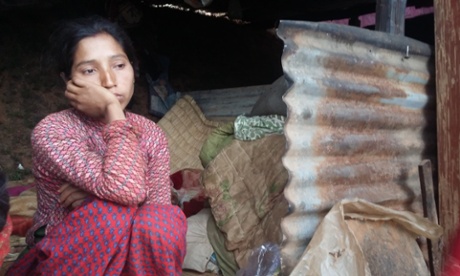
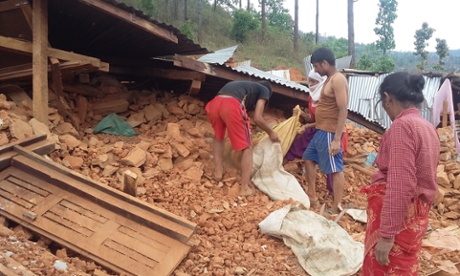
Ishwar Rauniyar, who is working for the Guardian in Nepal, has just filed these heartbreaking images from the remote village of Sindhupalchowk, which has been left devastated by the earthquake.
In the remote village of Sindhupalchowk, Goma Puri is grieving for the loss of her three-year-old son, Jenish.
On Saturday, she went to her farm leaving her son at home, but when she came back immediately after the earthquake, she found her son dead and buried under her house.
Sindhupalchowk has been hit hard by the earthquake, leaving 1,300 people dead there so far.
A family tries to recover some grains and their belongings from their collapsed house as they don’t have anything to eat.
Updated
Thousands of people are fleeing Kathmandu as essential supplies run low
Ishwar Rauniyar, who is working for the Guardian in Nepal, has filed this report as thousands of people flee Kathmandu, where food and water supplies are scarce, and accommodation remains unsafe;
Thousands of people are queuing around the Kathmandu’s Constituent Assembly Building looking for a bus coupon that will take them to their respective districts outside Kathmandu valley. They fear epidemic outbreak and earthquake aftershocks.
They were told that the government will provide them free bus services to different parts of the country.

Sarmila Panthi, 24, joined the queue at around 2am in the morning to go to her home in Dang district in western Nepal.
But, having queued for eight hours with no food and water she hasn’t got chance to get a ticket.
“Its been almost eight hours since I am here, with my one year old child,” she said. “Life has become very tough, as I can’t even go for water or toilet, if I go, others might take my number.”
She and her son, both look helpless.
She said that she was getting calls from her parents to come back to their house.
“We fear epidemic might occur and we might be infected and there’s chances of earthquake too.”
Some people were seen quarrelling with the police officials, demanding bus tickets.
“During election political leaders provide vehicles in free of costs but now they cannot even rescue us, and the government what is it doing,” said 21 years old Keshav.

Narsingh Jhakri, 68, has a different story.
He came to Kathmandu to get treatment for his wife Sushila, 55, but the day they landed they were trapped in the earthquake. “We hardly managed to survive, almost hit by a wall in the house,” he said.
Sushila couldn’t get treatment for her nerve problem. Yet they want to go back.
“I suspect what has happened to my other family members as I haven’t been able to contact them,” she said.
Police officials say since morning they have managed more than 150 vehicles ferrying the people to different parts of the country, but it seems the people now in line will have to wait another few days to be ferried.
Updated
More than 100,000 people have already left Kathmandu, terrified by the prospect of further earthquakes, epidemics and a breakdown in law and order, our south Asia correspondent, Jason Burke, reports;
At the checkpoint on the main highway out of the city, officials said more than 300 packed buses and coaches had passed since 5am this morning, nearly 10 times the usual number.
Most are heading for distant regions, where Kathmandu residents are originally from.
Officials said that the total of the exodus today may reach 300,000, more than a 10th of the cities total population.
“They keep coming, I’ve never seen it like this,” said stop inspector Tara Bhattrai.
“They are going to all destinations.
#UPGovt buses in Kathmandu helping evacuation :Major help in road transport. pic.twitter.com/8N4pAehH6J"
— Anurag Bhati (@VartmanSatta) April 28, 2015
The government has laid on free transport and many companies are changing all ticket prices.
Lokraz Pant, 20, an engineering student, said, “I’m afraid in Kathmandu”.
“Life is a struggle,” he said.
“We have a rented home there, but our own house is in the west and there is no earthquake there.
Sarlahi Singh, 30, a government scientist, said, “I’m going home where there is food and safety”.
“Here, there is no food,” he said. “There is no government support.”
Updated
Charity organisation, ActionAid, reports that people are sleeping rough on every road and junction, and that there is rubble everywhere.
A critical fear is for the health of people sleeping on the streets with cold nights, and clean water shortages, they say, with staff on the ground reporting heavy rain has just set in, contributing to health concerns.
Bimal Phnuyal, ActionAid Nepal’s country director, said on Wednesday;
The rain that has begun is making the lives of people in shelters even more difficult, and is also making relief-delivery challenging. The ActionAid team in Nepal have been working around the clock since the earthquake struck to do all that we can to ensure that those affected receive the critical relief that they need at this time.
Morning logistics meet to agree who we can reach today. We're planning to reach 150,000 with response - #Nepal pic.twitter.com/kyjzyWeYGH
— Tom Allen (@geecologist) April 29, 2015
According to UNICEF Australia,
- Some 8.1m people are estimated to be affected by the earthquake
- This includes an estimated 1m children
- There are 3,353 schools in the severely affected districts, 2,903 schools in the most affected districts, and a further 9,762 in the partially affected districts.
Temporary learning spaces for school-age children in affected areas are being established. Immediate needs include water, sanitation and hygiene, child protection, food, shelter, as well as medical tents, medication and surgical kits.
Nearly 1m children require urgent humanitarian assistance in aftermath of #NepalEarthquake: http://t.co/ET1rJtLYYC pic.twitter.com/2kGIQ1eipF
— UNICEF (@UNICEF) April 27, 2015
Updated
South Asia correspondent, Jason Burke has just sent us this;
What is clear is that a huge amount of aid is now coming into the country through its only International airport in Kathmandu.
There have been flights every few minutes landing through the night. So many flights in fact that there are real problems with congestion and a lot of aid is an held up out of the country.
So even when it clears that bottleneck at the airport any aid will then face huge difficulties on the road, it seems pretty clear that people I saw yesterday only 15 miles away from Kathmandu will have to wait a very long time before anything reaches them.
All climbers on the Nepal side of Mount Everest have left the mountain
This just in from Associated Press;
All climbers on the Nepal side of Mount Everest have left the mountain and the climbing season is over following a deadly earthquake that left thousands dead in Nepal and dozens of climbers killed or injured after an avalanche swept across the basecamp area, according to guiding companies and individual climbers.
Crews race to rescue climbers amid shifting weather on Mt. Everest after Nepal earthquake: http://t.co/JzFgO5x3cr pic.twitter.com/39kWA9Ze9G
— ABC News (@ABC) April 28, 2015
Teams attempting to climb the north side of Everest, the Tibet side, were called back to their base camp over the weekend and were holding discussions with Chinese officials about whether any summit attempts will be possible in the remaining weeks of the spring climbing season, said Adrian Ballinger, a guide for California-based Alpenglow Expeditions.
Eric Simonson with International Mountain Guides said their team came down with others on the Nepal side who had been trapped above the Khumbu Icefall, which was impassable after the avalanche swept away a fixed route through that section. “These will be the last of the climbers on the mountain,” he said in a Monday blogpost.
Updated
The managing director of Dreamers Destination treks, Temba Tsheri Sherpa, has given the Guardian permission to use some photos he has taken of Everest Base Camp.
Sherpa has been left devastated after losing five of his climbers in the avalanche that hit the camp.
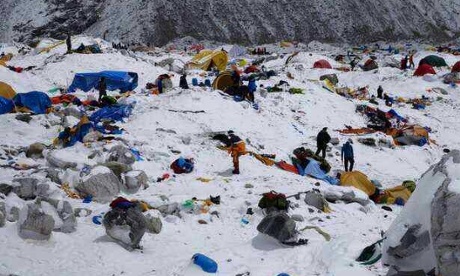
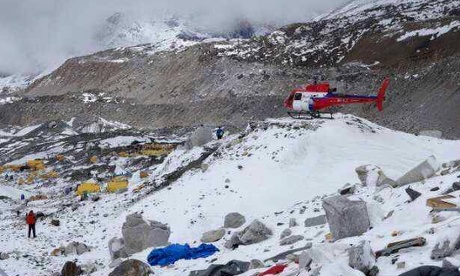
Updated
From our south Asia correspondent Jason Burke;
Just to give an idea of the logistical problems that people face getting made out to more distant areas, the convoy I’m with has just taken over an hour to clear Kathmandu itself and there is still five or six hours, possibly more, of driving to go before reaching Gorkha.
And even then the worst affected areas are a helicopter ride away with no other way of reaching them. To make matters worse, there are no effective communications once you leave Kathmandu. The mobile phone network is barely functioning in Gorkha and certainly is a mess pretty much everywhere else.
Borders of sindulpalchowk district, Nepal. Five houses, five brothers, 50 people homeless. pic.twitter.com/e95BA8tuIK
— Jason Burke (@burke_jason) April 28, 2015
A second military plane has been deployed to Nepal to deliver Australian aid to the earthquake-ravaged country, AAP reports.
The planes are due to arrive in Kathmandu on Thursday with tarpaulins, blankets, water tablets, health supplies, and a specialist medical team, while additional Defence personnel will provide support to embassy staff.
Hundreds of Australians stranded in Nepal will be airlifted to Bangkok until the planes are no longer required, the federal government said in a statement on Wednesday.
Two RAAF planes have left QLD base to deliver aid to Nepal, and bring back affected Aussies. #NepalEarthquake #9News pic.twitter.com/UC5ftXvxgr
— Nine News Brisbane (@9NewsBrisbane) April 29, 2015
Updated
Here is an update from the Guardian’s Caty Enders;
It seems there are villages that are being flown over by rescue helicopters in favour of resorts where westerners need rescue.
A Facebook post from climber Pasang Yangjin says her entire village was wiped out, and that rescue teams continue to pass overhead, doing nothing.
The villages of Thame and Upper Thame have been devastated. So far not one relief mission has arrived and all the homes are uninhabitable. It’s now cold, and raining. The local population desperately need better quality temporary shelters and much more help. So far at least seven empty commercial helicopter flights have flown in to the Yeti Mountain Home luxury hotel to evacuate its customers but not one brought anything.”
In the meantime, climbing expeditions are quietly mulling the possibility of continuing their expeditions, seemingly oblivious to the widespread devastation below.
A scene of destruction after ice thunders into Mount Everest base camp http://t.co/5qTyvnhFpc pic.twitter.com/msmiFP9miT
— The New York Times (@nytimes) April 28, 2015
The question is whether Sherpas will agree to set the Icefall for them. The defiant language of these tourists is eerily reminiscent of last year’s Everest tragedy, after which many climbers tried to persevere even when it was wildly inappropriate.
From climber Carsten Pederson, who is at Everest Base Camp;
The first problem we need to address if we want to climb is to find a route up through Khumbu Icefall, a task that is normally done by a special group of Sherpas called “Icefall Doctors” ... Despite the earthquakes and avalanches, there are still a lot of climbers here that have the motivation, strength, acclimatization and time to summit this year if it is possible. Even climbers that were evacuated yesterday wants to go back up.”
Guardian south Asia correspondent, Jason Burke, has sent through this update;
I’m on my way out of Kathmandu in a save the children aid convoy heading to the epicentre. Driving through the city I’ve seen huge queues, literally half a mile long, for aid distribution.
There are still a lot of people camping out and we can now see how many have lost their homes as those in the open simply out of fear of aftershocks have moved back to their houses. There are clearly thousands with nowhere to go.
At the main bus station there are scenes of chaos as hundreds fight for seats to get back to distant villages to be with families or check on property. All look haggard, tired and worried.
UNHCR is rushing supplies to #NepalEarthquake survivors- help us get aid where it is needed http://t.co/CNc4KOm2p8 pic.twitter.com/B04UD5UUK4
— Australia for UNHCR (@UNrefugees) April 29, 2015
Candlelight, and mobile phone, vigils have been taking place around the world since Saturday’s deadly earthquake in Nepal. Crowds of people in London, Multan (Pakistan) and New York have stood alongside members of the Nepalese diaspora to mark their respect for the more than 5,000 who died in the disaster.


Monica Tan signing off as I hand this blog to my colleague Melissa Davey.
Updated

Delivering aid to the more remote parts of the country has become an urgent task for Nepal’s government, but one made complicated by poor weather conditions and landslides that have blocked access.
Guardian journalist Jason Burke has reported from the tiny village of Swarathok, 43 miles (70km) from Kathmandu. Though all 71 households of Swarathok have been reduced to rubble, given there are thousands of people in the capital still without assistance it is unlikely aid will reach Swarathok anytime soon.
“No one has come. I walked to the police post and told them we were here. They said there was no plan and they had no orders and told us to stay where we are and wait. So we are waiting,” said Rashmita Shashtra, 23, a health worker in the village.
Aid is flowing into Nepal. The land route to India is open, and flights are landing round the clock at the nation’s single, and now very congested, international airport. There are now distributions of blankets, food and other vitals in some places and assessments under way of far-flung districts.
But Swarathok lies in the hilly district of Sindhupalchowk. The total number of deaths in the district now stands at 1,100 and is expected to rise further.
“All the aid stays in the capital city. Out here, we know nothing and no one knows about us,” said Sumon Rag Giri, 24.
Burke said reaching Swarathok required “hours driving on roads still threatened by landslides and strewn with debris, followed by an hour’s walk along a stony path”.

More photos from that extraordinary five-hour rescue on Tuesday by a joint Nepali-French search and rescue team in which a 28-year-old man was pulled from a collapsed apartment block in the capital Kathmandu.
Rishi Khanal had been on the second floor of a seven-storey building when the quake struck on Saturday, reported Reuters. He spent around 80 hours in a room with three dead bodies and had no access to food or water during his ordeal.
“It seems he survived by sheer willpower,” said Akhilesh Shrestha, a doctor who treated him.
The top floors were intact and the teams drilled down to him after he shouted for help and responded to questions in Nepali. Doctors said he may have a broken leg.


World Vision CEO Tim Costello is in Kathmandu and has seen bodies of Nepalese earthquake victims being cremated and thrown in a river, as local officials struggle to deal with the humanitarian crisis.
“What shocks you is seeing smoke and asking what that is – well, it’s burning the corpses and putting the ashes in the river here,” he told Australian Associated Press.
Costello said the scale of the disaster had overwhelmed the Nepalese government. “When you ask people if the government’s done enough, they basically say ‘we paid for our own tarpaulin and food and water and we really need international agencies and the rest of the world to help.’”
A giant tent city has been set up in Kathmandu, with clean water and toilets in short supply, and rumours present that another, bigger earthquake is coming. But the situation was worst in regional areas where no one has been able to access, he said.
“Our staff in the regions are getting really desperate. They say ‘nothing is getting out here’ because of landslides and bad weather,” Costello said.
He said it was a race to ensure sanitation was restored or an outbreak of disease could kill more people than the earthquake.
Updated
Death toll could reach 10,000, Nepal’s prime minister says

Welcome back to the Guardian’s coverage of the 7.8 magnitude earthquake that hit near Kathmandu on Saturday and its aftermath. An official death toll released 12 hours ago stands at 5,507, although Nepal’s prime minister Sushil Koirala has said this could reach 10,000. Around 8,000 people have been injured.
Koirala said getting help to remote areas was a “major challenge”, with pleas for help far exceeding its availability, but aid was finally reaching areas that had been fending for themselves since the disaster struck.
In Gorkha, one of the worst-hit districts, terrified residents ran with outstretched arms towards an Indian army helicopter to plead for food and water, Agence France-Presse has reported.
The United Nations said it was releasing US$15m from its emergency fund to help relief efforts while the World Food Programme said it aimed to get food aid to 1.4m people over the next three months. The UN aid chief, Valerie Amos, is to arrive on Thursday.
Military planes from countries such as the United States, China and Israel have also joined the rescue effort. Australia said it was raising its level of aid to $4.7m and sending a military plane to bring supplies and evacuate stranded citizens. However, lack of space at the only international airport has been hampering efforts to bring in relief by air.
Health workers, meanwhile, fear a major crisis is unfolding among survivors of the quake who are living in the open or in overcrowded tents with no access to sanitation or clean water. It rained heavily in the capital of Kathmandu on Tuesday, forcing people to find shelter wherever they could.
But there has also been some heartening news: French rescuers freed a man from the ruins of a three-storey Kathmandu hotel near the main bus station, reported the Associated Press. The man, identified as Rishi Khanal, was conscious and taken to a hospital.
Updated