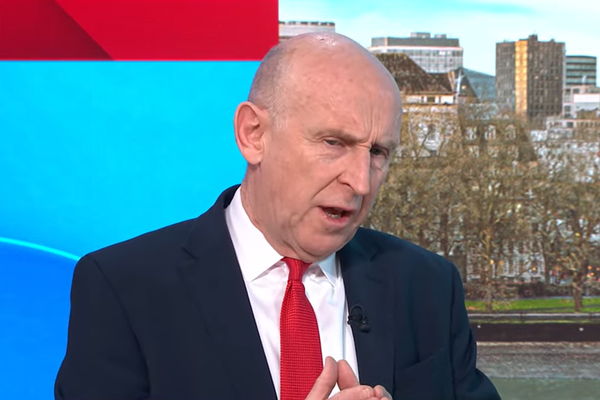
Alleging that the National Education Policy (NEP) 2020 sought to homogenise education in the country, Chief Minister Pinarayi Vijayan has said its implementation goes against two key driving forces of the country — federalism and inclusion.
He was speaking while inaugurating a web rally organised by the Kerala Vidhyabhyasa Samithi, a platform of Left-aligned service organisations, demanding the withdrawal of the policy on Tuesday.
Mr. Vijayan said formulation of the policy without incorporating the States’ views went against the spirit of the federal framework. “Federalism can thrive only when the States are empowered to fine-tune national policies in line with ground realities and diverse views, even while retaining basic framework evolved by the Centre. However, the Centre has chosen to centralise decision-making powers and weaken the plural nature that existed in education systems in each State,” he said.
He also flagged the proposed plan to identify ‘aspirational district’, which will require special interventions. While the NEP 2020 calls for declaring regions with large sections of socially and economically disadvantaged groups as Special Education Zones, the Chief Minister cautioned that the concept envisaged bringing such areas under the supervision of Central agencies, further posing danger to the federal structure.
According to Mr. Vijayan, the NEP that aspires to create a centralised system from the pre-primary to the research level will wipe off academic autonomy.
Besides, the plan to replace the apex advisory body Central Advisory Board of Education (CABE) with Rashtriya Shiksha Ayog will lead to excessive centralisation of powers. While the CABE ensured equal representation of each State, the proposed body is likely to be an exclusive panel with several States left out.
He also blamed the Centre for making no attempt to address the reasons that contributed to the high drop-out rates at each stages of the education system. While around 10% of the students dropped out at the primary level, the corresponding rates increased to 21% and 43.5% before the secondary and higher secondary school levels respectively.
All Kerala Private College Teachers’ Association (AKPCTA) general secretary C. Padmanabhan presided over the meeting. Left Democratic Front (LDF) convener A. Vijayaraghavan, former MP K.N. Balagopal, Kerala School Teachers Association (KSTA) general secretary K.C. Harikrishnan, Association of Kerala Government College Teachers (AKGCT) general secretary N. Manoj, and former dean of Faculty of Education in Delhi University Anita Rampal, were among those who were participated.