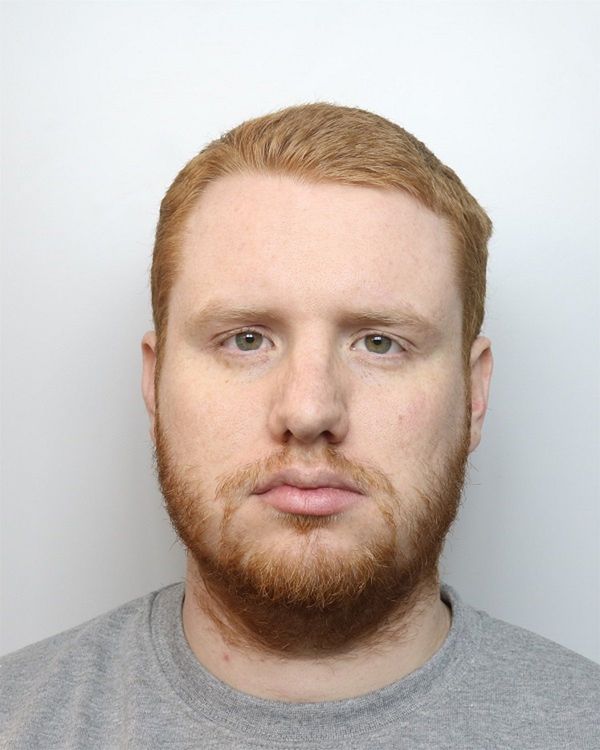
White supremacist Thomas Sewell allegedly smashed through a car’s window while a group of more than a dozen other neo-Nazis punched and kicked the vehicle and took a phone from one of the “petrified” passengers.
A prominent leader of Australia’s neo-Nazi movement, Sewell was arrested last month in relation to an alleged assault at the Cathedral Range state park in Victoria. He faces a number of charges, including assault, armed robbery and property damage.
On Wednesday, he was denied bail by Melbourne magistrate Timothy Bourke, despite Bourke noting the potential for delays in a hearing as well as what he agreed were “frailties” in the prosecution’s case.
Police say, on 10 May, a group of six men were on a hike through the national park when they came across a group of about 25 Caucasian men wearing black T-shirts.
Hours later, the six men were in a car park at the Cathedral Ranges when they came across the larger group again. One of the group of six men took out his phone and began to film the other men from inside his car.
According to a police summary of the charges read out in court, one of the men saw they were being filmed and was heard yelling out “antifa”. More than a dozen men surrounded the car, some of them allegedly kicking and punching the vehicle.
Police allege Sewell punched the passenger side window of the car, while another member of the group smashed the driver’s side window. It’s alleged that a number of the men tried to grab the driver’s car keys, while two were holding knives.
Detective senior constable Michael Taylor told the court the “panicked” passenger “pleaded” with the men to let them go, shouting “what do you want? Do you want my phone? Please, please. We just want to go home”. The man then held his phone out of the car, which was taken from him.
A man described as the “leader” of the group then told the men inside the car: “Do you want your phones? Get out of the car,” before the men managed to drive away from the scene.
The court heard that when police attended Sewell’s home a few days later, he had a cut to his wrist, and that blood matching his DNA was found both on the car used by the alleged victims and on Sewell’s own steering wheel. It was alleged that his mobile phone was also traced and found to have been in the proximity of the national park on the day of the alleged offences.
Wednesday’s bail hearing was the first time the full allegations against Sewell have been heard in court.
Taylor told the court he had concerns about what he called Sewell’s “escalating violence” and the safety of the alleged victims in the assault.
He described Sewell as someone with “remarkable grandiosity of himself and the white race” who used his significant online following to “indoctrinate” others into a “neo-Nazi subculture based on racism and contempt of other races and religions”.
Taylor said Sewell’s behaviour had become “more erratic and volatile” and he had shown a “propensity for violence” that had become “really, seriously concerning for police” because he was becoming “more outwardly aggressive”.
The court also heard there was significant fear among the alleged victims, and some had refused to give formal statements to police. Taylor told the court that in phone calls made by Sewell while on remand to other members of his group, he had told them to “investigate” statements made by the witnesses.
“The most important thing is for you to be looking over [the] witness statements ... there are interesting little clues in there,” the court heard Sewell was recorded as saying.
Earlier Sewell’s defence lawyer, Kieran Reynolds, noted the victims had not yet positively identified Sewell as the person who punched the window, wielded the knife or told the men to get out of the car. He also noted “inconsistencies” with the statements of the men, including about the description of the men and what took place at the scene.
“There are absolute frailties in the police case,” Reynolds told the court.
“The police case is certainly not as strong as what it has been made out to be. There are issues with who made the demands, who took the phones, and at what stage knives were produced and who produced those knives.
“One of the frailties runs on this: it appears some people were wearing balaclavas, some were not, and there are issues with identification of potential suspects. There may be a differing view of how this matter took place.”
But while he agreed there was a risk of delay in the case, the Melbourne magistrate Timothy Bourke denied Sewell’s bail application, saying he accepted he found he posed an “unacceptable risk” of committing further offences or endangering the public or the welfare of witnesses in the case if he was granted bail.