Two weeks in politics is a long time – especially two weeks in which a previously marginalised, insurgent leadership has taken over the Labour party. Two developments, neither obvious when Jeremy Corbyn’s landslide win was announced on 12 September, are already clear at the Brighton conference. Both are driven by a keen survival instinct.
On the left Corbyn and his shadow chancellor (it gets easier to type that after a bit of practice), John McDonnell, seek to conciliate the old regime, in terms of both policy and tone. Trident, Europe, Nato … the list is growing. It may just be tactics, but the reassuring charm offensive is clear.
On Radio 4’s Today programme, McDonnell said very little that will have upset Middle Britain’s middle classes, though he is likely to have unsettled big business. That may change too. For the moment it is all sweetness, light and eminently reasonable consultation on everything from tax avoidance to a strategy for growth.
Equally striking however is the response of the Labour right – the Blairites and Brownites; the moderates and the mainstream Tribune Group kind of left; the people who thought their inheritance was reasonably secure, but isn’t. Some have refused to serve in the shadow cabinet. Others haven’t. There is always fresh talent to try.
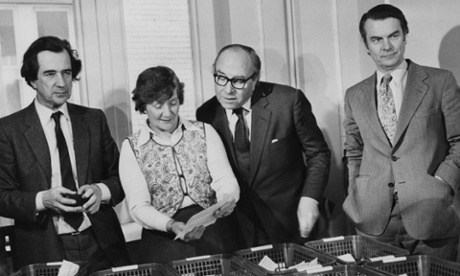
But ahead of Corbyn’s belatedly predicted victory, and in the immediate aftermath, there was excited talk of splits and breakaways by outraged centre-lefties. Given the experience of the SDP, whose Gang of Four broke with Labour in 1981 after Michael Foot’s election, it seemed a foolish response in 2015.

Foot was a loyal deputy PM in hard times (1976-79) and a major political figure for decades. The fleeing foursome were substantial figures too: Roy Jenkins, Shirley Williams, David Owen and Bill Rodgers. The present disputants seem Lilliputian by comparison.
But their rebellion ended in a merger with the Liberals and coalition with the Tories. In the interval the split helped sustain Margaret Thatcher in office.
Not a good idea then; and would-be Labour splitters have quickly realised that the smart thing to do is stay and fight their corner. After all, if they believe what they say it is only a matter of time before Corbyn stumbles fatally and falls; before he realises he is nearly 70 and not equipped for the job he did not expect to get.
Corbyn thinks otherwise – or says he does. How could he not? But the modernisers, gathered under the Progress banner or in new cabals and groupings, think he is bound to compromise with electoral necessity – thus alienating his core supporters, old lags and novices alike – or suffer humiliation at the polls.
There are local and devolved elections next year, including in Scotland and London. That also requires the Brighton conference not to fall out in public as it did so often in the 70s and 80s. Those conferences were exhilarating and scary; great theatre but disastrous as platforms for electoral success.
Neither Corbynites nor modernisers (is that the word?) have yet drawn up a convincing road map that could command a majority among the disaffected British electorate. They have that in common too.
“We know what’s going to happen, we’ve seen this movie before,” say assorted non-Corbynites. But not very loudly, however privately appalled they may be. They disagree about how long the process of self-destruction will last. No one wants to fire the shot that reopens ancient splits. Some concedethat perhaps Corbyn is on to something. The Corbyn camp certainly thinks so – look at all those new members, all fired up.
“Jeremy has a mandate from the party,” they counter. He certainly does. Even his critics can see that. It is another reason why they now realise they must rally to the leadership and see what happens next. If they don’t hang together they will surely hang separately.