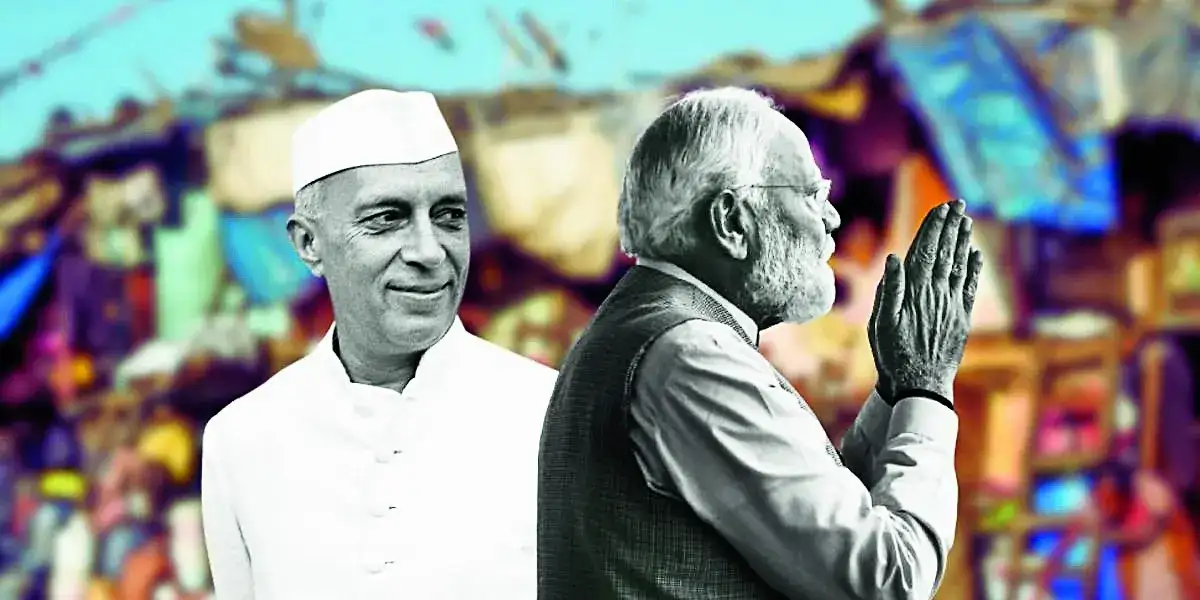
As Narendra Modi becomes India's longest-serving, popularly-elected head of government, comparative assessments with the man he has surpassed on that specific metric are inevitable. Separately, a sober, rather than superficial, reflection on the milestone is also merited.
The first question is obviously the easier one to attempt to answer, even if the true judgement belongs to history. For the moment, it will suffice to say Jawaharlal Nehru and Modi are likely to go down as India's most consequential Prime Ministers in terms of the lasting impact of their legacies.
In context and impulse, there is more in common than either individual's partisans would admit. While no period has been free of tribulations, it could be argued the 2020s have been India's most challenging decade since the postwar architecture was reshaped in the late 1940s and early 1950s. Today, like then, there are global shifts, great-power turbulence, and a messy churning of the political and economic order. Neither Nehru nor Modi had any precedents or templates to follow. They walked alone.
There are other similarities, too. Both men had an instinctive trust - unmatched by any other Indian PM - in technology as not just an economic and innovation-enabler, but as a force-multiplier for social transformation. Finally, both took large and ambitious bets in devoting precious capital to big-picture projects.
Nehru built an industrial base, exemplified by the construction of three steel plants in a half-decade in the late 1950s, with three separate international partnerships. Modi's pursuit of an Indian semiconductor mission is driven by a similar determination and equally diverse diplomatic engagements.
From virtually nothing, an ecosystem has begun to emerge. Its second phase will see further investments in materials and equipment. If the semiconductor ecosystem is a skyscraper, India is in the early storeys. Four years ago, it wasn't even at groundbreaking.
Like Nehru, Modi has faced opposition - well-meaning as well as opportunistic - that has questioned such capital-intensive programmes. Yet, Modi has persisted, recognising the need for building national resilience and longer-term economic security. He has taken responsibility and not left tough decisions and hard beginnings to a future generation. Nehru faced similar choices in the 1950s.
Having said that, the pushback Nehru got was ideational, not electoral. Modi operates in a much more competitive polity. This makes his repeated demonstration of electoral appeal particularly remarkable. Nehru's Congress earned voter success on the legacy and goodwill of the freedom struggle. Other than in small pockets - the Andhra region of the erstwhile Madras state; or Kerala in 1957 - it faced little resistance.
The Modi-era BJP began with a base in largely northern and western India. Today, it's the dominant party in eastern India as well, with inroads in the south, even as far as Kerala. This has been an organic, pan-India flowering - with states such as Haryana and Tripura, Bihar and now Bengal seeing a growing BJP footprint.
Purely as national expansion of a political movement, this is unprecedented since Congress' experience of a very different, non-electoral and uncontested accretion in the 1920s. Nehru was the repository of that rich inheritance. Modi has both shaped and been shaped by bottom-up urges.
It is often asked why Modi takes every election so seriously. Why can't he 'just concentrate on governance'? This is an innocent question that completely misses the hyper-competitive nature of modern politics, and inter-connection between electoral validation and policy advance. Each time Modi wins an election - not necessarily for Lok Sabha but even a BJP major state election victory - it replenishes his political capital for the next set of policy and legislative priorities.
Nehru did not need this constant replenishment. He worked to a 5-year cycle. 'One nation-one election' was the default plebiscitary ethic of the Indian republic. Modi has no such luxury, not in an age of constant electioneering (and even everyday social media referenda). Electoral politics in the Nehru epoch knew wartime and peacetime. For Modi, there can be no easy distinction.
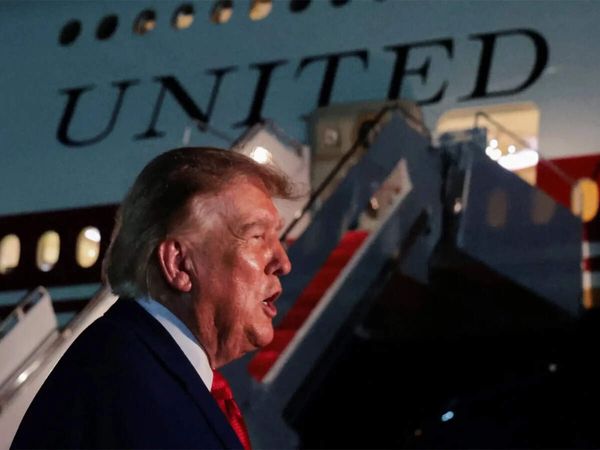
Consider an example from another democracy, the US. So much of Donald Trump's future rests on the verdict of midterm Congressional elections this November. This is one round of elections in one presidential term. Modi has navigated and outlasted multiple parliamentary and state elections over a 12-year period since May 2014. The magnitude of that achievement is incalculable.
The writer is partner, The Asia Group, and chair of its India practice