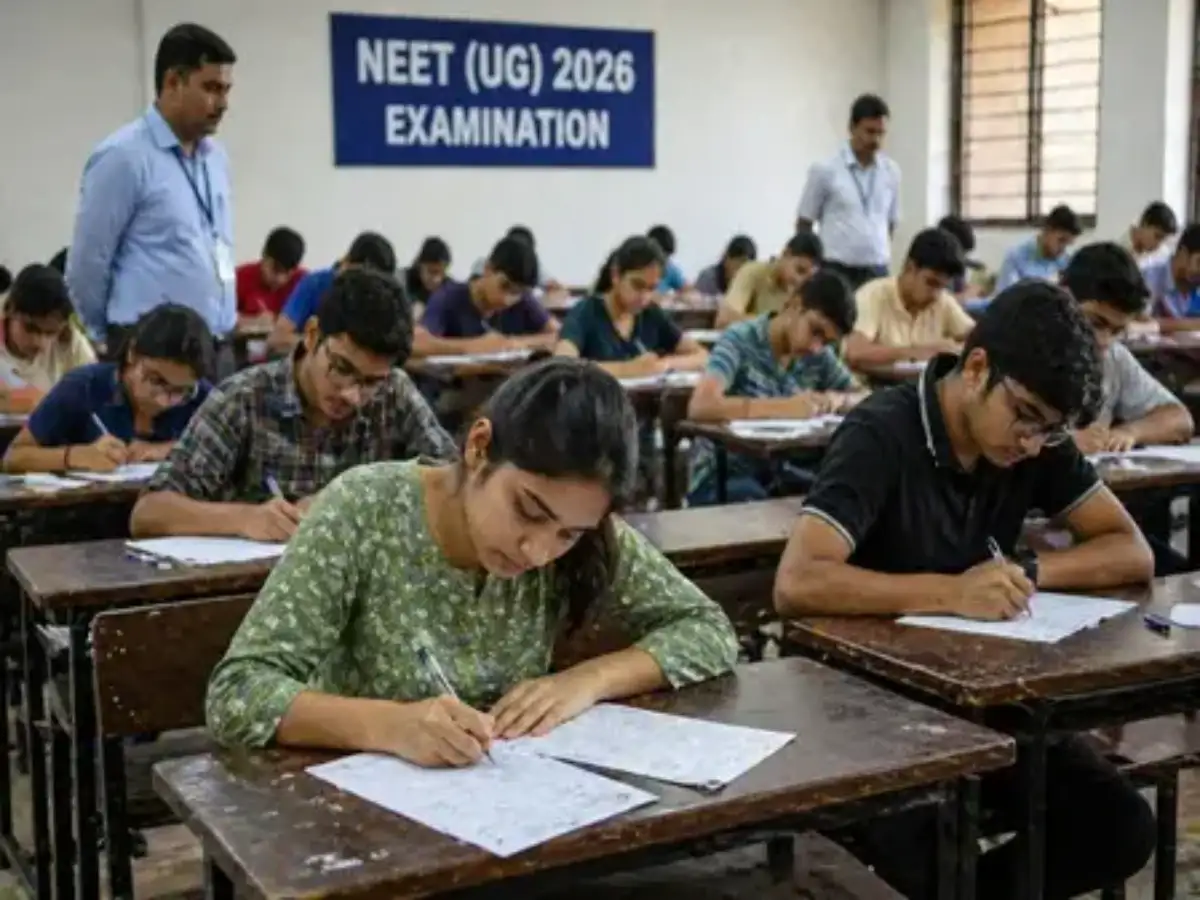
The controversy surrounding the alleged NEET-UG 2026 paper leak has once again raised serious concerns about the functioning of the National Testing Agency (NTA), with several recommendations made by the K Radhakrishnan Committee after the NEET-UG 2024 crisis still awaiting implementation.Following widespread outrage over the 2024 examination irregularities, the Centre had constituted a high-level committee headed by former ISRO chief K Radhakrishnan to recommend reforms in the conduct of national entrance examinations. The panel proposed sweeping changes aimed at improving transparency, security and credibility within the system.
Among the most significant recommendations was the introduction of a multistage authentication system using biometrics and artificial intelligence to strengthen candidate verification and prevent impersonation.
The panel also proposed hybrid examinations backed by encrypted question papers, which would be delivered to confidential servers at examination centres shortly before the test. To support this model, the committee recommended the installation of high-speed printers at centres, with question papers distributed in PPT format to reduce the risk of leaks during transportation.
Another major recommendation focused on establishing an oversight mechanism for the coaching industry while simultaneously strengthening school education, in an effort to reduce excessive dependence on private coaching centres.
The committee further suggested conducting examinations in multiple sessions spread over several days, alongside the creation of standardised testing centres, mobile examination centres for rural areas and the implementation of a digital examination ecosystem referred to as “DigiExam”.
However, despite the extensive recommendations, even the most basic requirement, an efficient CCTV surveillance system at examination centres, has reportedly remained a challenge.
According to reports submitted by IIT Madras, which monitored examination centres across Tamil Nadu, there was “no camera feed” available in at least nine centres and nearly 60 examination rooms during NEET-related examinations.
Similarly, IISc Bangalore reportedly found instances where CCTV cameras were non-functional at several centres, including 10 centres where no CCTV cameras were working at all, while one centre reportedly had less than 50 per cent camera functionality.
The renewed scrutiny has also brought attention to Rajasthan’s Sikar district, which has rapidly emerged as a major coaching hub. Often described as the new “U-Bustan”, Sikar is increasingly being compared with Kota for its growing concentration of coaching institutes preparing students for engineering and medical entrance examinations.
An IIT Madras report submitted to the Supreme Court in 2024 stated that among the top 500 rankers in NEET-related examinations, Sikar accounted for 29 candidates, compared with Kota’s 18, while Patna in Bihar accounted for four.
The report specifically noted that Sikar, Kota and Kottayam were leading the list due to the high concentration of coaching institutes in these locations.
Amid the 2026 controversy, allegations have now surfaced claiming that a network involving paying guest accommodations housing NEET-UG aspirants, coaching intermediaries and MBBS counsellors may have played a role in facilitating the alleged “guess paper” leak.
The 2024 NEET-UG Controversy
NEET-UG 2024 had itself been engulfed in controversy over allegations of paper leaks and the awarding of grace marks.
Questions were raised after an unusually high number of candidates secured top scores, including marks such as 718 and 719. In total, 67 candidates achieved a perfect score of 720 out of 720.
Subsequently, a re-examination was conducted on 23 June 2024 for 1,563 candidates who had received grace marks. The NTA stated that compensatory marks had been awarded because some candidates allegedly suffered a “loss of examination time”.
The matter eventually reached the Supreme Court, while investigations into alleged paper leaks in Bihar and other states were transferred to the Central Bureau of Investigation (CBI).
In July 2024, however, the Supreme Court declined to order a nationwide re-test, observing that there was insufficient evidence to establish a systemic breach affecting the entire examination process.
Key Recommendations of the Radhakrishnan Panel
The Radhakrishnan Committee’s recommendations included:
- Minimising the outsourcing of examination staff and centres
- Conducting maximum entrance examinations online
- Introducing hybrid examination models where full computer-based testing may not be feasible
- Implementing biometric and AI-based authentication systems
- Delivering encrypted question papers through secure digital systems
- Establishing standardised and mobile testing centres
- Strengthening surveillance and monitoring systems
- Creating oversight mechanisms for coaching institutes
- Considering a cap on the number of attempts in major entrance examinations, including NEET
While several proposals were welcomed as necessary reforms, the latest allegations surrounding NEET-UG 2026 have intensified criticism over the pace of implementation and the continuing vulnerabilities in India’s examination system.
Inputs from agencies