Nearly 250 people were feared missing after a boat carrying Rohingya refugees and Bangladeshi nationals capsized in the Andaman Sea last week, the UN and migration agencies said on Tuesday.
The boat sank after encountering heavy winds and rough seas. “The trawler, which departed from Teknaf in southern Bangladesh and was on its way to Malaysia, reportedly sank due to heavy winds, rough seas and overcrowding,” the United Nations High Commissioner for Refugees reported in a statement.
The exact circumstances surrounding the incident were not immediately clear, but preliminary information indicated that the vessel was carrying nearly 280 men, women and children. It had departed Bangladesh on 4 April.
“This tragedy highlights the devastating human cost of protracted displacement and the continued absence of durable solutions for the Rohingya," the International Organization for Migration noted.
One of the survivors recounted the harrowing journey at sea that nearly cost him his life. “There was hardly any oxygen," Rafiqual Islam said, claiming that at least 30 people died from suffocation before the boat capsized. "We could not breathe."
He indicated that there were traffickers on board.
The passengers had to endure four days and nights of rapidly worsening conditions as the suspected traffickers, looking to avoid naval patrols, forced them into cramped storage compartments meant for fish and nets, he said.
Mr Islam said only a handful of people survived. They were rescued by a passing Bangladeshi oil vessel and alerted the crew to the fellow passengers still in the water. “They later found five more people,” he said.
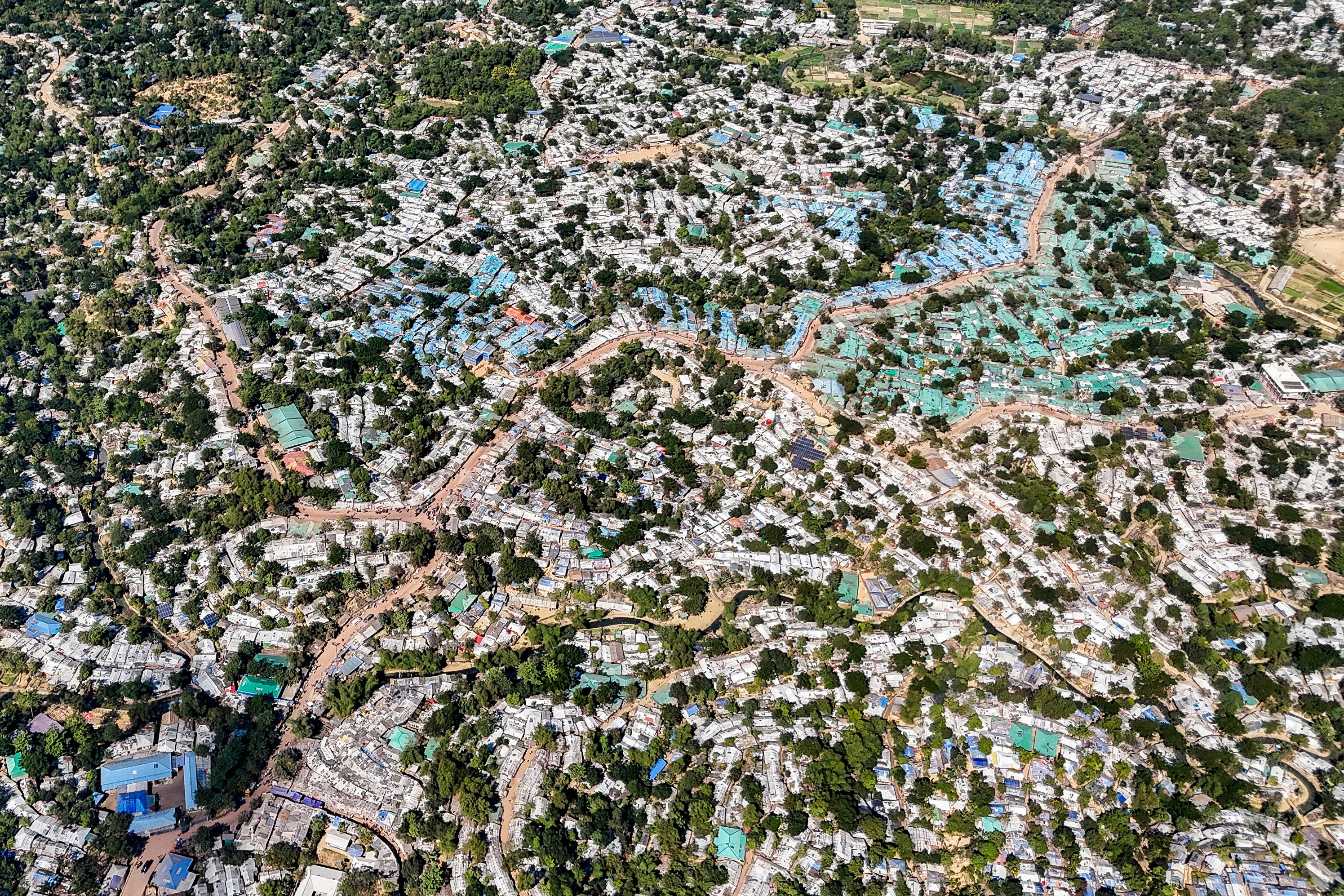
The Rohingya are an impoverished Muslim minority originally from Myanmar’s Rakhine state. Almost 1.3 million of them fled as refugees to neighbouring Bangladesh following a brutal military crackdown in 2017 that was marked by widespread violence and home burnings. In the decades before they were forced to flee their homes, the Rohingya had been subjected to systematic discrimination, deprivation and violence by both the state and the largely Buddhist ethnic militias in the region.
The refugees travelling on the ill-fated boat had likely left from Bangladesh’s Cox’s Bazar, where almost a million of them continue to live in overcrowded camps in squalid conditions.
Aid agencies warn the situation is worsening for the refugees as humanitarian support declines. A recent report by the International Rescue Committee, based on a survey of 500 households in Cox’s Bazar, found that just 2 per cent of the Rohingya parents felt hopeful about their children's future, compared with 84 per cent among host communities.
Many of the refugees risk perilous sea journeys to Malaysia, a majority Muslim nation that does not recognise their refugee status but is seen as offering better prospects for work and safety.
The Southeast Asian country is estimated to shelter the largest Rohingya refugee community after Bangladesh.
In their own country, the Buddhist-majority Myanmar, Rohingya Muslims were regarded as foreign interlopers from South Asia and even denied citizenship.
Why Myanmar’s new government is just ‘a junta in civilian clothing’
Former Malaysian PM Mahathir Mohamad says he has lost control of legs after fall
Elephant tramples 69-year-old man to death at Malaysian oil plantation
Ex-policemen get death penalty over student’s killing during Bangladesh protests
Young Thais react to ‘Hunger Games’-style military draft lottery
Philippines alleges ‘cyanide sabotage’ by China in South China Sea