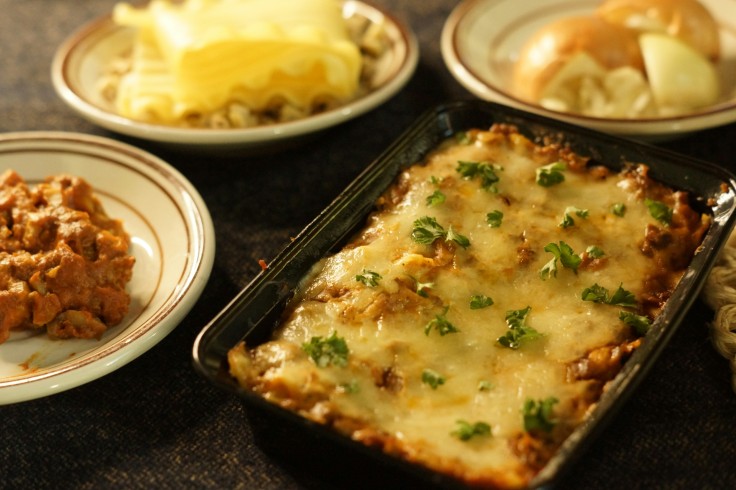
Federal food safety regulators have announced the recall of approximately 22,880 pounds of prepared baked spaghetti and chicken cobbler that may contain metal slivers. The Food Safety and Inspection Service said the products, made by Ukrop's Homestyle Foods of Richmond, Virginia, were produced between July 1 and July 29 and shipped to retailers in Virginia, North Carolina and West Virginia, along with Department of Defense commissaries and online orders.
The recall began with a customer. FSIS said the problem surfaced after the establishment received a consumer complaint about a metal piece found in a fully cooked product. No confirmed injuries have been reported.
These are refrigerated prepared meals of the kind bought for a weeknight, which means a meaningful share of the affected inventory is already in home refrigerators and freezers rather than sitting on shelves. That is the reason this recall stays open longer than the shelf-life dates suggest.
An Aluminum Baking Pan at the Center of the Problem
The company's account, posted in its announcement through the FDA, identifies the mechanism. During a routine review, a small sliver of aluminum was discovered in a baking pan used to prepare six of its products. A similar fragment was then identified in a chicken cobbler product.
That distinction matters for how consumers should read this. The contamination source is not an ingredient and not a single mishandled batch. It is the equipment, which means every product prepared in pans from the affected lots falls within the scope regardless of recipe.
Ukrop's said its baking pan supplier has been notified and has begun removing potentially affected pan lots from distribution. "While no injuries have been reported, consumer safety remains our highest priority," the company said in its release.
Two Notices Cover Different Product Lists
There is a wrinkle worth understanding, because the two published lists do not match and a consumer checking only one may miss an item.
The company's own recall, issued first, covers six products: Baked Spaghetti, Baked Spaghetti Bulk, Chicken Cobbler, Chicken Cobbler Bulk, Bread Pudding with Vanilla Sauce, and Bread Pudding with Vanilla Sauce Kit.
The FSIS notice covers only four of those, because the agency's jurisdiction runs to meat and poultry products. The FSIS list is 62.4-oz aluminum pans of Ukrop's Baked Spaghetti Bulk, 14.8-oz cardboard trays of Ukrop's Baked Spaghetti, 48-oz aluminum pans of Ukrop's Chicken Cobbler Bulk, and 11.6-oz cardboard trays of Ukrop's Chicken Cobbler. Those items bear establishment number EST. 19979 or P-19979 in the mark of inspection.
Best-by dates on the FSIS-covered items run from July 8 through August 5. The company's list, which includes the bread pudding items, extends the range back to July 6. Some national outlets have reported a 4.8-oz spaghetti tray; the FSIS notice specifies 14.8 ounces. Consumers should work from the federal list for the meat and poultry items and the company list for the desserts.
Swallowed Metal Fragments Can Cause Real Injury
Foreign-material recalls are sometimes treated as a lesser category than pathogen recalls. Metal slivers do not cause outbreaks, and there is no incubation period to track. The injury pathway is mechanical and immediate.
A sharp fragment can lacerate the mouth, gums or throat, crack a tooth, or cause pain on swallowing. A fragment that reaches the digestive tract can cause abdominal pain, and in uncommon cases perforation or obstruction. Most small, smooth foreign objects pass without harm; sharp, rigid slivers are the ones that concern clinicians.
Risk is not distributed evenly. Young children, older adults and anyone with swallowing difficulty are more likely to be injured by a fragment and less likely to detect and spit it out. People with inflammatory bowel disease, diverticular disease or recent gastrointestinal surgery face higher consequences from a fragment that travels further.
Anyone who believes they swallowed metal and has persistent throat pain, painful swallowing, abdominal pain, vomiting, or blood in vomit or stool should seek medical evaluation. Sudden severe abdominal pain or significant bleeding requires emergency care. FSIS advises anyone concerned about an injury to contact a health care provider. This is general information and not a diagnosis.
Cooking does not address this hazard. Heat has no effect on a metal fragment, and reheating a recalled meal does not make it safe.
Freezers Are Why This Recall Has a Long Tail
FSIS stated specifically that it is concerned some product may be in consumers' refrigerators or freezers. That single sentence is the operational core of the recall.
A refrigerated prepared meal with a best-by date in late July or early August will be gone from store shelves quickly. The same meal moved to a home freezer in mid-July can sit for months, and the best-by date on a frozen item stops functioning as a reminder. Households that transfer prepared meals out of original packaging lose the establishment number and date code entirely.
Consumers who have these products should throw them away or return them to the place of purchase. When packaging is gone and identification is impossible, discarding is the appropriate call rather than guessing.
Ukrop's said all retail locations have been notified and are removing the products, and consumers with questions can reach the company at 804-340-3050. FSIS posts retail distribution lists on its recalls page when they become available, which is the practical way to check whether a specific store received affected product.
FSIS classifies recalls on a three-level scale based on the likelihood that consuming a product will cause health consequences, with the most serious designation reserved for situations carrying a reasonable probability of serious adverse health effects. Consumers can find the classification assigned to this action on the agency's recall page.
Checking a Package Before Anyone Eats It
The verification sequence is short. Look for the Ukrop's brand and one of the four product names. Confirm the establishment number EST. 19979 or P-19979 inside the USDA mark of inspection. Check the best-by date against the July 8 to August 5 range, or July 6 for the bread pudding items on the company list.
Households in Virginia, North Carolina and West Virginia are the primary distribution footprint, along with military commissary shoppers and anyone who ordered online. Ukrop's prepared foods are distributed to retailers across the Mid-Atlantic, so shoppers at regional supermarket chains should check even if they do not recognize the brand as their store's own.
The next development to watch is whether FSIS posts a retail distribution list, and whether the pan supplier's removal action leads other establishments using the same pan lots to issue their own recalls. MedicalDaily will report any expansion.
Frequently Asked Questions
What was recalled? Approximately 22,880 pounds of Ukrop's Baked Spaghetti and Chicken Cobbler in bulk pans and single-serving trays, produced July 1 through July 29.
Where were the products sold? Retail locations in Virginia, North Carolina and West Virginia, plus Department of Defense commissaries and online sales.
What caused the recall? A small aluminum sliver was found in a baking pan used to prepare the products, and a similar fragment was found in a chicken cobbler. A consumer complaint prompted the FSIS action.
Are the bread pudding products included? They appear on the company's recall list but not on the FSIS list, because FSIS jurisdiction covers meat and poultry products. Check both lists.
Has anyone been hurt? FSIS reports no confirmed injuries from consumption of these products.
Can I cook the product to make it safe? No. Heat does not remove or neutralize metal fragments. Discard the product or return it.
What if I already ate some? Most small foreign objects pass without harm. Persistent throat pain, painful swallowing, abdominal pain, vomiting or blood in vomit or stool warrant medical evaluation.