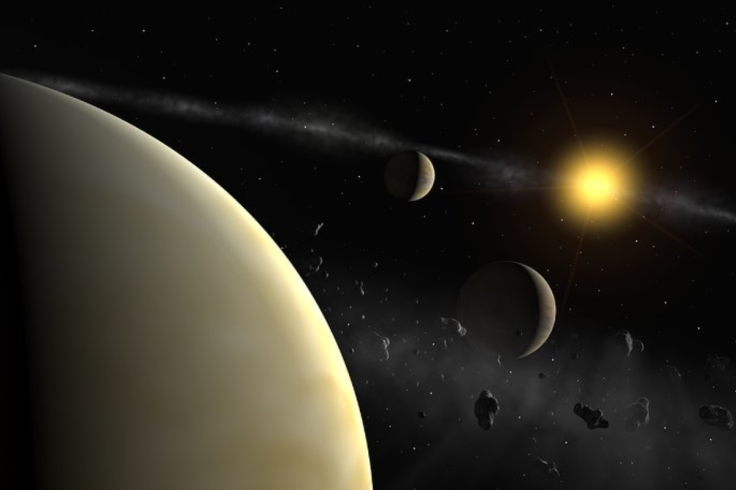
A nearby 'super‑Earth' just 25 light years from our solar system has been recategorised as a lighter, likely rocky world sitting in the habitable zone of its star, raising fresh hopes in the search for Alien life, according to astronomers behind a new analysis of the planet GJ 3378 b.
For context, GJ 3378 b has been on scientists' radar for several years as one of thousands of exoplanets catalogued since the 1990s, when the first worlds beyond our solar system were confirmed. More than 6,000 exoplanets are now known, from blisteringly hot gas giants to ocean worlds and compact 'super‑Earths.' Yet despite that cosmic headcount, no confirmed evidence of alien life has turned up. Planets like GJ 3378 b matter because they help narrow the field, picking out nearby targets where habitability is at least plausible.
The star in question is a red dwarf, cooler and smaller than our Sun, with GJ 3378 b circling it roughly every 21.45 days. The planet was initially thought to be hefty, weighing in at about 5.26 times the mass of Earth based on measurements taken with the SPIRou spectrograph. That kind of mass puts a world into awkward territory. Above roughly four to five Earth masses, planets tend to hold onto thick gas envelopes, turning them into scaled‑down versions of Neptune rather than solid, Earth‑like bodies.
The revised study took a second look, folding in extra radial‑velocity data from the Hobby–Eberly and WIYN telescopes. Once those readings were combined, the team cut the planet's minimum mass to around 2.3 Earth masses. That apparently modest numerical tweak has major implications. At that size, GJ 3378 b falls firmly into the realm where a dense, rocky composition is likely rather than a bloated mini‑Neptune.
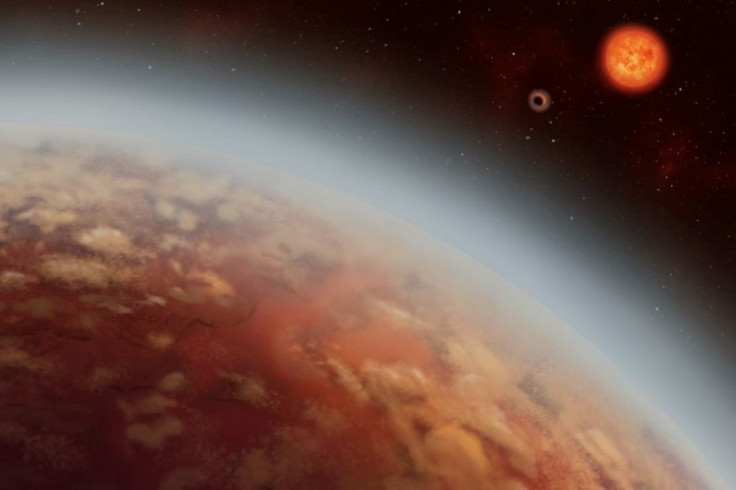
Researchers predict a radius of about 1.29 times that of Earth, though that figure is still model‑based rather than directly measured. Its exact density, surface conditions and atmospheric make‑up remain entirely unconfirmed, so any talk of oceans, clouds or weather systems still belongs in the 'maybe, but we do not know' column. Nothing is confirmed yet, so everything should still be taken with a grain of salt.
Alien Life Hopes Rest On A Habitable‑Zone Super‑Earth
The most eye‑catching part of the update is where this super‑Earth actually sits. GJ 3378 b lies in the star's conservative habitable zone, the notional band where a rocky planet with the right kind of atmosphere could maintain liquid water on its surface over long timescales.
In practical terms, the planet receives about 90 per cent of the energy Earth gets from the Sun, making it more temperate than many of the scorched worlds usually found hugging tight orbits around red dwarfs. On paper, at least, that is the kind of energy budget that scientists associate with potentially life‑friendly environments.
For any realistic chance at habitability, a planet also needs adequate atmospheric pressure, a reasonably stable climate and a chemistry that allows liquid water to persist. Strip away the air, and liquid water simply cannot survive on the surface. This is where the optimism around Alien life on GJ 3378 b runs into its hardest problem.
The Atmosphere Problem That Could Decide Alien Prospects
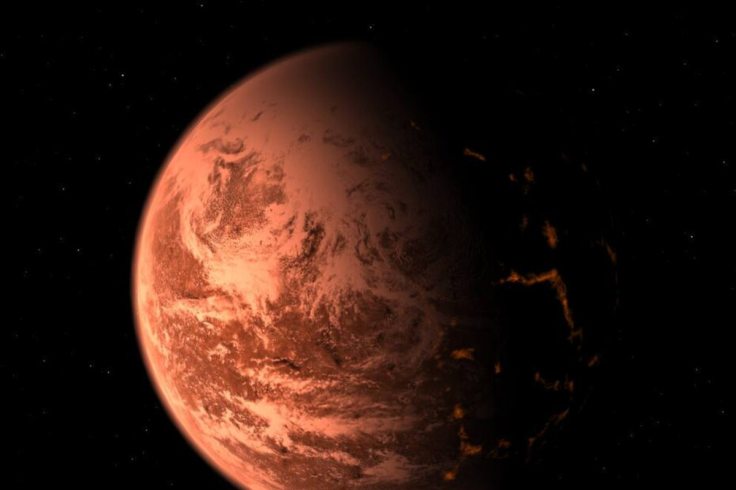
The biggest open question is brutally simple: did GJ 3378 b manage to hold onto an atmosphere at all. Red dwarfs may be cooler than our Sun, but they are often ferociously active in their youth, blasting nearby planets with radiation capable of eroding atmospheres over millions of years.
The new work puts GJ 3378 b right on what astronomers call the 'cosmic shoreline,' a rough dividing line between planets that can likely keep an atmosphere and those whose gases are stripped away. The team calculates an escape velocity of around 15 kilometres per second for the planet, almost exactly at that threshold.
If the planet kept its air, it becomes a prime candidate for future habitability studies and an enticing nearby test case in the search for alien biosignatures. If it did not, GJ 3378 b is still scientifically useful, offering a cautionary tale about how red dwarfs might quietly sterilise their retinues of small worlds.
At present, though, astronomers are effectively working with the outlines of a world rather than a detailed portrait. GJ 3378 b was detected using radial‑velocity measurements that track the tiny wobble of a star caused by an orbiting planet's gravity. That technique is excellent for weighing planets and plotting orbits, but it does not tell scientists whether a planet passes directly in front of its star from our vantage point.
Without such a transit, existing space telescopes struggle to probe an atmosphere. Transit spectroscopy, where starlight filters through a planet's air and leaves chemical fingerprints, has powered many of the most detailed exoplanet atmosphere studies so far. GJ 3378 b sits outside that sweet spot.
Looking ahead, missions like NASA's proposed Habitable Worlds Observatory are designed to get around that limitation. Instead of waiting for a lucky line‑up, the observatory aims to directly image rocky, temperate planets around nearby stars and analyse their light for signs of gases that could hint at life. If GJ 3378 b does turn out to be a compact, rocky planet with a tenacious atmosphere, it could easily end up on that shortlist.
Red dwarfs are the most common star type in the Milky Way, so whatever is ultimately learned from this one modest super‑Earth will echo far beyond its own quiet system. If worlds like it often cling to their atmospheres, potentially habitable planets may be scattered all over our galactic neighbourhood. If they do not, the search for alien life may have to look harder, and perhaps a little further, than many had hoped.