RALEIGH, N.C. — A federal lawsuit filed Tuesday says North Carolina law prevents some transgender people from changing their birth certificate to reflect the gender that they identify as.
State law says individuals can legally change their gender on a birth certificate only if they have undergone sex reassignment surgery. The lawsuit says that’s unconstitutional and discriminatory.
Represented in the litigation is a transgender woman and two plaintiffs who are transgender minors represented by their parents. The lawsuit was filed in the U.S. District Court for the Middle District of North Carolina by Lambda Legal, a national law firm specializing in LGBTQ issues.
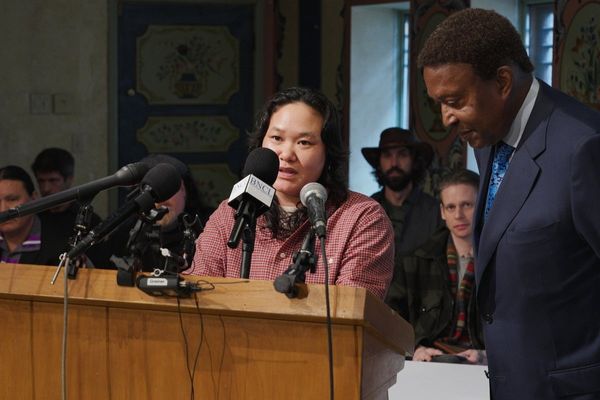
“This discriminatory requirement presents a significant barrier, sometimes insurmountable, to many transgender people, particular those who may not be able to afford such a gender-affirming surgery, who may not want or need such interventions or like our minor plaintiffs, for whom it is simply not medically indicated,” said Carl Charles, a Lambda Legal staff attorney, in a virtual press conference.
The lawsuit argues that the surgical requirement violates the 14th amendment of the U.S. Constitution under its Equal Protection Clause that prohibits discrimination based on sex and transgender status.
It names as defendants Dr. Mandy Cohen, secretary of the N.C. Department of Health and Human Services; Mark Benton, the state assistant secretary of public health; and ClarLynda Williams-DeVane, who is state registrar and director of the N.C. Center for Health Statistics.
‘Unjust, unfair and discriminatory’
A surgical requirement for birth certificate gender change is a barrier that can force transgender people to “out” their gender identity publicly and risk harassment or violence, said Lillith Campos, a plaintiff in the lawsuit.
“It is unjust, unfair and discriminatory for the state to require that I undergo a surgery in order to provide me with an accurate birth certificate and to recognize me as the woman who I am,“ said Campos, a transgender woman from Jacksonville.
Campos says she can’t afford gender-affirming surgery on her own and her employer-provided insurance does not cover it.
The sound of judgment
Katie Jenifer, of Carrboro, is the parent of a 14-year-old transgender girl who is also a plaintiff. Her identity is protected in the lawsuit due to being a minor.
“Not having a correct birth certificate has caused discriminatory treatment toward our daughter and excluded her from activities like participating in the town’s girls softball league and she’s been discriminated at school and other places,” Jenifer said in the press conference.
The law does not apply to driver’s licenses: People in North Carolina can change their gender on their licenses using a note from a health care provider attesting to a person’s gender identity.
But Omar Gonzalez-Pagan, a Lambda Legal attorney, said unmatching driver’s licenses and birth certificates create inconsistency that can call the validity of transgender people’s documents into question.
Attorneys noted that the lawsuit has been filed during the Transgender Week of Awareness, which occurs annually from Nov. 13-19 to raise awareness about hate and violence toward transgender and gender non-conforming people.
______