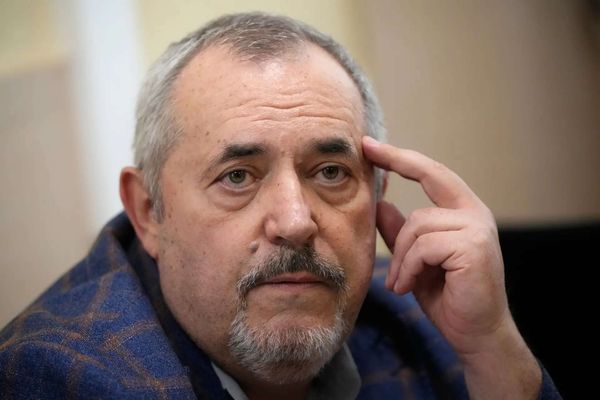
India’s growing tribe of SIP investors may be chasing financial freedom through mutual funds. However, top fund managers believe wealth creation requires much more than simply starting a monthly investment plan. At the Groww India Investor Festival 2026, veteran market experts Navneet Munot of HDFC Mutual Fund, Nilesh Shah of Kotak Mutual Fund and Kalpen Parekh of DSP Mutual Fund cautioned investors against unrealistic return expectations, emotional investing, and blindly following market trends or social media narratives.
Speaking at a panel discussion titled What Your Fund Managers Wish You Knew, Navneet Munot, Nilesh Shah and Kalpen Parekh shared lessons on disciplined investing, asset allocation, and behavioural mistakes that often hurt long-term returns.
Also Read | Parag Parikh Flexi Cap Fund increases stake in ITC, TCS, HDFC Bank and 14 other stocks in April
The discussion began with debates around ambitious retirement goals and viral social media claims suggesting investors may need Rs 40 crore to retire comfortably in the future.
Nilesh Shah argued that financial goals are highly personal and cannot be standardised. “Someone may need Rs 40 crore to retire, while someone else may comfortably manage with far less,” Shah said, adding that investors should avoid blindly relying on SIP calculators and social media assumptions.
The panel repeatedly stressed that SIPs are powerful tools, but not shortcuts to guaranteed wealth creation.
Navneet Munot compared SIP investing to former Indian cricket captain Sourav Ganguly’s famous off-side game. “SIP is the starting point. It works beautifully. But not all balls are in your comfort zone,” Munot said.
According to him, investors often underestimate the importance of asset allocation, periodic SIP top-ups, and disciplined lump-sum investing alongside regular SIPs. He also gave a new interpretation to the acronym SIP, calling it “Stay Invested Patiently.”
Munot highlighted that many investors damage their long-term returns by stopping SIPs during market corrections — often the period when they should ideally continue investing.
Referring to the sharp market crash during the COVID-19 pandemic in 2020, he said investors who paused SIPs missed out on accumulating units at lower NAVs. “Those missed units represent your missing alpha,” he remarked.
Munot added that an investor contributing Rs 10,000 monthly to the HDFC Flexi Cap Fund over the past 31 years would have accumulated nearly Rs 18-20 crore today, despite investing only around Rs 40 lakh in total.
The panel also cautioned investors against unrealistic return assumptions, especially after strong market rallies in recent years.
Also Read | New to mutual funds? Experts suggest using the 50-30-20 rule to build a smart investment strategy
Kalpen Parekh warned that investors often extrapolate recent bull market returns into the future without considering long-term market realities. “If you expect 30% compounded returns for 25 years, that is unlikely. Even 20% compounded over 25 years is unlikely,” Parekh said.
He noted that historically, long-term real returns across markets have generally remained in the range of 0-6% above inflation over extended periods.
Parekh also challenged the popular investing advice of “buying when there is blood on the streets”, pointing out that investors can only deploy cash during market crashes if they maintain discipline during bullish phases as well. “You have to create that cash reserve by booking profits when returns are excessively high,” he said.
Despite discussing the possibility of extended periods of weak market performance, including examples such as Japan, the fund managers remained optimistic about India’s long-term growth story.
Munot highlighted India’s demographics, digitalisation, rising demand, and economic transformation as long-term positives for equity investing. “The pessimist sounds intelligent, but the optimist makes money,” he said.
The discussion also focused heavily on behavioural mistakes that frequently impact investors. Shah identified “recency bias”, the tendency to chase outperforming sectors or themes that have recently performed well, as one of the most common errors.
He cited the example of silver ETFs, where investor interest surged only after prices had already rallied sharply. “At lower prices, nobody wanted to buy. At higher prices, everyone became interested,” Shah said.
For portfolio construction, the experts advised investors to first build diversified core portfolios before allocating money towards thematic or sectoral strategies.
Shah compared thematic investing to desserts in an Indian thali. “If you eat only dessert, you will get diabetes. Build the thali first,” he remarked.
Closing the discussion, Munot said investors often fail because of peer pressure, excessive media noise, and behavioural biases rather than poor products. “There is only one STP that truly works in investing — Sound investment, Time and Patience,” he said.
Summing up the essence of long-term investing, Munot concluded with a line that resonated strongly with the audience: “The stock market is a device that transfers money from the impatient to the patient.”
( Disclaimer : Recommendations, suggestions, views and opinions given by the experts are their own. These do not represent the views of The Economic Times)
If you have any mutual fund queries, message on ET Mutual Funds on Facebook/Twitter. We will get it answered by our panel of experts. Do share your questions on ETMFqueries@timesinternet.in along with your age, risk profile, and Twitter handle.