The Australian government bought a $50,000 industrial steam cleaner – “a giant water blaster” – to combat the mould growing throughout the Nauru immigration processing centre, but never used it because it was too dangerous, a former worker has said.
The machine, paid for by Australia and shipped to the Pacific island, was too dangerous to employ in the camps, and was never used to clean mould from accommodation tents and from buildings.
A former detention centre worker said the machine’s purchase was a “comedy of errors”.
“It was too big, too bulky, you couldn’t get it down into the camps, besides the fact that it was dangerous as anything,” the worker told AAP. “It was a giant water blaster and if you used it inside the [asylum seeker] tents it was ripping the plywood floors up.”
By the time the machine arrived on Nauru, the camp management company Transfield – now Broadspectrum – had begun a cleaning regime with tea tree oil. The machine has instead been used by mechanics to clean the mud off the bottom of buses before they are serviced.
A Guardian investigation last week revealed the Australian government had been warned as long ago as 2014, in a report by BHS, that the mould growing inside the buildings within the Nauru regional processing centre presented a “major risk to the health and safety of the occupants”.
At least a dozen former staff who have worked in the regional processing centre are understood to have developed conditions from exposure to mould and breathing the contaminated air in the buildings. The conditions include toxic mould syndrome, cognitive and neurological symptoms, chronic pain and chest infections.
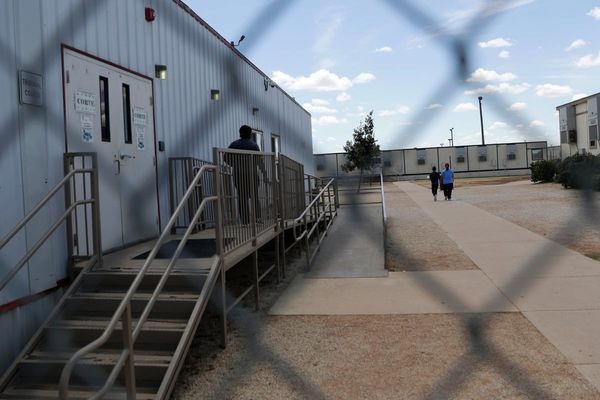
At least 330 refugees and asylum seekers, including 36 children, still live in mould-prone tents on Nauru. Pictures from the Nauru RPC this week show mould remains prevalent across the camp.
The microbiologist contracted to assess the mould problem in 2014, Dr Cameron Jones, told the Guardian the mould problem he discovered “was a disaster waiting to happen”. “The mould was of epic proportions ... it was an absolute nightmare.”
Some tents and work buildings were found to be “highly toxic” with the level of mould measured at up to 76 times the normal, safe level.
During a senate estimates hearing on Monday night, the government conceded it had been told of the health risk posed by the mould in the 2014 report, but said it had adopted industry recommendations to alleviate the problem.
But as late as December 2016, the government conceded to the Australian National Audit Office – which criticised the immigration department for failing to act on repeated warnings – “mould is a persistent issue at the Nauru RPC”.
In estimates, the department’s first assistant secretary David Nockels said no former staff had complained to the department about mould-related illnesses, though he was aware of a complaint of a mould-related illness made to the government’s workplace safety agency, Comcare, that “was acknowledged and went no further”.
Nockels said the government had implemented an extensive remediation program - including going to considerable expense - and had satisfactorily addressed the mould issue.
Mould was removed from permanent buildings in early 2017, and “the service providers… have a fairly extensive cleaning regime in place to clean... marquees,” Nockels told estimates Monday night.
“We purchased significantly large ... industrial-sized equipment... a massive steam cleaner at the cost of $50,000.”
He said he didn’t know how machine worked because he hadn’t seen it in action.
The Australian Lawyers Alliance said the Department of Home Affairs and its private contractors might have breached their legal duties of care in exposing refugees, asylum seekers, and staff to mould.
A spokesman for Comcare told the Guardian it received a complaint in 2016 “from a worker employed by a contractor who advised they had been diagnosed with a respiratory condition after living in a water damaged and mould affected building at the Nauru RPC”.
“Following inquiries, Comcare was of the view that ongoing measures were in place to deal with the problem of mould, which included replacing affected structures and installing new air conditioners.”
Comcare has been monitoring mould issues at the Nauru RPC, including through onsite inspections in 2014, 2015, and 2017.
“We are satisfied that reasonably practicable steps were taken to address problems with mould at the centre, and that the most recent site inspection in August 2017 found no significant issues.”
AAP contributed to this story