The main opposition People’s Party (PP) is under intense scrutiny after its criticism of privy councillors attending a recent high-level water management meeting chaired by Prime Minister Anutin Charnvirakul appeared to backfire, opening a broader debate about the party’s political strategy and direction ahead of the Bangkok gubernatorial election on June 28.
The controversy erupted when People’s Party lawmakers questioned the appropriateness of privy councillors participating in the meeting, suggesting their presence could be interpreted as interference in government administration. The party argued that the role of the Privy Council should remain strictly advisory to the monarchy and separate from executive affairs.
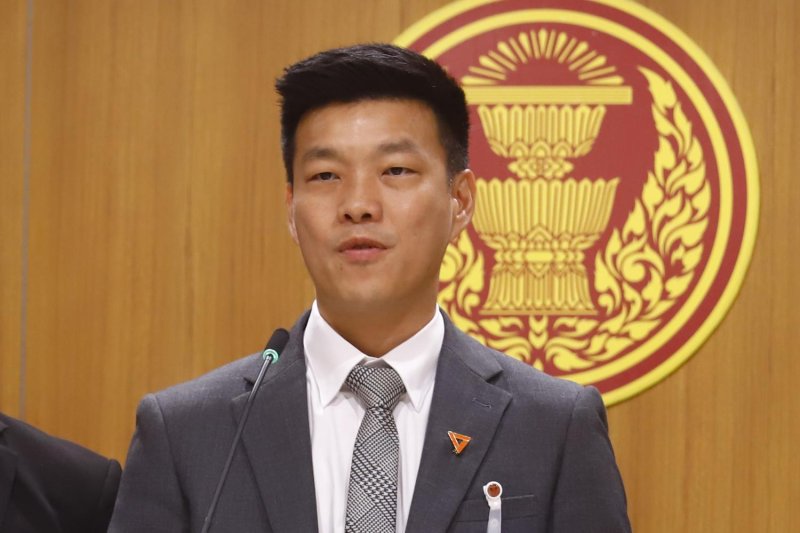
Party leader Natthaphong Ruengpanyawut said the presence of privy councillors at a meeting with government officials could compromise the neutrality of the Privy Council and run counter to democratic principles.
The Election Commission (EC), meanwhile, is reviewing a petition seeking the dissolution of the opposition party because of Mr Natthaphong’s remarks about the Privy Council.
The poll body said the complaint was being assessed under administrative procedures to determine whether it meets legal thresholds under political party law or involves conduct deemed hostile to the constitutional monarchy.
The government swiftly rejected the party’s allegations, insisting the councillors attended in an observational capacity and exercised no executive authority. Officials also noted that privy councillors have regularly attended major government meetings, particularly on strategic issues such as water management and national development, under successive administrations.
As historical records and past examples emerged showing similar participation by privy councillors over many years, critics argued the PP had failed to adequately research the issue before launching its attack. What was intended as a challenge to the government instead shifted attention to the opposition party’s judgement and political motives.
The episode has generated considerable discussion in political circles because it touches on a longstanding fault line in Thai politics: the relationship between elected institutions and traditional centres of influence.
For some observers, the controversy represents more than a disagreement over protocol. It has reignited questions about whether the PP is recalibrating its political identity after a period of electoral setbacks.
Several conservative and right-leaning commentators have interpreted the criticism as part of a broader effort by the People’s Party to reconnect with the activist roots of its predecessors, the Future Forward Party and the Move Forward Party.
Both parties built substantial support by challenging established institutions and advocating reforms that many traditional parties were reluctant to address. Among the most controversial issues was the debate surrounding Section 112 of the Criminal Code, the lese-majeste law, which concerns the protection of the monarchy.
While the People’s Party has sought to broaden its appeal by emphasising governance, economic policy and social welfare issues, some analysts believe it has struggled to maintain the distinctive political identity that previously energised its supporter base.
Some, therefore, view the criticism of the privy councillors as an attempt to return to ideologically charged terrain that resonates strongly with the party’s core supporters.
The party may believe a firm position on institutional accountability can re-establish its credentials as a reformist force at a time of growing political challenges.
The timing of the controversy has also drawn attention.
The debate comes less than a month before Bangkok voters head to the polls to elect a new governor, a contest widely regarded as an important political barometer. Bangkok has traditionally been one of the strongest electoral bases for the progressive movement represented by Future Forward and its later incarnations. The People’s Party won all 33 seats in the capital in the Feb 8 general election, up from 32 in 2023.
A strong performance in Bangkok would help reinforce the party’s reputation as a dominant political force with substantial urban support despite recent electoral setbacks. Conversely, a disappointing result could deepen concerns about its ability to expand beyond its traditional voter base.
The controversy also follows what many within the party regard as a disappointing outcome in the Feb 8 general election. The People’s Party secured 120 seats in the House of Representatives, a significant tally by most standards but well below the 151 seats won by Move Forward in the previous election.
Although electoral comparisons are complicated by changing political circumstances, the reduced parliamentary representation has prompted internal debate about strategy, messaging and voter outreach.
Supporters of the party argue that criticism of powerful institutions should not automatically be dismissed as political opportunism. They maintain that raising questions about constitutional boundaries and institutional roles is a legitimate function of an opposition party in a democratic system.
Critics, however, contend that the issue risks alienating moderate voters who may support reform but remain uncomfortable with challenges involving institutions linked to the monarchy.
They argue that the party’s strongest electoral opportunities lie in economic policy, public services and governance reform rather than reopening highly sensitive political debates.
The differing interpretations highlight a broader strategic dilemma facing the People’s Party.
On the one hand, it must retain the enthusiasm of its progressive base, which expects it to continue advocating institutional reform and democratic accountability. On the other, it must broaden its appeal to centrist and undecided voters if it hopes to convert popularity into governing power.
Balancing these objectives has become increasingly difficult as Thailand’s political landscape evolves.
Issues that once sharply differentiated reformist parties from their rivals have become more politically sensitive, while voters are increasingly focused on economic concerns, household debt, cost-of-living pressures and the delivery of public services.
Whether the Privy Council controversy ultimately benefits or harms the People’s Party may depend less on the dispute itself than on how effectively it explains its intentions and connects the issue to broader concerns about governance, a political source said.
For now, the episode has revived discussion about the movement’s origins, its future direction and the delicate balance between maintaining ideological conviction and pursuing broader electoral appeal.
As Bangkok’s gubernatorial election approaches, the controversy offers an early indication of the political narratives that may shape the next phase of Thailand’s evolving democratic process.
‘Agong’ row unlikely to hurt Chadchart
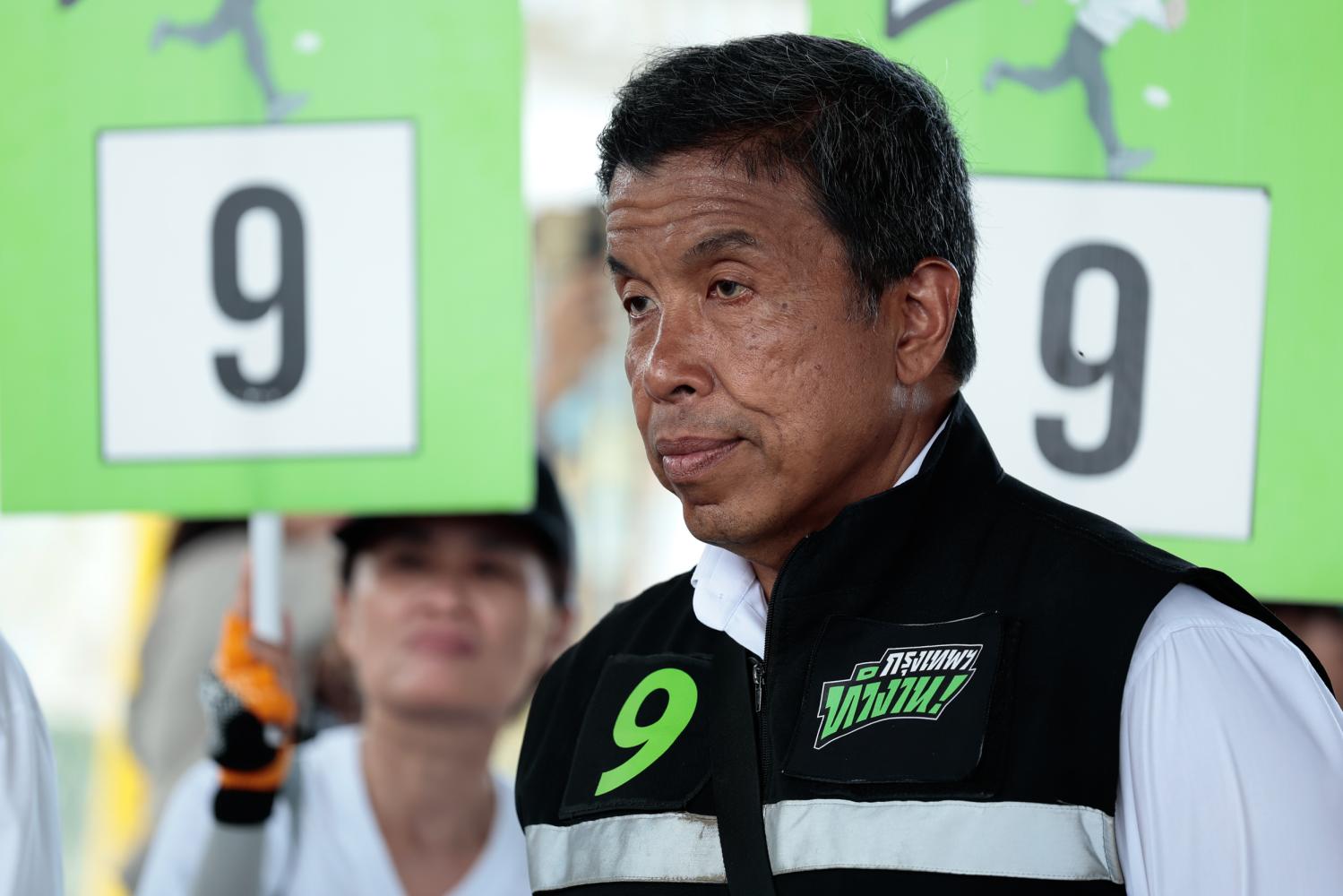
Allegations that a shadowy figure has exerted influence over City Hall during the past four years are unlikely to derail former Bangkok governor Chadchart Sittipunt’s bid for another term, according to political observers.
The issue emerged after Chris Potranandana, a party-list MP and leader of the Economic Party, accused Mr Chadchart of allowing what he described as an “Agong regime” to run the Bangkok Metropolitan Administration (BMA).
Mr Chris alleged that the network was behind key decisions within the administration and that “everything was run by Agong”, while Mr Chadchart merely signed off on decisions.
He also claimed that appointments of district directors were linked to bribes of up to 4 million baht in exchange for positions, questioning why Mr Chadchart took no action despite repeatedly declaring that corruption would not be tolerated in the BMA.
According to Mr Chris, allegations of such magnitude meant the former governor could not simply deny responsibility.
“I believe Mr Chadchart is likely to be re-elected. If that happens, he should be bold enough to get rid of the Agong regime and become the governor who actually runs City Hall,” Mr Chris said.
“Agong” is a Chinese word meaning “grandfather” and is commonly used by Thai-Chinese families to refer to an elderly male relative.
The accusations have injected fresh interest into the governor’s race, which until now has lacked a serious challenger to Mr Chadchart. However, they have also raised questions about why the claims surfaced only weeks before the election.
Mr Chadchart, who is running as an independent candidate, completed a full term as governor, yet the allegations emerged only after campaigning was well under way.
As a result, some political observers doubt the issue will gain enough traction to significantly damage his popularity.
Suvicha Pouaree, director of Nida Poll, told the Bangkok Post that the political impact would have been far greater had the allegations surfaced repeatedly during Mr Chadchart’s time in office.
“If they had emerged throughout his four years and no action had been taken, the political consequences would be very different,” he said.
Instead, the accusations surfaced only during the election campaign and have yet to be backed by clear evidence, making it less likely that voters will change their minds, he said.
According to Mr Suvicha, the next Nida Poll survey, due on Friday, should provide a clearer indication of whether the issue has affected Mr Chadchart’s standing.
The previous survey, conducted before the allegations emerged, showed Mr Chadchart leading with 67.3% support. He ranked first in every area and remained well ahead of his rivals.
While the findings could not measure the impact of the controversy, they suggested Mr Chadchart could win by an even larger margin than in 2022, when he secured more than 1.3 million votes. People’s Party candidate Chaiwat Sathawornwichit is expected to finish second.
“His vote tally could rise to around 1.8 million, while the runner-up may struggle to exceed 200,000 votes,” Mr Suvicha said.
For now, there is little sign that the controversy will change the overall race.
One factor working in Mr Chadchart’s favour is the absence of a strong contender capable of turning the gubernatorial election into a genuine contest. None of his rivals has established itself as a credible alternative.
“There is no close contest that would compel supporters of a candidate to make sure they go out and vote,” he added.
Mr Suvicha noted that the more interesting battleground may be the contest for seats on the Bangkok City Council.
Council members play a crucial role in scrutinising the city administration, considering budgets, passing local laws and representing the concerns of residents in their constituencies.
Political parties are expected to focus on council seats as a way of strengthening their local networks and positioning themselves for future elections, as the governor’s race is widely viewed as already decided.
“The more interesting question in this election is which political party or independent group will emerge with the largest number of council seats,” he said.
That assessment was reflected in Nida Poll’s latest survey on the council election. Nearly 49% of respondents said they preferred independent candidates, compared with 33% who favoured party-affiliated contenders to win the race.
The findings also pointed to a flexible voting pattern, with 54% saying they intended to select candidates from different camps rather than support a single party or group across both ballots.
A total of 16 candidates, including three party nominees, are contesting the governorship, while 252 are running for seats on the city council. Both elections will take place on June 28.