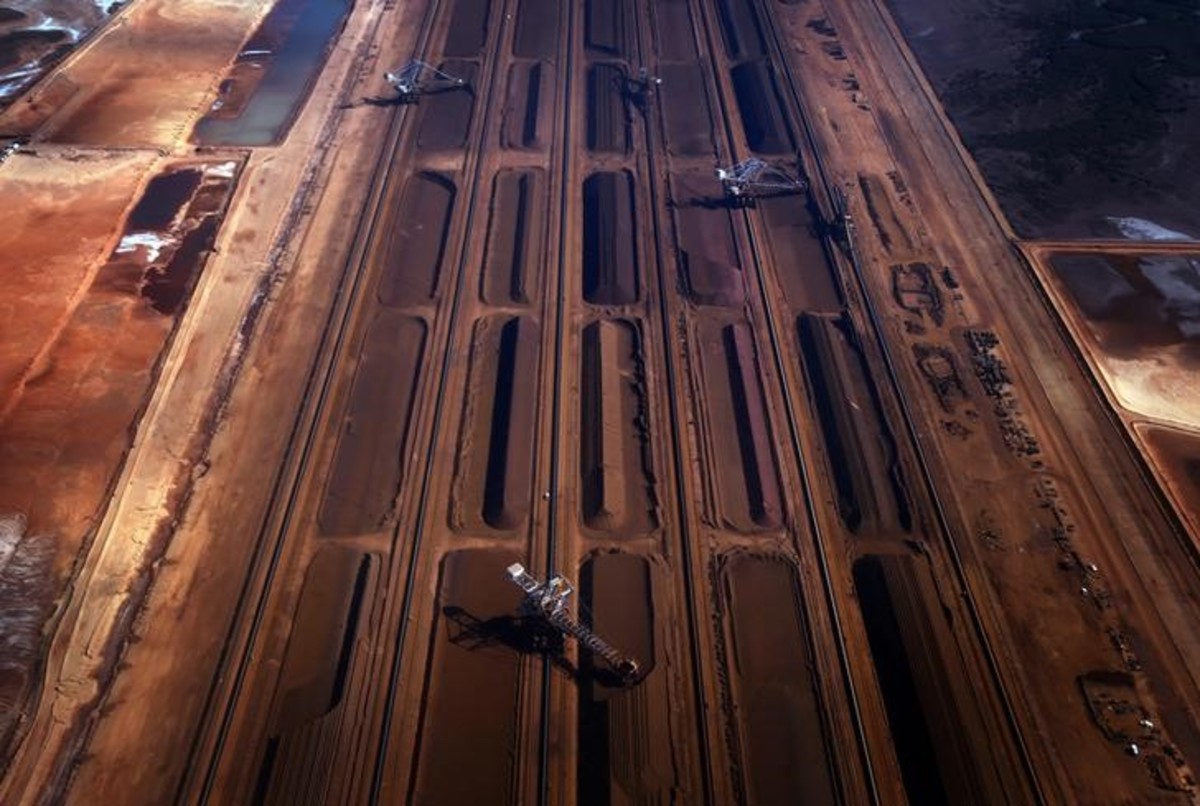
SYDNEY (Reuters) - A native title agreement between a remote Aboriginal tribe and an Australian state government has opened the way to expand the world's largest iron ore export terminal.
The Port Hedland terminal, located on the north-western coast of the state of Western Australia is the main port through which iron ore travels from the Pilbara district to China.
After six years of negotiations, the West Australian government announced on Friday that it had signed a A$38 million ($29.77 million) native title agreement with the Kariyarra people, an Aboriginal group who traditionally lived around the town of Port Hedland.
A native title agreement is a legal undertaking that recognises indigenous people's rights to their traditional lands.
The benefits are in the form of both land and money, and include freehold grants of urban and rural land with existing dwellings as well as a five percent payment on lots to be developed within an agreed area of South Hedland.
The agreement also grants native title over some areas, protects Kariyarra heritage sites and gives the tribe direct management of significant areas.
The Western Australian Government said in a media release that the agreement would enable future expansion of the Port Hedland Port and of residential land in South Hedland.
Iron ore shipments from Port Hedland to China rose 11 percent in August to 35.7 million tonnes from 32.03 million tonnes in July.
Mining giant BHP Billiton <BHP.AX> <BLT.L> is seeking to expand its export facilities at the port.
In April the Town of Port Hedland approved its plans to ship an additional 5 million tonnes of iron ore annually through the port, the first stage of an expansion plan to lift shipments to 290 million tonnes by 2019.
(Reporting by Alison Bevege)