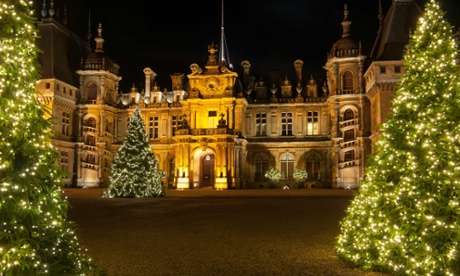
The National Trust is preparing to address the question most frequently asked by its 4.2 million members and 20 million paying visitors: “so, when is it open?” The answer, in a radical shift in policy for hundreds of historic properties, parks and gardens, will be 364 days of the year.
Even during opening months, the properties have been closed on one or two days of the week. From early November until late spring, they hibernate, blinds drawn, lights out, furniture and statues swaddled in cloth covers.
However, properties that have experimented with winter opening, including Waddesdon Manor, the palatial Rothschild mansion in Buckinghamshire where thousands have come in recent years to see spectacular Christmas decorations in the house and gardens and then flocked to spend more money in the shop and cafe, have proved wildly successful.
Frosty walks around the Jacobean garden at Ham House in London have been equally popular and Scotney Castle in Kent stayed open through the past winter, with an exhibition about the first world war experiences of Arthur Hussey, based on the discovery of a chest of his letters and diaries from the front.
“It’s been trialled throughout London and the south east,” Dame Helen Ghosh, director general of the trust, said. “We won’t necessarily be opening the whole house or the whole garden, but experiments with opening part of the properties and the cafes have proved very popular.”
The trust used to argue that the properties needed a long winter rest for conservation reasons, to allow fragile buildings to recover from the strain and to allow essential housekeeping work.
But properties that have experimented with allowing the public to see the houses being “put to bed” have proved extremely popular. Visitors have been fascinated by the meticulous work of cleaning, repairing and protecting, and untroubled either by cold or low lighting levels.
“If any of our properties were getting beaten up by the number of visitors, we would reconsider,” Ghosh said.
The warmer wetter winters brought by climate change are proving far more of a challenge for historic properties than more visitors. Insects that would normally be killed off by cold weather are flourishing, leading to problems with tiny but damaging pests such as silverfish, which have been found multiplying happily over the winter months in the library at Stourhead.
Ghosh also revealed that the properties most associated with the National Trust, the 17th and 18th century mansions – many taken on after the first world war when death and taxes meant great houses were being abandoned and demolished across the country – were proving the most difficult to market.
Visitor surveys show that grand houses are the least popular, while humbler, quirkier properties, such as the back-to-back shops in the heart of Birmingham and the Beatles’ childhood homes in Liverpool, are hugely popular.
The trust intends to invest heavily on how to interpret and display such properties, focusing on individual objects rather than assaulting visitors with grand rooms stuffed with works of art and antiques.
“One lovely thing beautifully lit can be more intellectually rewarding than bewildering the visitor with – as our curator James Grasby calls them – a lot of brown pictures.”