National Trust returns to Cornish farm for biosurvey
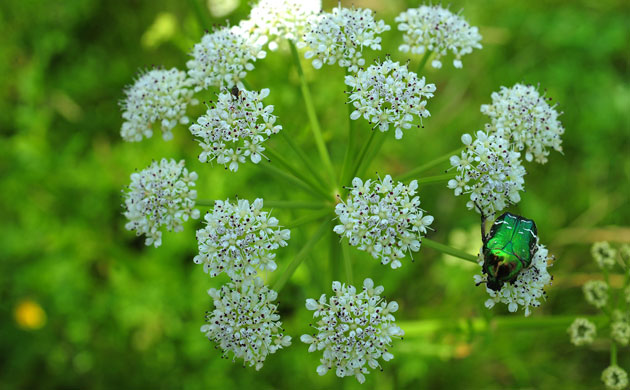
The number of varieties of plants, insects and birds, many of them extremely rare, has increased threefold or more on the farmPhotograph: Jim WilemanKatherine Hearn was a member of the original survey team and is now a National Trust nature conservation adviser. She said that in 1979 the clifftop was swamped by scrub and tall rank grass full of thistles Photograph: Jim WilemanThirty years ago, a modest six or seven types of plants were recorded in a typical square metre of the clifftop farmPhotograph: Jim Wileman
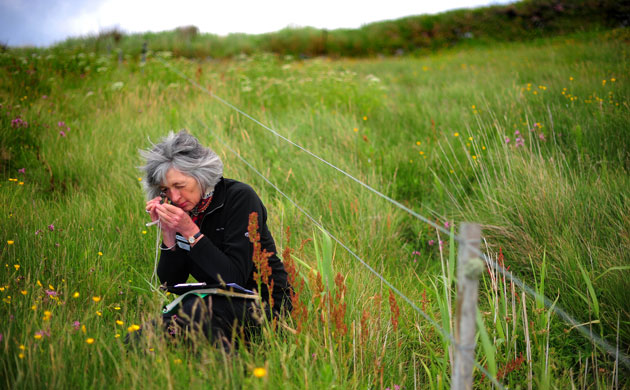
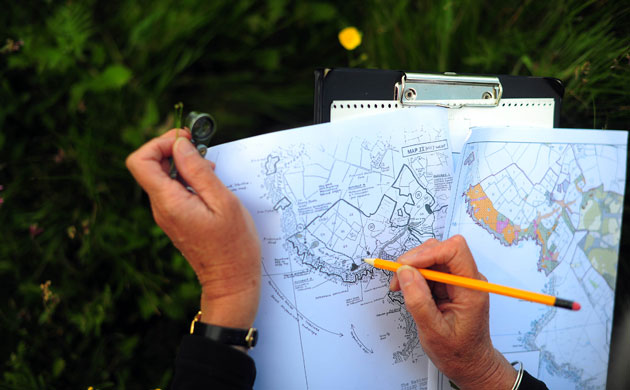
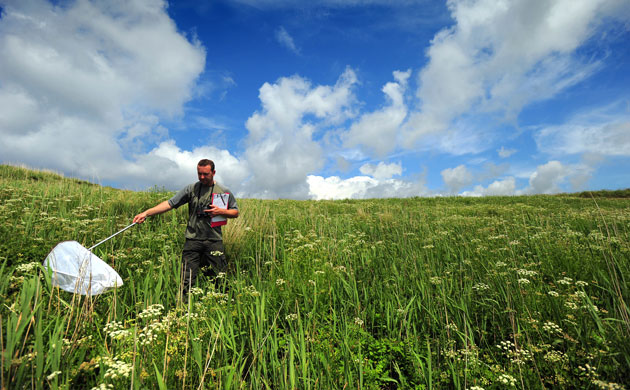
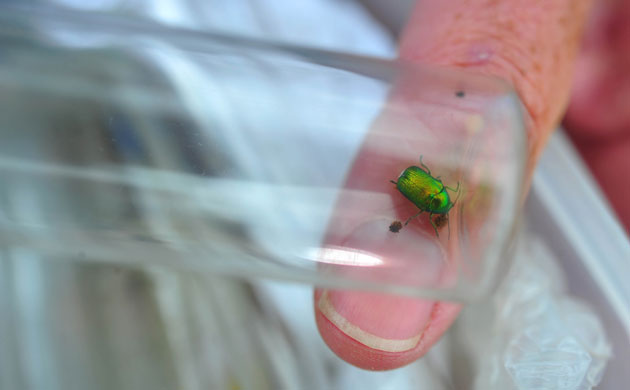
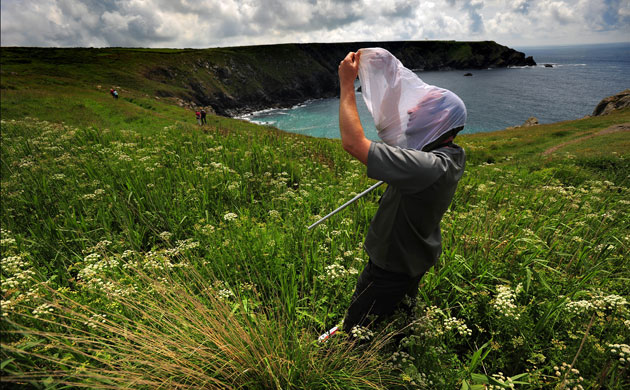
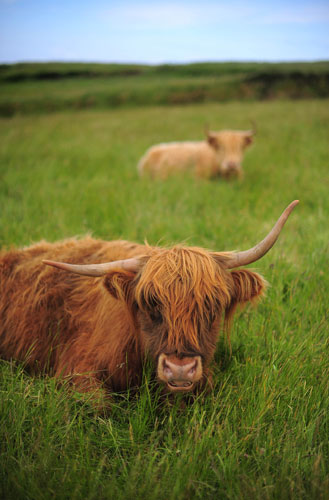
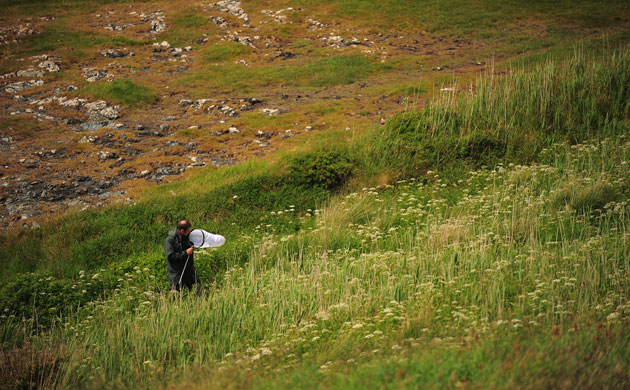
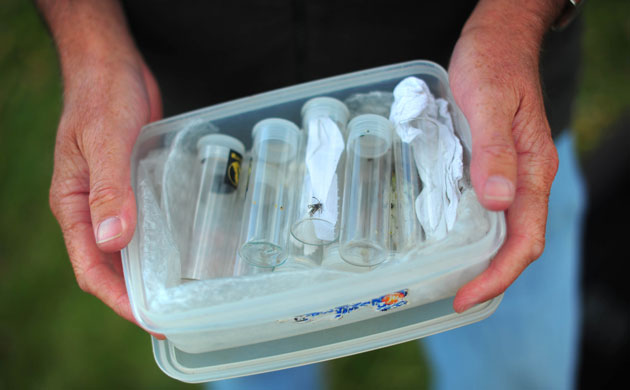
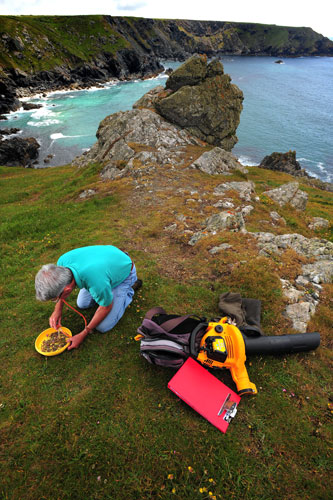
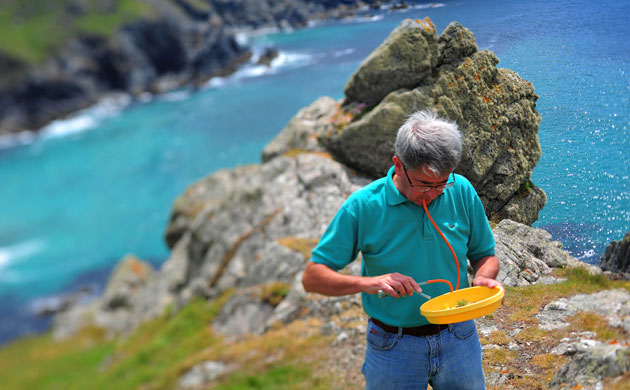
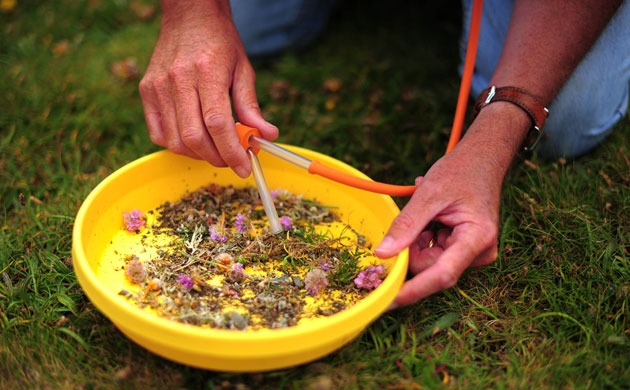
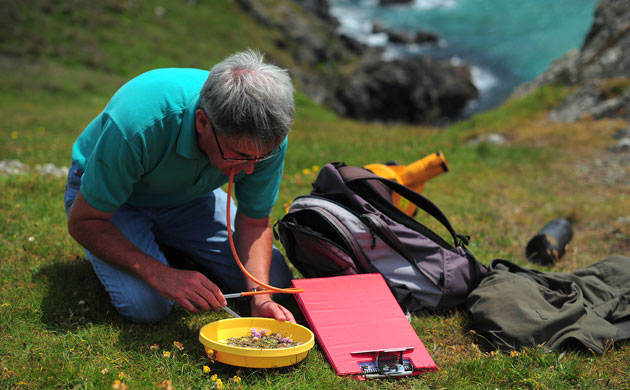
Pete Brash, invertibrate ecologist collecting insects with a net. The National Trust said that thanks to careful management up to 40 types of plant were found on a typical square metre, together with many types of rare bugs, bees, butterflies, and mothPhotograph: Jim WilemanAndy Foster, biological survey adviser, collecting animal and plant life to be surveyed. The National Trust regards the success at Lower Predannack as proof that rare flora and fauna can thrive across the country if farmland is managed wellPhotograph: Jim WilemanPete Brash, invertebrate ecologist collecting insects with a net. Only six or seven types of plants were recorded 30 years ago in a typical square metre of the clifftop farm. The cliffs were covered in scrub and the arable fields were intensively farmedPhotograph: Jim WilemanThirty years ago farmers had stopped grazing cattle on the cliffs, worried that the animals would not thrive on the scrub or might plunge to their deaths. A conservation clause was added to the farm's tenancy agreement, and since then the scrub has been munched away by ponies and hardy cattle such as highland and dexterPhotograph: Jim WilemanPete Brash, invertebrate ecologist collecting insects with a netPhotograph: Jim WilemanAndy Foster, biological survey adviser collecting animal and plant life to be surveyedPhotograph: Jim WilemanAndy Foster, who led the biological survey team for the charity, said: 'It's great to see the variety of flora and fauna on this site. You look at a few square centimetres of land and find that it's heaving with life.'Photograph: Jim WilemanFoster was particularly pleased to find one of the UK's most endangered bees, the brown banded carder bee – the first time it had been spotted here. He was also delighted that the red-legged crow the chough had reappeared on the cliffs at Lower Predannack after disappearing from Cornwall in the seventiesPhotograph: Jim WilemanFoster sucked up clifftop vegetation with an adapted garden leaf blower and then combed the leaf debris for creepy-crawlies. One of his best finds was a thyme lacebug Photograph: Jim WilemanIt's not all good news. The trust is worried at the encroachment of foreign invaders such as the hottentot fig, a rampant South African plant that is taking hold on the Lizard, possibly because of global warming. And there is a lack of frogs this summer because in January the cold snap claimed a generation of tadpolesPhotograph: Jim Wileman
Sign up to read this article
Read news from 100’s of titles, curated specifically for you.