By the time prison officers were alerted to the fire in Clare Dupree’s locked cell, clouds of thick smoke were billowing from under the door.
She was screaming, “I'm on fire, help”, as she gasped for air at the window, according to another prisoner who raised the alarm.
It was another 33 minutes before she was pulled from the blaze by a fire crew, because by the time prison staff arrived, the door handle was too hot to touch. The 48-year-old mother of six died of smoke inhalation following the fire in December 2022, which was started with a vape.
Cell 59, where she was housed on Residential Unit 6 at HMP Eastwood Park, a women’s prison in Gloucester, did not have automatic in-cell fire detection (AFD), legally required to meet fire safety standards. The jail is one of more than 40 in Britain without this lifesaving system, which automatically raises the alarm at the earliest stages of a fire, in all cells.
More than three years after the tragedy, automatic detectors still have not been installed in Clare Dupree’s cell. The Ministry of Justice has admitted that 21,067 prison places are without basic safety measures.
Ministers had long promised to make all cells fire-safe by 2027 or take them out of use. But in a shocking U-turn, Labour has reneged on the pledge, blaming the overcrowding crisis because emptying cells for upgrades would “breach critical capacity” in the prison estate. No new date has been set for the prison service to bring all cells up to legal standards.
The move has been branded a “national scandal”, and there are fears that more prisoners will lose their lives while ministers drag their heels. Labour MP Kim Johnson called the U-turn “outrageous”, and said the Grenfell tower disaster, which claimed 72 lives in west London in 2017, showed what happens when fire safety measures are not properly followed.
She said: “How can the Ministry of Justice possibly justify sitting on such blatant, life-threatening failings? After Grenfell, we should need no reminder of what happens when fire safety is treated as optional. Those at risk – from prisoners to the officers and staff who keep our prisons running –deserve answers, not more broken promises.”

‘National scandal’
Cell fires have soared by 124 per cent over the last five years. In the year ending March 2025 there were an average of eight each day in prisons in England and Wales – mostly caused by vapes.
At least ten other prisoners have died in cell fires since the government first accepted almost 20 years ago that vital upgrades were needed, according to the Howard League for Penal Reform, which has threatened legal action over the failures.
Its legal chair, Gemma Abbott, demanded: “How many more people have to lose their lives for the government to take this seriously?”
She told The Independent: “Today, tens of thousands of people are forced to live in prisons that are not safe. The government U-turn on a deadline to fix this is a disgrace. If you are going to keep people in custody, it's imperative both legally and morally to keep them safe. It must be terrifying to know you are locked in a cell in a prison that doesn’t meet legal standards for fire safety. The lack of urgency in responding to this is shameful.”
The Howard League’s chief executive, Andrea Coomber KC, described the situation as a “national scandal”.
Lord Foster, chair of the House of Lords justice and home affairs committee, said the move was “deeply concerning” and urged the government to “reconsider before the unthinkable occurs”. He added: “This about-turn on safety standards puts at risk prisoner and prison officer alike.”
‘There will be more deaths’
Andy Slaughter, chair of the Commons justice committee, told The Independent the recent deaths and surge in prison fires should be a “wake-up call” for the government. MPs on the cross-party committee have said they have “serious concerns” about the delays and demanded a new date for when upgrades will be completed.
In response, prisons minister Lord Timpson revealed that 21,067 out of a total 89,795 prison places still lack AFDs. Some 1,695 places are out of use as upgrades are underway.
In a letter to the committee, dated last week, he told MPs that “we are doing everything that can be reasonably done” to mitigate fire risks, but refused to give a new deadline to make all cells compliant. He said the aim was to complete the works as “quickly as possible” but admitted, “it will take time to rectify the problems we have inherited”.

For now, cells without AFDs have battery-powered domestic smoke detectors fitted outside the doors, a temporary solution which the Prison Officers’ Association (POA) says is not fit for purpose.
POA chair Mark Fairhurst has long called for prisons in England and Wales to be upgraded with automatic detectors and fire suppression systems, which are already fitted in Scottish jails. He said the current situation was a “disgrace”.
“I am afraid there will be more deaths,” he told The Independent. “They [the government] obviously don’t care because if they did care, it would be a priority. Can you imagine the government announcing that if it affected a school? What’s the difference between a school and a prison? It still is inhabited by human beings.”
MoJ tests, conducted in 2007, found that a prisoner will lose consciousness within seven minutes of a cell fire breaking out and die within eight minutes. However, according to Freedom of Information requests submitted by the Howard League, more than 60 prisons were waiting for work to improve fire safety as of late last year, including 40 which need AFDs and seven prisons where there have been fatal fires.
Responding to cell fires has left prison officers traumatised and struggling with PTSD, Mr Fairhurst said, and they frequently happen at night when you are “lucky to have one officer on each wing”. He believes any other workforce would have walked out over the fire safety risks to staff, but prison officers do not have the right to strike, an issue the POA is challenging in the European Court of Human Rights.
The government only informed the fire safety regulator, the Crown Premises Fire Safety Inspectorate (CPFSI), that it would not meet its 2027 deadline to make cells fire-safe after the Howard League threatened a judicial review.
According to the CPFSI’s last annual report, prison fires have increased significantly from 1,308 a year to 2,932 in the last five years. In the year ending March 2025, there were 534 fire-related injuries in prisons, down slightly on the previous year, but a significant increase compared to 135 injuries five years ago. Almost seven in ten were caused by vapes, although the Ministry of Justice is rolling out a tamper-proof vape pen to try to tackle the issue.
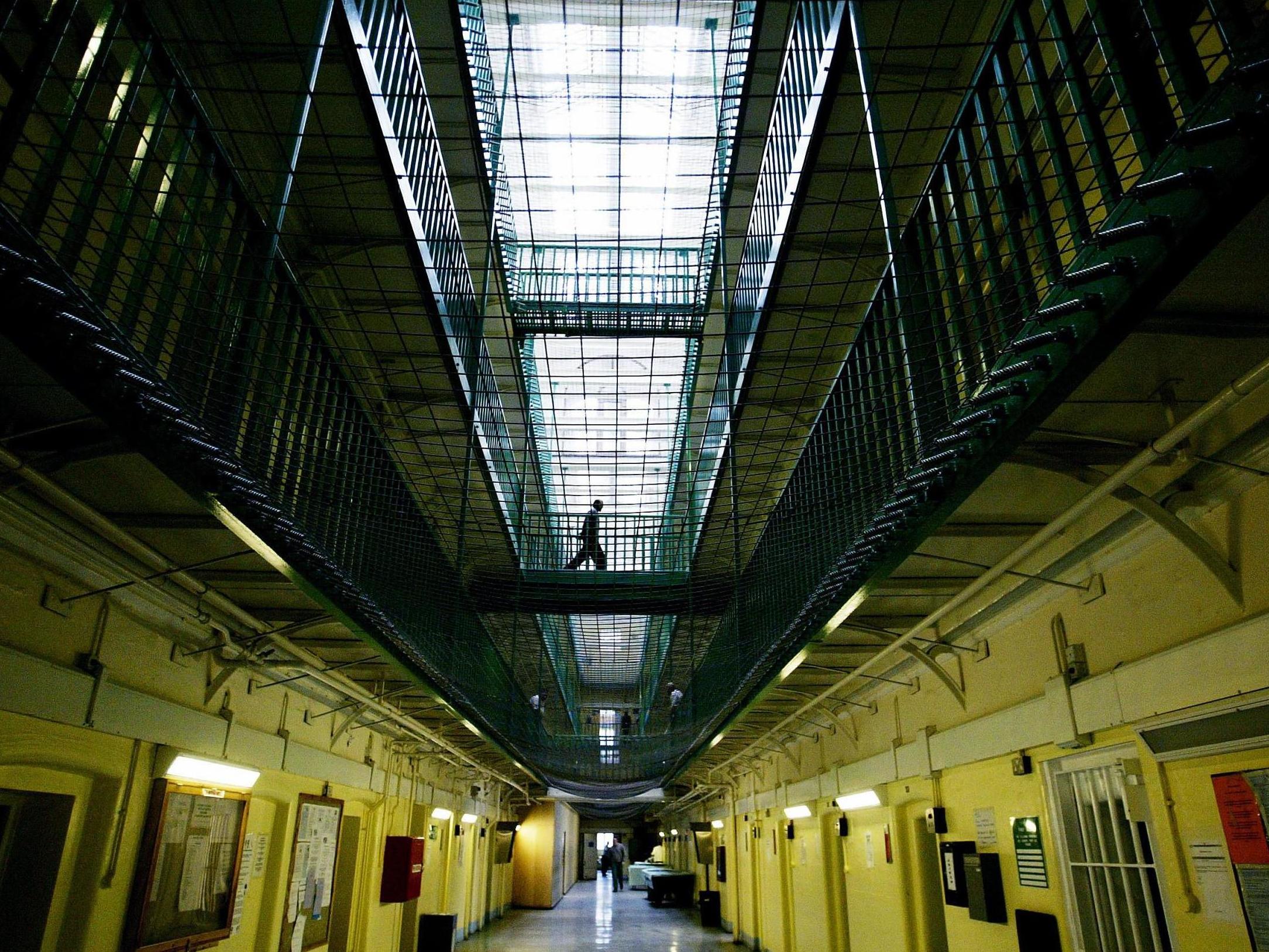
Legal letters seen by The Independent, sent on behalf of justice secretary David Lammy, reveal that HMP Wandsworth, a scandal-hit Category B men’s prison in south London, is classified as the least fire-safe in the country, according to the MoJ’s internal scoring system. More than 1,000 cells at the Victorian prison lack in-cell AFDs. Work to install them and new fire suppression systems started in October 2024, but is still unfinished, as only 90 prisoners can be decanted at a time.
‘Simply not good enough’
The letters also reveal that 177 of 395 spaces at Eastwood Park, where Ms Dupree died, still lack AFDs three years after her death. Upgrades are expected to start next month, but in-cell furniture at the prison does not meet fire resistance standards.
Lawyers for Ms Dupree’s family said this was “simply not good enough”, adding that prison was not the right place for the mother, who needed wraparound mental health care. Clare Hayes and Betty McCann, of Deighton Pierce Glynn, added: “When the risks are so high, and the window of time in which prisoners can be safely removed from a cell fire so small, this is simply not good enough. Fire safety in prisons needs to be a priority for the Prison Service to prevent any more tragic deaths in cell fires.”

In July 2019, Christian Hinkley died after a cell fire overnight at high-security HMP Swaleside in Kent. His cell had no AFD, and the fire was noticed by a neighbouring prisoner, who alerted staff to smoke. Attempts to spray water into the cell were hampered because Mr Hinkley had barricaded his cell door. By the time fire crews entered wearing breathing apparatus more than half an hour later, having had to navigate several locked prison gates, he was unconscious and not breathing.
A coroner warned that fire detection at Swaleside was “inadequate and unsafe”. But almost six years after Mr Hinkley’s death, 724 of 940 prison spaces there still lack AFDs, the government admitted in legal letters to the Howard League. Upgrade work began in 2024 but was halted when the contractor went into administration.
Crown immunity protects government
Both Swaleside and Eastwood Park have been subject to repeated enforcement notices from the fire safety regulator, the CPFSI, in the past two years. They are also among six prisons for which the watchdog, which has no power to prosecute government-owned prisons due to crown immunity, has resorted to issuing a Step Away notice. This means the CPFSI would pursue a criminal case against the MoJ for failing to comply with its enforcement notices if it could.
Mr Fairhurst, of the POA, said the watchdog was a “toothless tiger. That’s how serious it is. The fact that people could have been imprisoned over this if it wasn’t a Crown premises speaks volumes.”

The situation also creates a dilemma for prison governors. Although they are responsible for health and safety on site, decisions over whether a cell is fit for habitation are taken by their managers, prison group directors. This can create an uncomfortable situation if they feel their bosses have certified cells that aren’t safe to use, Tom Wheatley, president of the Prison Governors’ Association, told The Independent. His union has drafted template letters for its members to use when governors have concerns about whether a cell is safe.
“Governors have no authority over whether a cell is certified for use, or powers to commission major fire improvement works, but they are often held accountable should something go wrong,” said Mr Wheatley.
In a letter to the justice committee, prisons minister Lord Timpson said the 2027 timeline for fire safety upgrades set by the previous government “will not be possible”. “To take remaining non-compliant cells out of use at the end of 2027 would inevitably – and significantly – breach critical capacity, resulting in the collapse of the proper functioning of the prison and wider criminal justice system with attendant intolerable risk to public safety,” he wrote.
A Ministry of Justice spokesperson said: “This government inherited a prisons system in crisis, overcrowded and on the brink of collapse. We take the safety of our prisons extremely seriously, and we are carrying out our plans to meet fire safety standards across the estate as fast as possible. That is why we are continuing a major programme of fire safety improvement works. In the meantime, we have put measures in place to keep people safe, with every cell either linked to an automatic fire detection system or using a smoke detector."