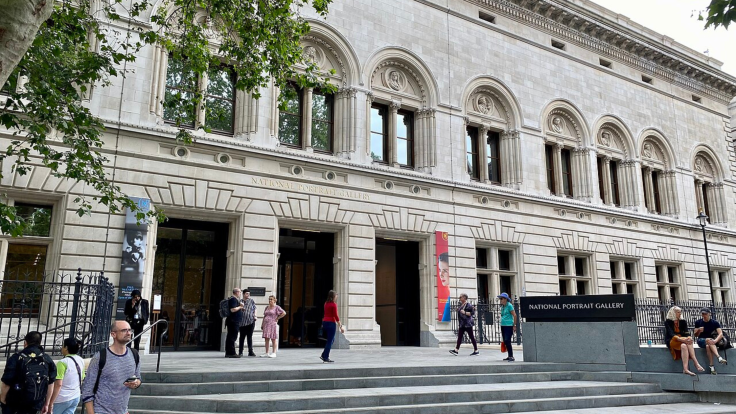
The National Portrait Gallery has come under fire after displaying a film that accuses Sir Winston Churchill of deliberately starving millions of Indians during World War II, prompting a backlash from historians, peers and members of Churchill's own family.
The controversy centres on Persistence, a 40-minute film by artist Helen Cammock that links the wartime prime minister to the 1943 Bengal famine. Critics, including Churchill biographer Lord Roberts of Belgravia and Churchill's grandson, Lord Soames, have condemned the work as historically misleading and politically motivated.
Roberts escalated the dispute on Monday by sending a letter to the gallery's board bearing the signatures of 50 peers. The signatories accused the institution of giving credibility to what they described as a false and deeply offensive portrayal of one of Britain's best-known wartime leaders.
The row has reignited a long-running debate over Churchill's role in the Bengal famine, which ultimately claimed the lives of nearly three million people and remains one of the most contentious chapters of Britain's wartime history.
Among the signatories was Churchill's grandson, Lord Soames, who emerged as one of the film's most vocal critics.
Soames criticised the film as nothing more than an ideologically motivated rant, rejecting its portrayal of Churchill as deliberately responsible for the famine and its human toll.
'The accusation that it was deliberately visited upon Bengalis by Churchill is foul and vile. It is also historically ludicrous,' the signatories wrote in the letter, according to a report from The Telegraph.
Cammock's Weapon of War Claim
Based on the film, which is narrated by Cammock herself, starvation is portrayed as a tactic used by Churchill as a weapon of war. The work argues that policies pursued during Britain's wartime administration contributed to the deaths of millions during the Bengal famine, presenting the disaster as the result of both wartime conditions and policy decisions.
Critics have condemned Churchill's racial views and policies, which they cite as reasons for branding him a genocidal maniac, a term also used by Cammock in the video.
However, Roberts strongly disagreed. He explained that the Bengal famine followed a devastating typhoon that struck the region in October 1942, causing widespread destruction of rice crops and damaging infrastructure such as roads and railways. The famine ultimately claimed the lives of nearly three million people.
Roberts also argued that Churchill sought international assistance by reaching out to leaders in the US, Canada and Australia for grain shipments in an effort to ease shortages and prevent starvation.
'He would not have done this if he were the genocidal maniac described by Ms Cammock in her taxpayer-funded rant against one of our greatest national heroes,' wrote Roberts in his letter to Professor Shearer West, interim chair of the board of trustees, in a report by The Independent.
NPG Responds to Churchill Backlash
For its part, the National Portrait Gallery said that while it supports freedom of expression, it does not endorse the opinions of artists. The gallery said the same principle applied to Cammock's work.
Cammock's work was commissioned in 2023 and has been on temporary display at the NPG since September 2025. It was created and narrated by her and includes personal reflections on historical and contemporary events.
'At the National Portrait Gallery, in addition to our own permanent collection displays, we also give opportunities to artists to create works of art in response to our collection,' the NPG said in an official statement.
The gallery stressed that presenting artists' interpretations of historical events should not be viewed as an endorsement of their opinions, and reaffirmed its commitment to encouraging discussion and artistic expression through commissioned works.
The installation remains on display at the gallery. The NPG has not commented on whether the film will be removed or remain in place until its scheduled run ends in August 2026.