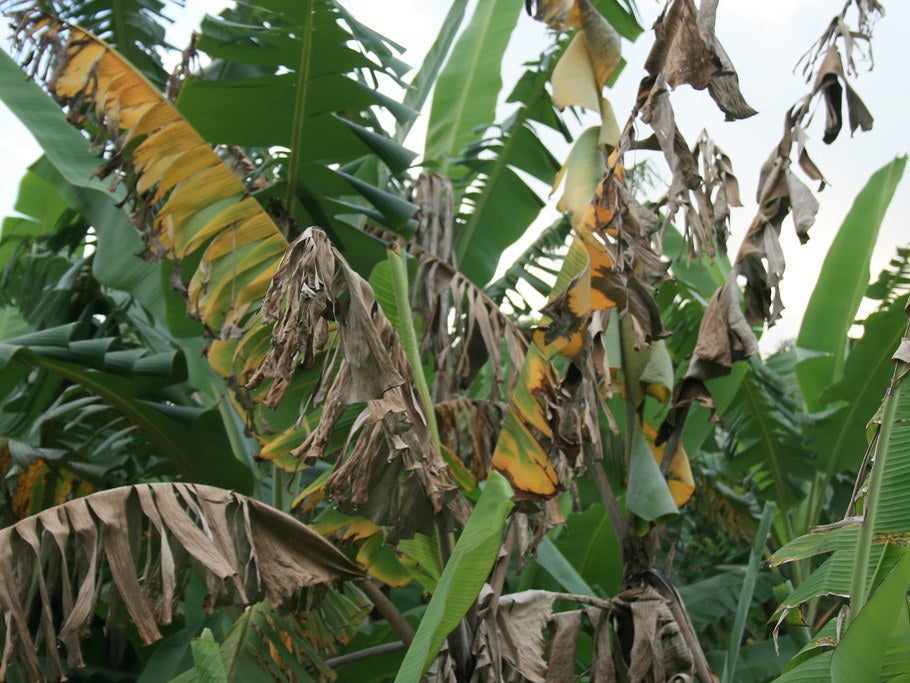
Colombia has declared a national emergency after a fungus that can devastate banana crops was found in its soil.
The Fusarium type 4 (TR4) organism was detected across nearly 180 hectares in the northeastern province of La Guajira, sparking a nationwide effort to increase sanitary controls to contain it.
Bananas are Colombia’s third-biggest agricultural export and the related plantain a popular domestic food source. Their lack of genetic diversity makes them vulnerable.
Bogota has been keeping its regional neighbours – also major banana exporters – apprised of the situation, according to the head of its agricultural institute.
In a series of tweets, Deyanira Barrero Leon said the police and even the military had been drafted in to combat the spread of the disease, alongside experts from Australia, the Netherlands, Brazil and Mexico.
“We are responding with everything we’ve got,” she said.
A 24-hour watch by agriculture officials and the Colombian air force is enforcing restrictions on the movement of crops.
She added that agriculture minister Andres Valencia Pinzon had travelled to Ecuador on Monday to brief representatives of 15 countries, comprising 85 per cent of the global banana market, on Colombia’s efforts.
TR4, which attacks banana plants’ roots and is popularly known as Panama disease, does not pose a risk to humans and should not affect exports, Ms Barrero said in a tweet.
A national emergency was declared last week following the discovery and quarantine of the fungus earlier in the summer.
Some 168 hectares of the infected crop have been eradicated already, Ms Barrero told journalists on 8 August.
The TR4 version of the Fusarium fungus has previously run rampant in parts of Asia and Australia, devastating plantations due to their monocultural nature.
.png?w=600)