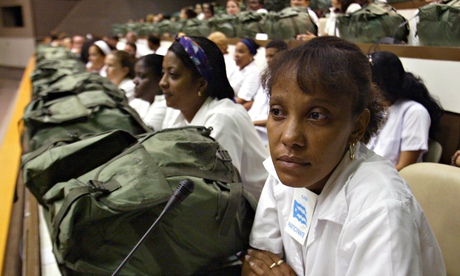
Your feature (How sick are the world’s healthcare systems?, g2, 30 October) demonstrated that any form of healthcare, irrespective of where in the world it is, that involves the for-profit private sectors is de facto not only more expensive but less efficient and subject to corrupt practices by drug companies, other suppliers and practitioners. You could have included Cuba in your survey as a contrast. It has a wholly public-funded and regulated healthcare system that, despite over 50 years of a US-imposed boycott, manages to treat its citizens in an equitable and efficient way, as well as despatch its medical staff to many other countries of the world where there are health problems, including to Sierra Leone to help with the Ebola crisis. Britain also once had an exemplary national healthcare system before New Labour and the Tories began privatising it piecemeal and tearing the guts out of it. Perhaps lessons to be learned?
John Green
London
• I note in reference to the Chinese health system: “Physicians are so underpaid that they often must supplement their salaries with kickbacks from drug companies and patient bribes.” I spoke in Beijing this year about the reform of doctors’ pay systems and heard that doctors in China often supplemented their earnings as described in the article – but there was no “must” about it. Such supplements are corrupt whether in the UK, China or anywhere else. Doctors in China are officially paid (not “underpaid”) roughly one and a half times the average earnings in Chinese society – not as generous a differential as in Europe, but doctors still earn from official sources noticeably more than the average worker. Although I did hear of a determination to increase that differential.
Bill McMillan
Assistant director, medical pay and workforce, NHS Employers