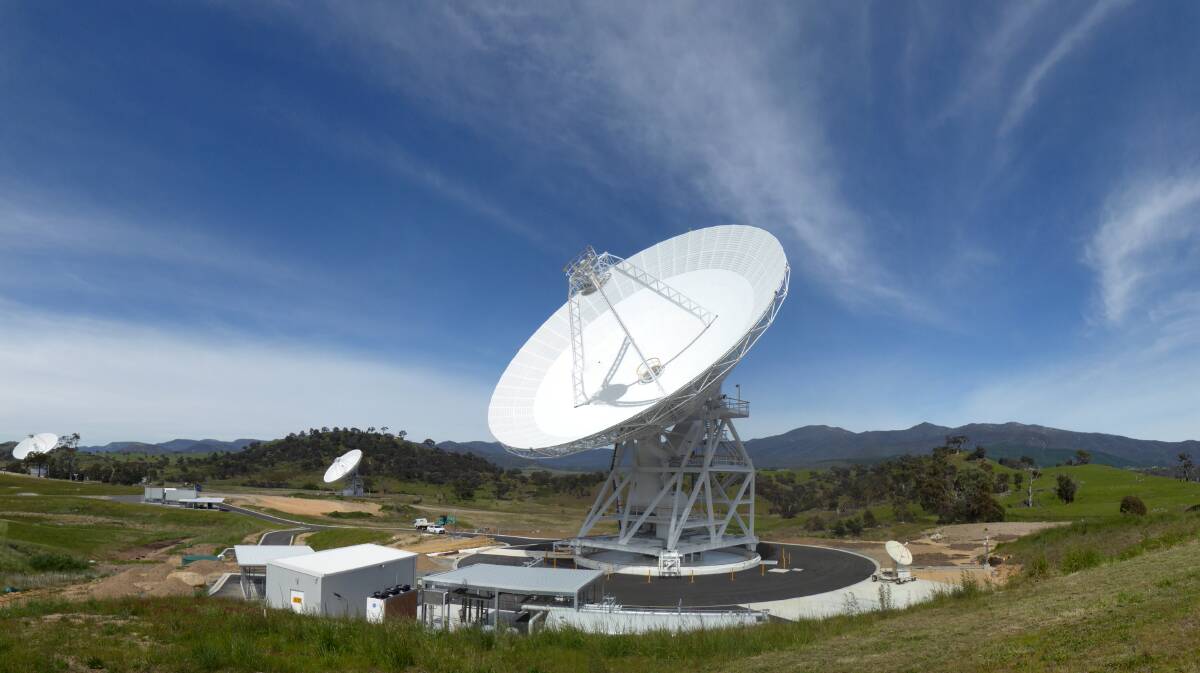
More space missions will be able to be tracked from the outskirts of Canberra when NASA builds a new multi-million-dollar deep-space antenna at Tidbinbilla.
The 34-metre antenna will be built at the Canberra Deep Space Communications Centre. Construction is set to begin in 2024, to come online in 2029.
The $81 million antenna will be used to communicate with spacecraft and missions in deep space - more than 100,000 kilometres away from Earth.
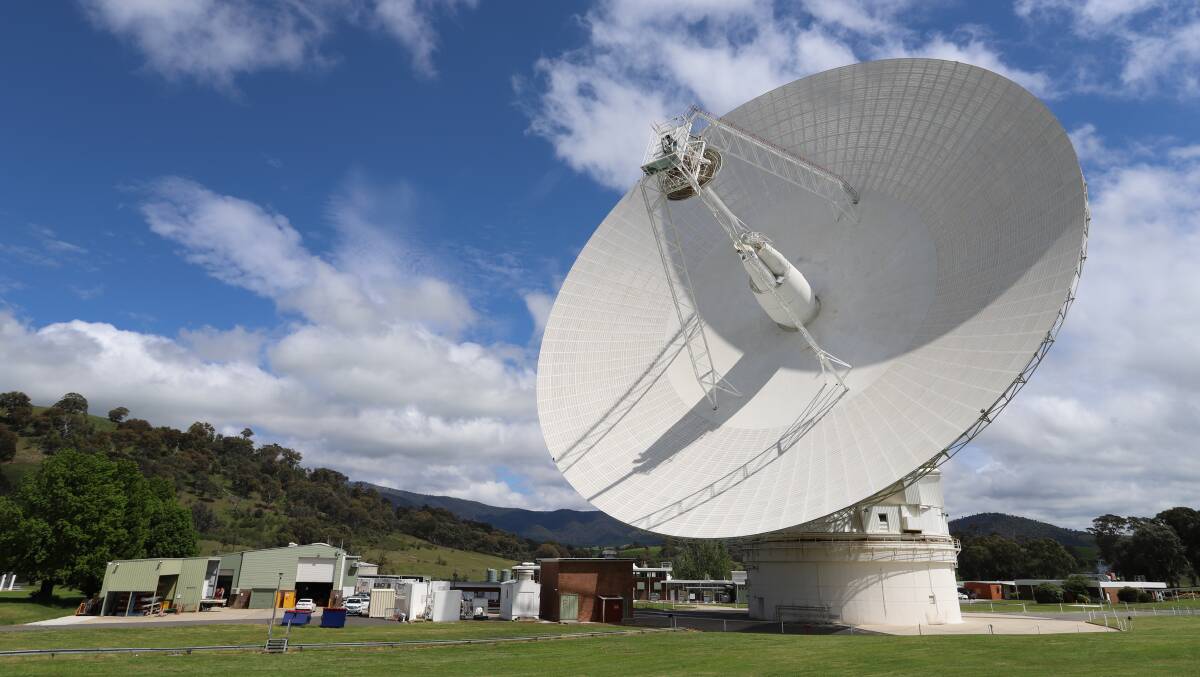
The new NASA antenna will join three other 34-metre antennas at the Tidbinbilla facility, as well as a 70-metre antenna, the largest of its kind in the southern hemisphere.
Canberra Deep Space Communication Centre outreach manager Glen Nagle said the new antenna in Canberra would be built following the construction of new equipment at NASA's other Deep Space Network facilities in Spain and California.
"NASA has an overall plan to expand the Deep Space Network, and this follows on from upgrades to existing antennas," Mr Nagle said.
"All the time with the antennas, we're increasing their capability with new technology, and with more missions going on out in deep space, there's not enough ears to communicate with them.
"This will be effectively extra bandwidth to communicate with more spacecraft."
The new antenna comes ahead of an expected deep-space mission boom in coming years, spurred on by NASA's return to the Moon in the mid-2020s and eventual manned mission to Mars a decade later.
It's expected there will be between 20 and 30 new deep-space missions that will launch in the next decade.
Mr Nagle said construction of the new antenna would take between three and four years to complete and the technology inside would be more advanced than others that had come before.
"They can pick up signals from far away that are billions of times weaker than a watch battery and put that together in communication," Mr Nagle said.
"The design will effectively be the same as with previous antennas, but this will take advantage of a new generation of transmitters and receivers."
NASA's Deep Space Communication Centre in Canberra has played a crucial role in space missions over the decades and provided communications with space crews millions of kilometres away.
More recently, it played a pivotal role in communicating with NASA's new Mars rover Perseverance, which touched down on the Red Planet earlier this year.
Mr Nagle said the new antenna would still be managed by the CSIRO and would play a crucial role in future space missions.
"It's a supply and demand issue, and with more countries wanting to go up to space and the costs begin to fall, that allows more people to participate," he said.
"There are more players coming in and there is an ongoing need to communicate with them.
"You can launch as many spacecraft as you like, but unless there is someone on Earth to communicate with them, there is no network."